









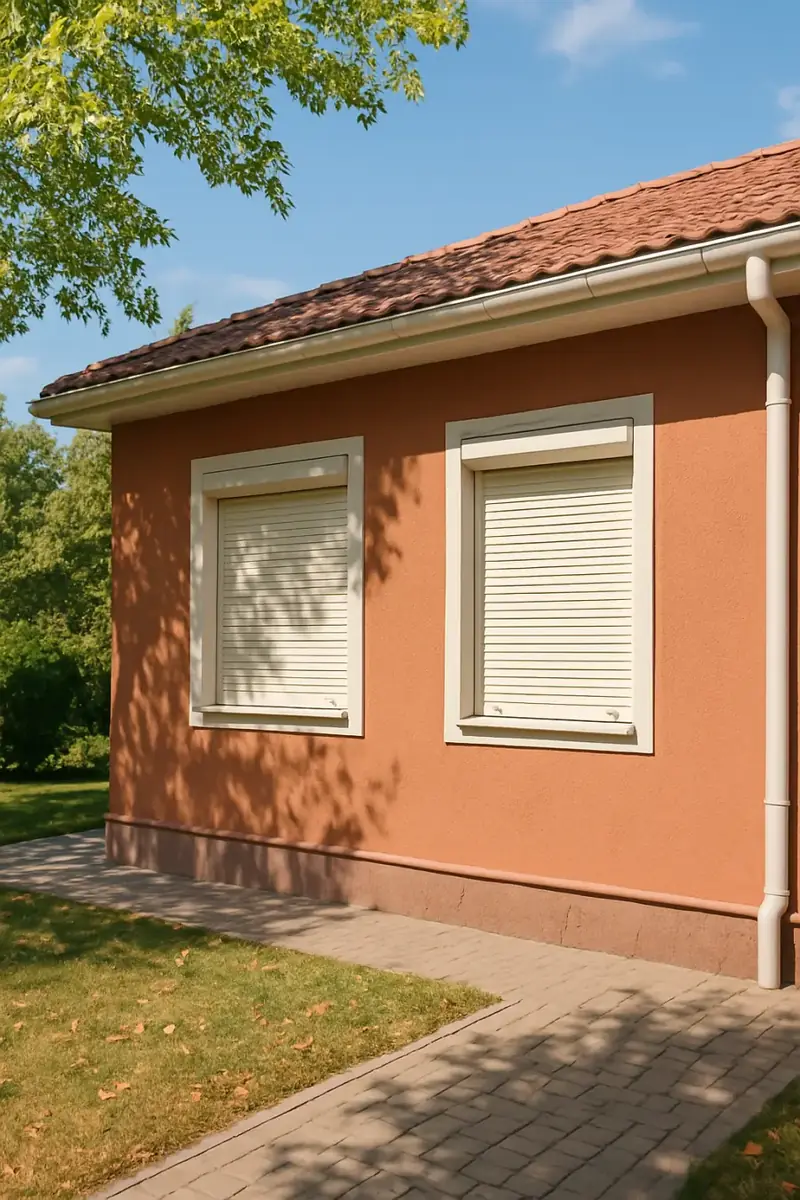
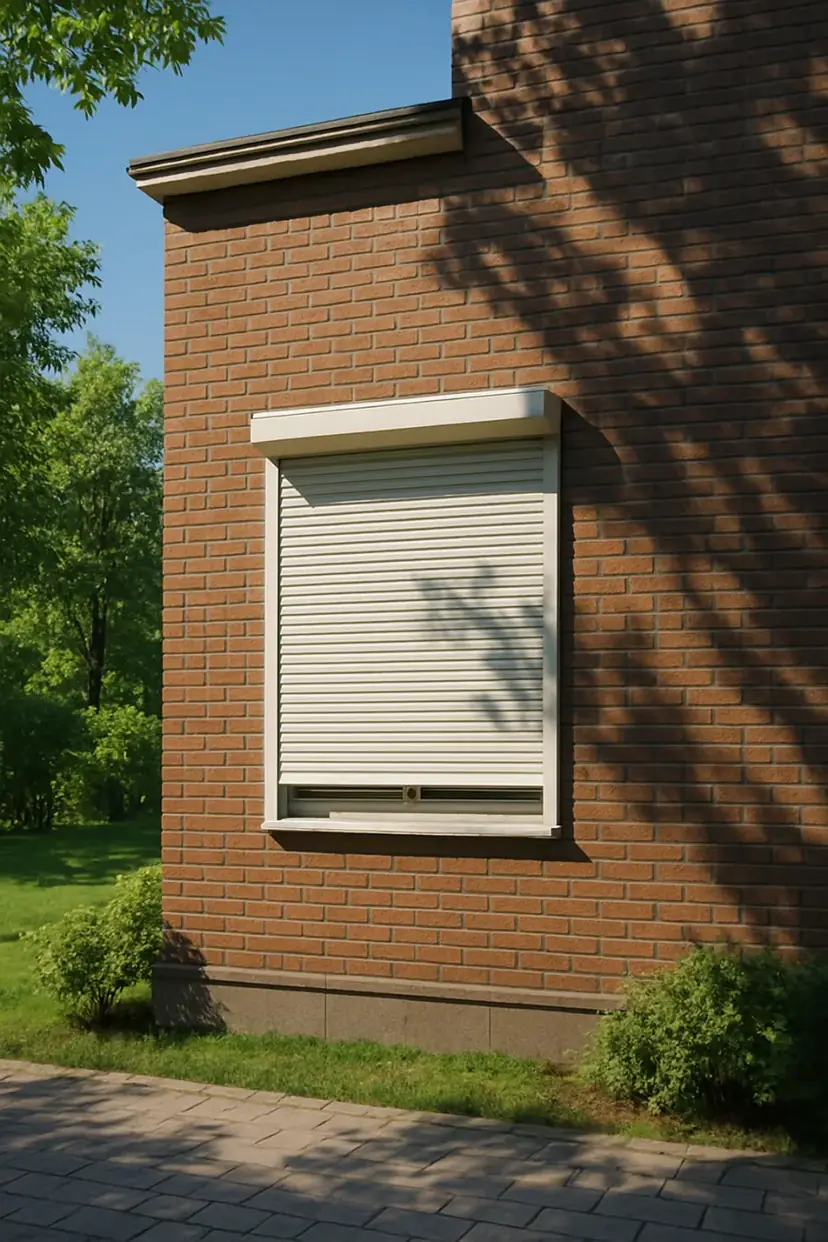



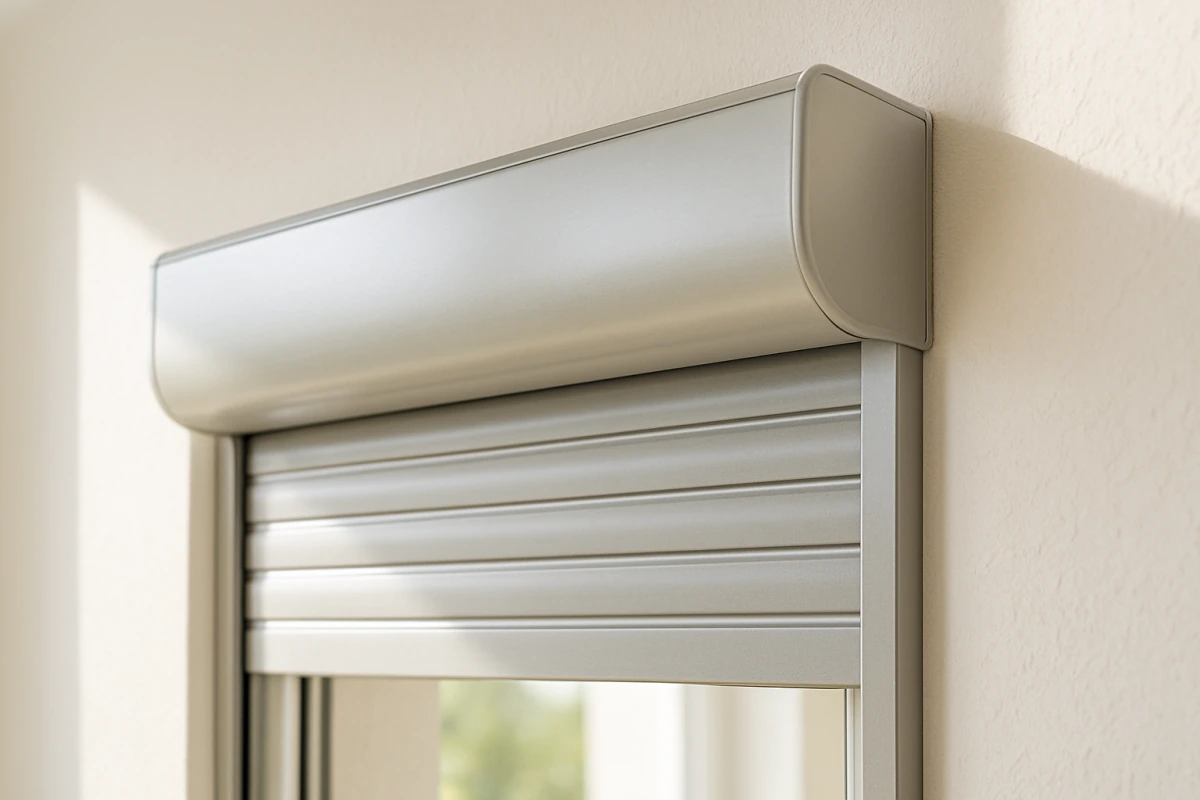









Anti-vandal roller shutters in Almaty hold up not because of the name, but because of three elements at once: an extruded profile without perforation, locking with a deadbolt lock and slat locks, and fixing the guide rails into the load-bearing wall. We manufacture them in Almaty based on measurement: protective options — from 24,900 ₸/m².
What makes roller shutters anti-vandal: three links of protection
Anti-vandal roller shutters in Almaty hold up not because of a name in the price list, but because of three links at once: extruded aluminium without perforation, locking with a deadbolt lock and slat retainers, and guide rails anchored into the load-bearing wall. Remove any one link and the structure stops being anti-vandal, whatever the sellers call it.
The profile is responsible for how much time and noise it takes to get at the curtain. Extruded aluminium is a solid slat without perforation: you can’t pry it open with a crowbar, it bends with difficulty and loudly. A foam-filled roll-formed profile plays no part in this at all — it’s about sun and dust.
Locking is the second link. A deadbolt lock secures the curtain in the guide rail, blocking deadbolts stop it being lifted from below, and slat retainers stop a single slat being pulled out of engagement. Without this, the curtain is simply pried up from below and rolled upwards.
The third link is mounting. The guide rails must sit in the load-bearing layer, through the insulation and finish. Mounting into insulation lets the structure be pried off together with the anchor: the point of support goes with the curtain, and all the profile’s strength is wiped out in a couple of minutes.
How real is this protection? As real as the weakest link turns out to be. A thick slat on an anchor in foam holds worse than a thin one set into concrete. That’s the answer.
Roller shutter protection is made up of three links — profile, locking and mounting — and the weakest link determines the outcome.
Which link gets broken first
Prying the guide rail from below is the most common way in. Nobody goes for the first link: they first try to pry up the bottom of the curtain, because it’s quiet and quick. That’s why mounting and slat retainers matter more than slat thickness — a quiet pry-off bypasses the profile entirely.
What to reinforce on a limited budget
The order of priorities is this: first mounting into the load-bearing layer, then the deadbolt lock, then the solid profile. This order gives the biggest gain in strength for every tenge spent. For example, for a ground-floor window with no security, we start the conversation with the anchors, not the choice of profile: the measurer checks the mounting points before the quote.
Anti-vandal, security, standard: where the terms divide
Security roller shutters is a general name for anything that closes an opening from prying eyes and prying hands. Anti-vandal roller shutters are about a specific level of strength within that group. The difference isn’t in the word on the price tag, but in which profile is in the curtain and what locks it.
Standard roller shutters are assembled on a roll-formed profile with foam filling. A foam-filled profile protects from sun and dust: it’s light, handles heat well and costs less than the rest. Against burglary such a profile doesn’t work — it bends and pries open with nothing more serious than a crowbar. Jalusso installs such roller shutters on windows and doors as sun protection, and it won’t call them anti-vandal.
An extruded profile behaves differently. Extruded aluminium is a solid slat without filler, the wall is thicker, the weight greater. An extruded profile can’t be pried open with a crowbar and doesn’t bend from a palm strike. This is exactly what we mean when we talk about anti-vandal roller shutters. After that only one question remains: a solid curtain or one with perforation — that’s in the next section.
Our measurer on site sorts out the terms in a minute: he shows both samples, and the client sees for themselves where sun protection ends. Anti-vandal roller shutters are always extrusion plus a deadbolt lock and mounting into a load-bearing wall, and without any of these links the name stays just a name.
Security roller shutters is a general name for anything that closes an opening, while anti-vandal is a specific level of strength, and a foam-filled roll-formed profile doesn’t belong to it.
Extruded or foam-filled profile
An anti-vandal profile is extruded aluminium: a solid slat with no internal cavity filled with foam, which can’t be pried open with a crowbar. A foam-filled roll-formed profile doesn’t belong to this category, and here’s why.
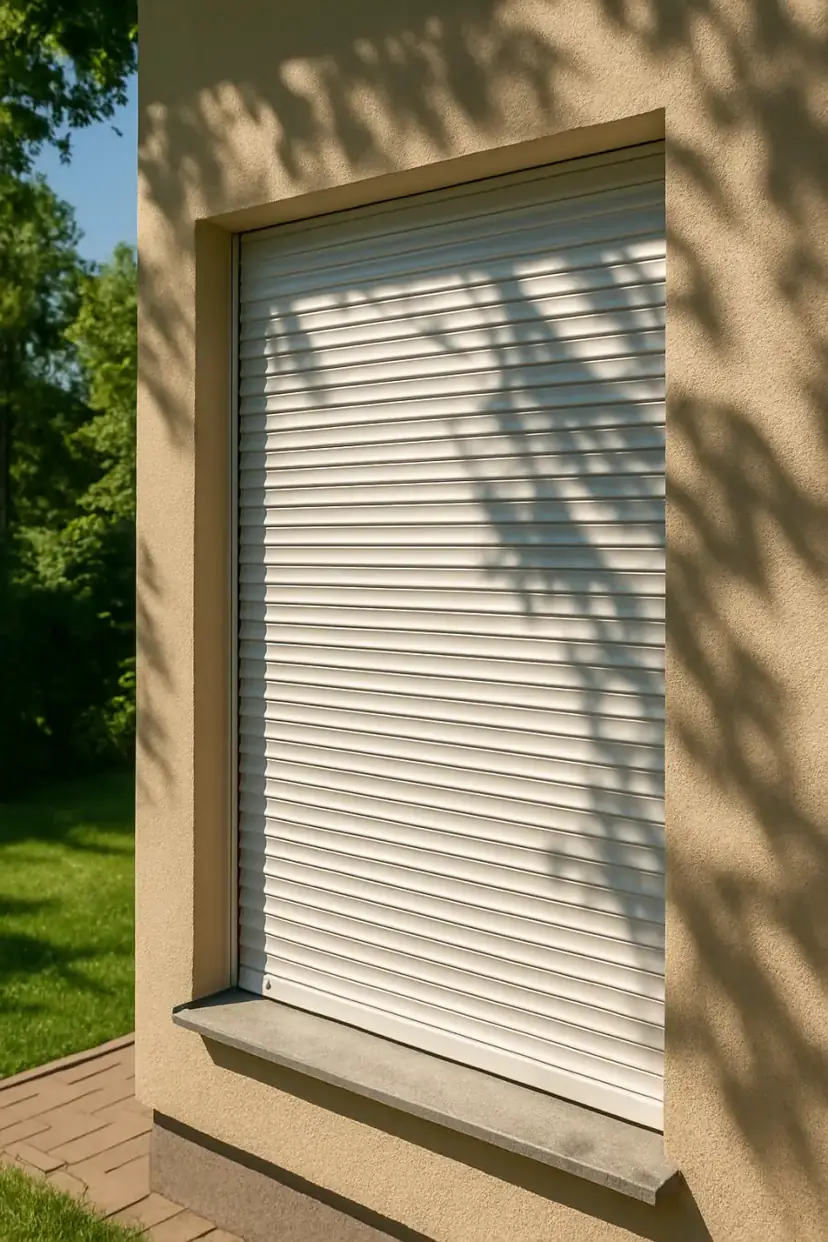
An extruded profile is pressed from an aluminium billet as a single body. Its wall is thicker, the slat heavier, and when the curtain is down there’s simply nothing to hook a pry bar under from below: the profile only bends under very serious force. That’s why extruded aluminium is installed on a shop front, a garage and ground-floor windows with no security. Anti-vandal roller shutters for windows are made from exactly this kind of profile.
A foam-filled profile is built differently. Inside the slat is a roll-formed shape with foam filler, and the metal itself is thinner. Such a profile closes a window from sun and dust, holds heat and muffles street noise, but under prying it gives way first. A foam-filled profile protects from sun and dust, not from burglary — that’s its honest role.
| Profile type | What it works against | Where we install |
|---|---|---|
| Extruded solid | Prying, lifting the curtain from below, prying eyes | Shop front, garage, ground-floor windows with no security |
| Extruded perforated | Prying and lifting, while the shop front stays visible | Sites where daytime visibility and air are needed |
| Foam-filled roll-formed | Sun, dust, noise, heat | Residential windows, where protection against break-ins is not the main task |
Sometimes a person comes in for anti-vandal roller shutters, but in fact needs the second option — a kitchen window with a vent, sun at noon, a lot of noise from the street, and a quiet first floor. In that case we don't sell extruded profile just for the word “anti-vandal”: it costs more, while the task can be solved more simply.
Extruded aluminium without perforation is a solid profile that can't be pried open with a crowbar; a foam-filled roll-formed profile works against sun and dust, not against break-ins.
Solid curtain or perforation
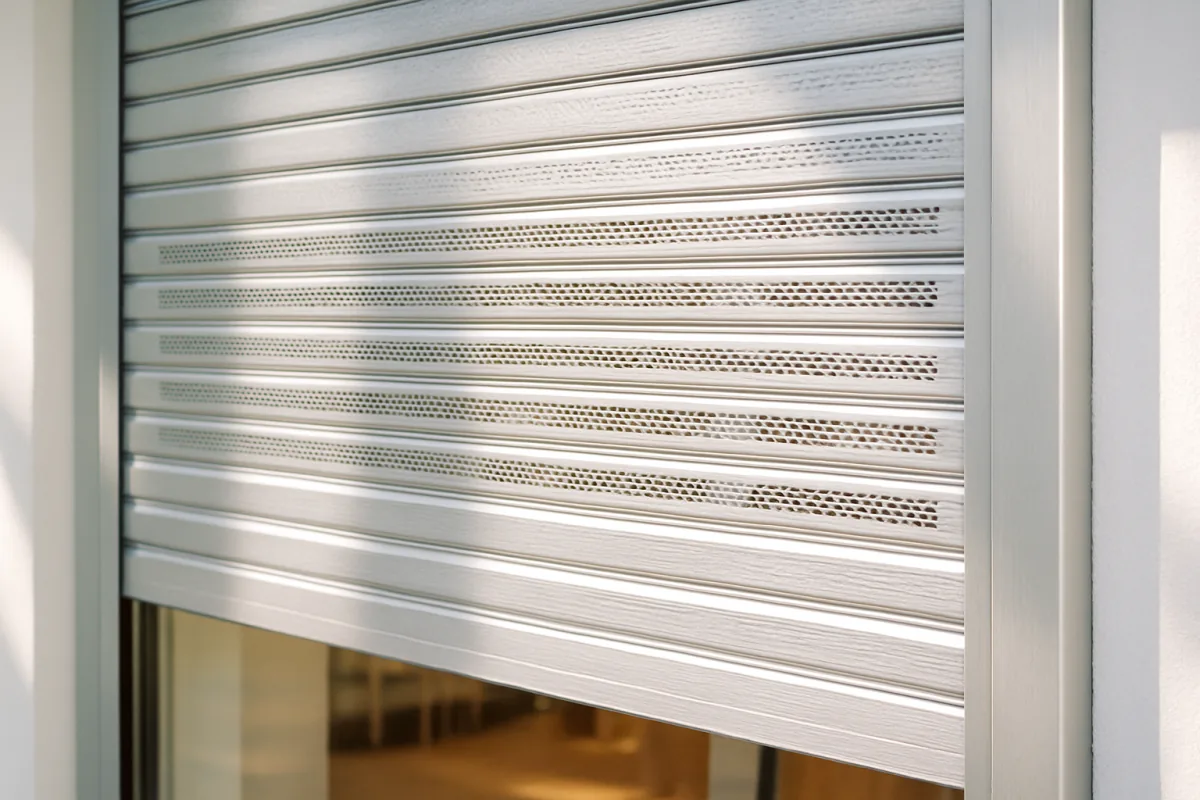
Extruded perforated profile is the same solid aluminium, only with holes in the slat. It keeps a shop window visible and lets air inside, but it is less resistant to prying than a solid curtain. Perforation does not give equal resistance — and you shouldn't believe anyone who says otherwise. With a closed solid curtain, the opening can't be pried open with a crowbar; with a perforated one, that becomes possible: the holes themselves reduce the slat's rigidity against bending.
For a shop window the choice is simple. During the day you need to show the goods, at night — to protect them. Perforation solves exactly this task: the curtain stays transparent to the eye from outside, and the air keeps the glass from fogging up.
A solid profile is chosen where visibility doesn't matter: a garage, a first-floor window, an entrance to a house without security.
As for a blow from a stone or a sledgehammer — neither curtain protects against that. Extruded aluminium holds against prying and lifting from below, not against a direct blow to the surface. If the main threat is exactly a flying object, anti-vandal blinds for windows don't solve that task.
It's worth paying extra for a solid profile instead of a perforated one in one case: when the shop window doesn't need visibility during the day. If it does — the difference in resistance doesn't justify it, and the question is already solved not by the profile, but by the lock and the mounting.
Locks, deadbolts and slat retainers
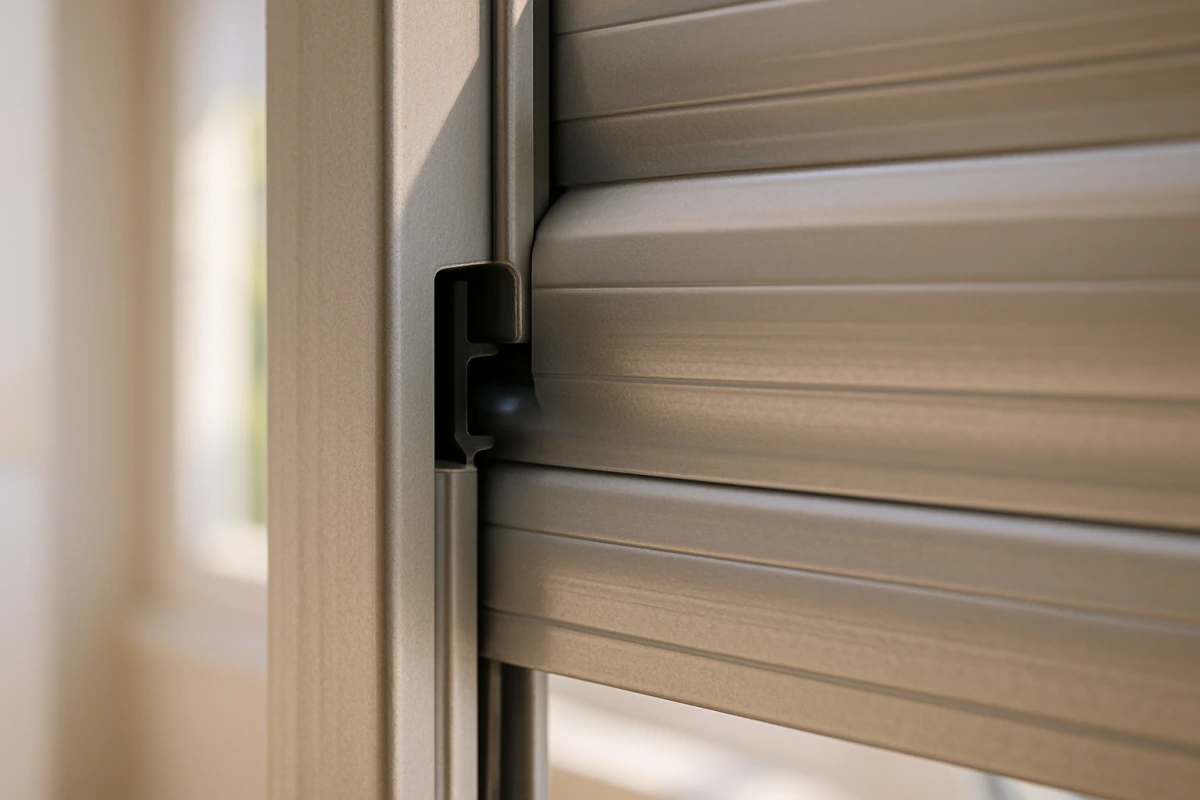
A deadbolt lock secures the curtain in the guide rail: the bolt comes out of the slat into the groove of the side post, and the curtain can no longer be lifted from below. The key is turned from outside, less often from inside if the lock is double-sided.
Blocking bolts are installed in pairs at the edges of the curtain, and on wide openings intermediate ones are added. One bolt holds one point — it gets knocked out, bent back, and the curtain goes up. Several bolts distribute the force across the whole width, so breaking in takes time and noise. And time and noise are exactly what a burglar dislikes most.
Slat retainers are spring-loaded elements inside the lock that catch the neighbouring slats. Without them, a single slat is pulled out of the lock, the opening is exposed, and the curtain stays hanging intact. With retainers, the slat can't be pulled out of the lock — it pulls the neighbouring ones with it.
For windows and shop windows we install this set on anti-vandal blinds made of extruded aluminium; on a foam-filled roll-formed profile a deadbolt lock makes no sense — there the slat is softer and the groove is shallower.
The order is simple: first the slat retainers, then the blocking bolts, then the lock itself. A weak lock with good bolts holds, but a strong lock without retainers doesn't: the slat will be pulled out right next to it. And the mounting of the guide rails works here together with the locking — a bolt only holds what holds itself. Curtain protection is made up of the locking mechanics and the installation, and a failure of either one cancels out the rest.
A lost key
What we do: we replace or recode the lock, and come out to the site. Sometimes recoding for a new key is enough, but the exact procedure is named by the technician after inspection — we don't guess it over the phone.
Mounting: why an anchor in the insulation breaks the whole protection
Fixing the guide rails into the load-bearing wall is the link that decides the outcome: a guide rail seated in the insulation gets pried off together with the anchor, and then neither the profile nor the lock helps. The anchor must pass through the insulated facade and seat into the load-bearing layer — concrete, brick or block. If that isn't done, the whole structure rests on a soft material that gives way to a crowbar in a couple of minutes.
An insulated facade is the most common trap. On the outside there's a layer of insulation and finishing, behind it a void or a frame, and another ten centimetres or so to the load-bearing wall. An anchor that goes only into the insulation gets torn out together with a piece of material, and the guide rail shifts sideways. During measurement Jalusso always checks where it can actually drill, and selects the fastener length for the specific wall build-up.
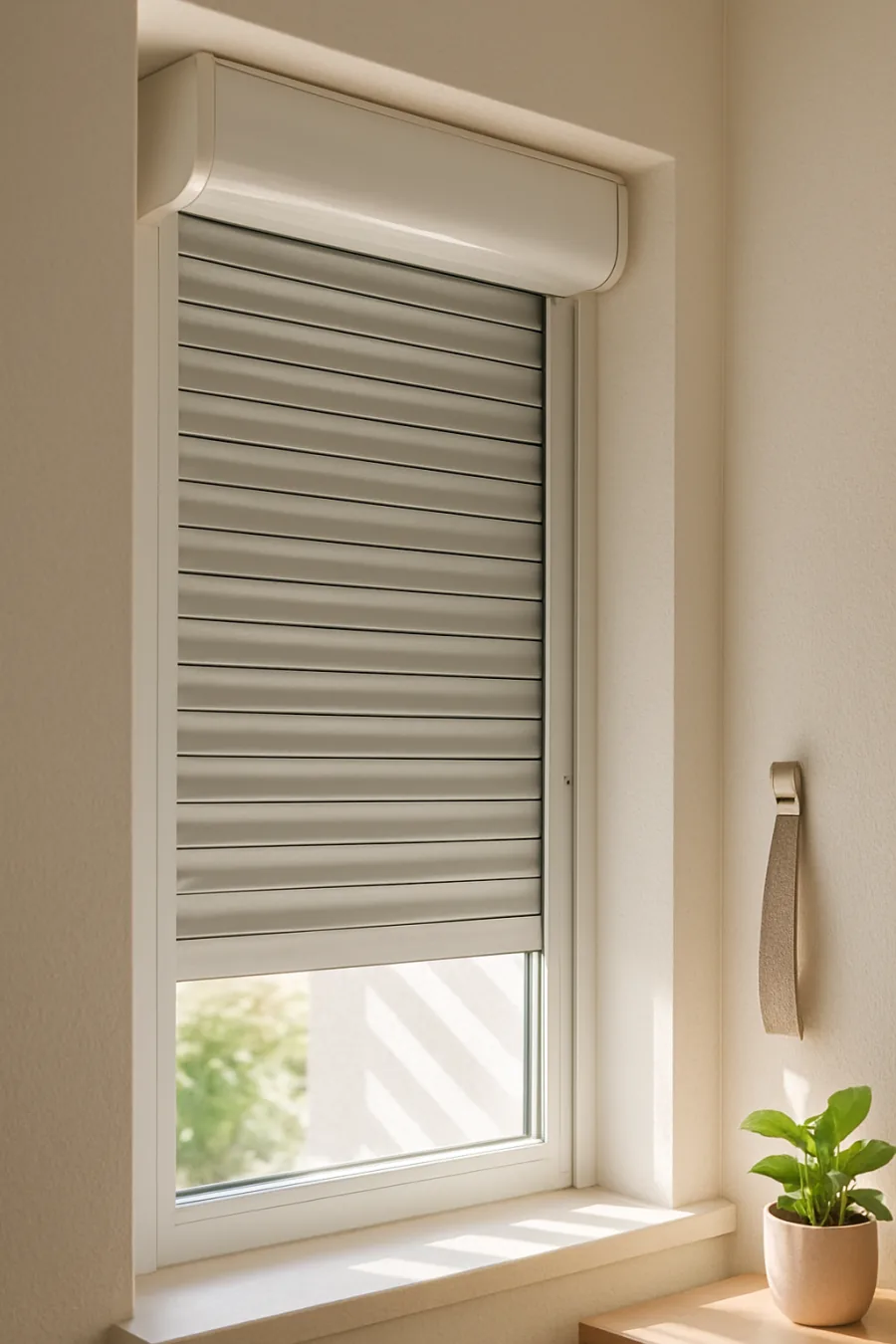
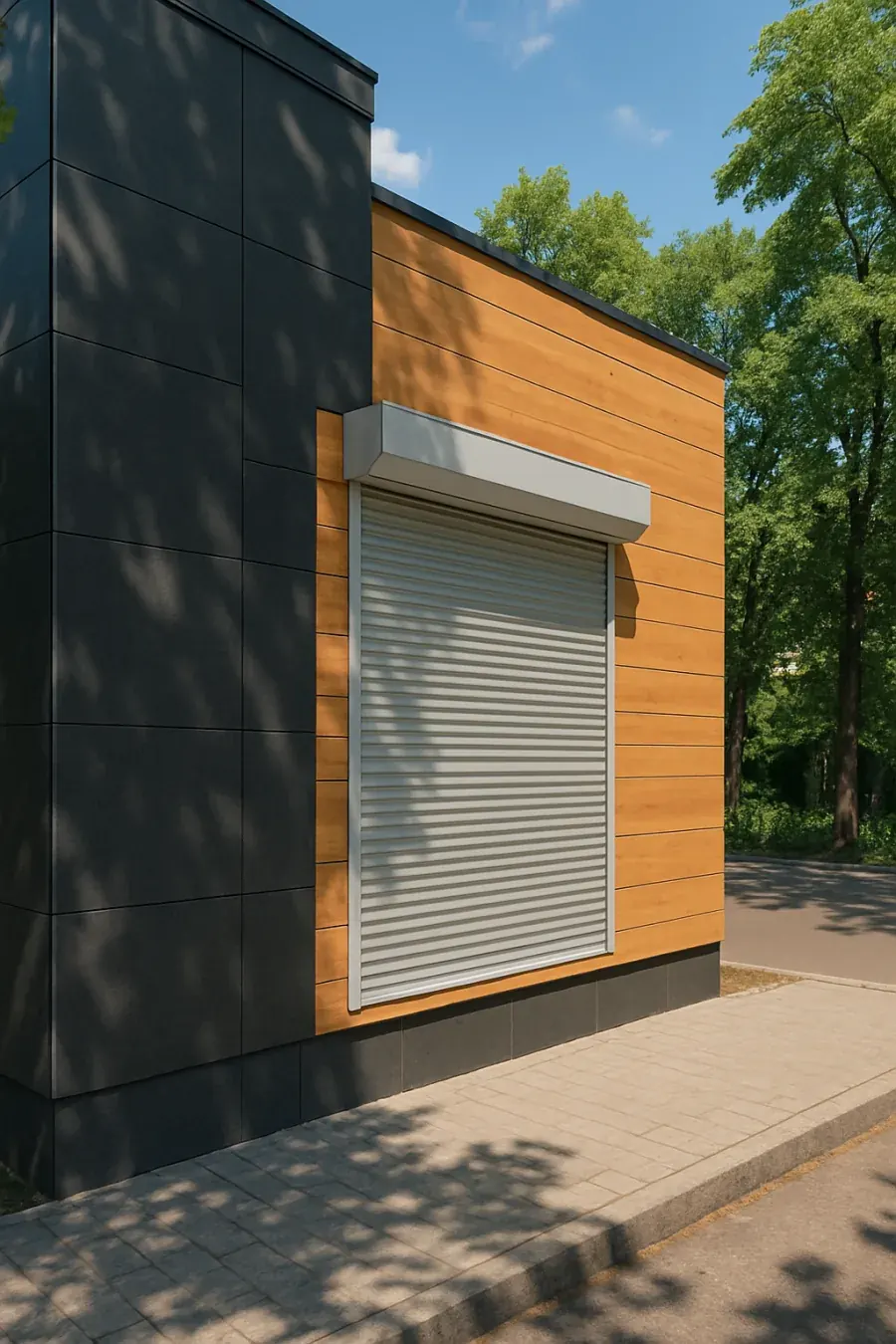
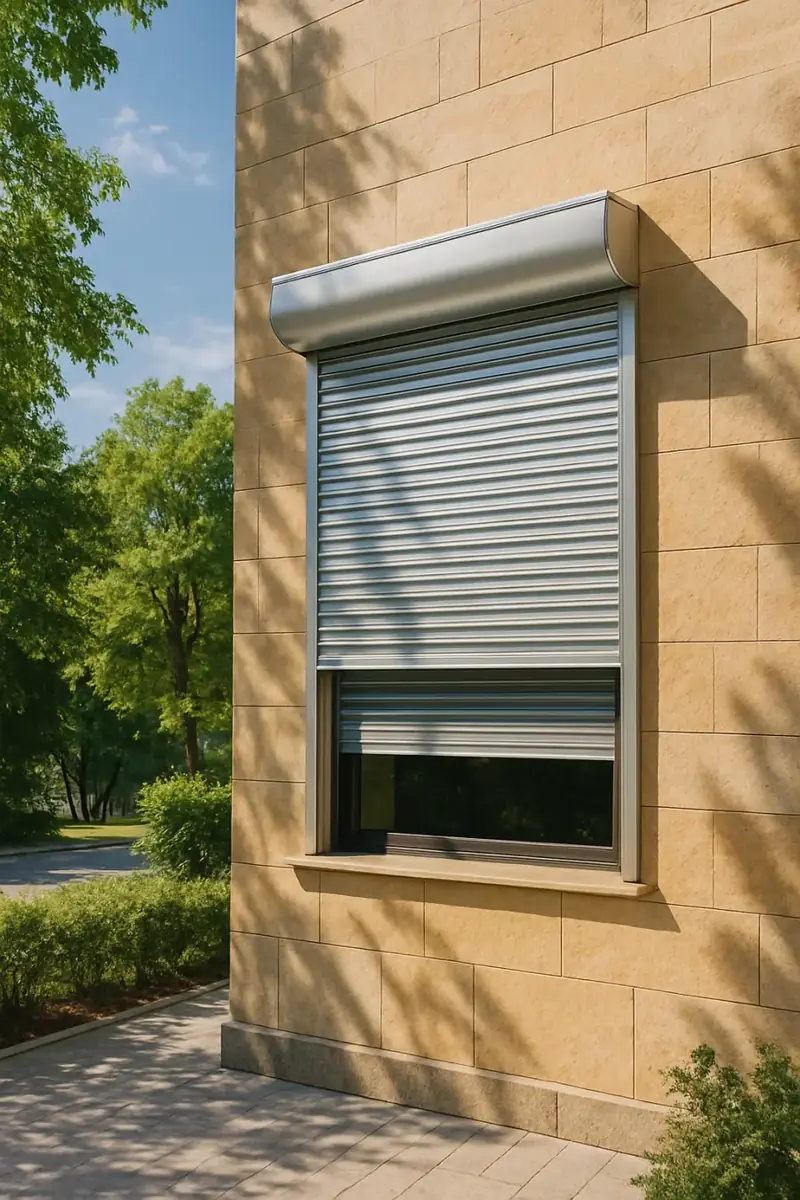
On anti-vandal shutters for windows the housing box also matters. A closed-type box conceals the curtain in the raised position — from outside you can't see what runs along the guide rail, and you can't catch the edge of a slat. That's exactly why a cassette system is made: the curtain goes entirely into the box instead of hanging outside. An overlay box is installed on a finished facade when the finishing can't be opened up.
Checklist after installation
Five points that show the mounting was done correctly.
- The anchors are visible in the load-bearing layer, not in the insulation or cladding.
- The guide rail doesn't wobble when pressed by hand.
- Closed-type box: the curtain is concealed in the raised position.
- The lock closes without effort, the key doesn't jam.
- The curtain rises evenly, without skewing.
What “no drilling” means
It means avoiding opening up the finishing and window reveals, not avoiding anchors into the load-bearing layer. Even with no-drilling installation, the guide rails are fixed through the cladding into the load-bearing layer via existing holes. You can't skimp on fasteners on an anti-vandal site: if you direct the anchor into the insulation to keep the facade intact, the whole protection rests on a promise.
Anti-vandal roller shutters or grilles
A window grille protects the opening, but does so at the cost of visibility and light — and pays that price constantly. Anti-vandal roller shutters for windows solve the same task differently: at night the opening is closed, during the day the curtain goes into the box, and the window works as a window again.
For a first floor without security the difference is especially noticeable. A shop window needs visibility during the day and protection at night, while a grille gives only the latter. And during the day it doesn't disappear: the light in the room drops, the facade looks closed, and some customers simply walk past.
Comparison by four criteria:
| Criterion | Roller shutters | Grille |
|---|---|---|
| Visibility during the day | The curtain is raised into the box — the shop window is visible | Blocked constantly |
| Light in the room | By day the opening is open, light comes through | Shades all year round |
| Protection at night | Extruded profile, deadbolt lock, fixed into the load-bearing wall | Metal on anchors |
| Facade view | When raised, almost invisible | A permanent grille over the opening |
The practice is simple: on a ground floor with no security, Jalusso more often installs roller shutters rather than a grille, because the premises have to work during the day. A grille blocks the view and the light all the time, while a closed curtain is raised into the housing box by day — and the opening works for passers-by again.
How much anti-vandal roller shutters cost in Almaty
The price of anti-vandal roller shutters in Almaty is calculated not by the name but by the set: profile, curtain size, housing box, controls and locks. That is where the range comes from — from 17,500 ₸/m² for a roll-formed foam-filled profile to 35,000 ₸/m² for a system with an electric motor.
| Position | Profile | Price from, ₸/m² | Lead time |
|---|---|---|---|
| Roller shutters for windows | Roll-formed profile, foam-filled | 17,500 | 10–14 days |
| Security roller shutters | Extruded aluminium | 24,900 | 12–16 days |
| Perforated roller shutters | Perforated profile | 27,800 | 12–16 days |
| Motorised roller shutters | Motor, remote control, emergency lift | 35,000 | 14–18 days |
These prices are per square metre of curtain according to the price list, and the price of anti-vandal roller shutters for windows only comes out after a calculation. Why? Protective roller shutters — from 24,900 ₸/m², and that is the base for solid extruded aluminium without perforation. The perforated option is a separate item, from 27,800 ₸/m². A set with an electric motor — from 35,000 ₸/m².
An example calculation using coefficients
We calculate from the protective item, because it is the closest to the anti-vandal option. Controls: mechanical comes with a coefficient of 1, chain — 1.06, electric motor — 1.85, electric with remote control — 2.1. Installation: on the wall — 1, on the frame — 1.05, cassette system — 1.28. Installation itself costs 4,500 ₸ per unit, and for orders from 150,000 ₸ it is free.
An electric motor is needed where the blind is heavy: it pulls extruded aluminium on tall and hard-to-reach openings. Installation on the frame or in a cassette system is chosen on a finished facade where the finish cannot be opened up. But the fixing points and the space for the housing box are still determined by the measurement — without it the figure remains an estimate.
Why the same name costs differently
The difference is in the set. A price per m² without a deadbolt lock, slat retainers and a closed-type housing box is not an anti-vandal set yet, just a blind. The price of anti-vandal blinds for windows on a marketplace is often calculated exactly that way: profile separately, locking separately.
The final figure is affected by the profile, the size of the blind, the type of housing box, the controls and the locks. Five things — and each one moves the number.
How we work: from measurement to installation
We do not calculate without a measurement: there are no ready-made units in stock, every blind is made for a specific opening, and the measurement reveals where the anchors will go. Measurement and consultation are free, the measurer arrives with profile samples and calculates the cost on site.
How an order goes:
- A request on WhatsApp. You send the dimensions of the opening and the premises — a shop window, a garage, a ground-floor window.
- The measurer with samples. Checks whether there is space for the housing box on the facade, shows the extruded profile and the perforated one so the difference is visible in your hands.
- Calculation on site. We give the cost right after measuring — based on profile, size, controls and locks.
- Manufacturing in the workshop. Protective items — 12–16 days, a set with an electric motor — 14–18 days.
- Installation. Installation requires anchors into the load-bearing layer: we fix the guide rails through the insulation into the wall, not into the cladding.
Installing one unit costs 4,500 ₸, but if the order total is from 150,000 ₸, installation is free. We close a shop window in a single visit — the housing box and guide rails go up the same day, and the blind is hung and adjusted right away.
Within the city, measurement and delivery are free. We travel to the suburbs of Almaty — Kaskelen, Talgar, Issyk, Kapshagay — and the cost of the visit depends on the distance; we tell you it before the visit, not after.
And one more thing about the measurement: it is needed not to agree on a price, but to understand the facade. Where the load-bearing layer is, whether there is space for the housing box, how the guide rail will behave on a particular wall — all of this is only visible on site. That is why we calculate anti-vandal roller shutters for windows after a visit, not from a photo in a chat.
For a shop window owner the order is this: request, measurement, manufacturing 12–16 days, installation. The timeline is set by the price list item, not by the season.
The bottom line is simple: measurement and consultation are free, the measurer arrives with samples and calculates the cost on site, and within the city measurement and delivery are free too. Installation requires anchors into the load-bearing layer, and we do not cut corners on that rule — not on a shop window, not on a ground-floor window.
What to cover first if the budget does not stretch to all the openings
The first opening to cover is the one someone can actually get inside through — the garage and the entrance. The shop window is protected after that. This is not about the beauty of the facade, but about the order in which the money pays off.
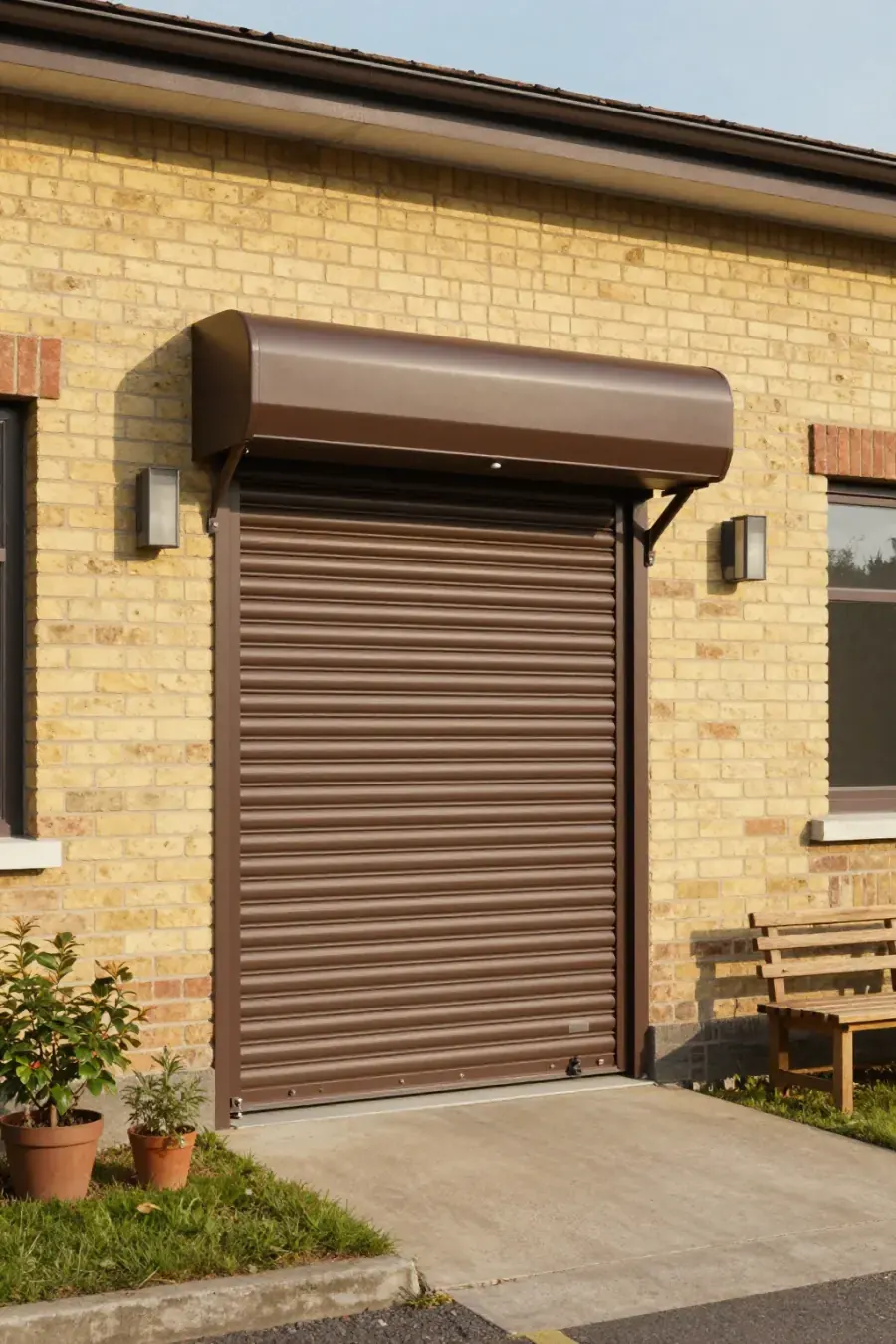
An unguarded garage needs a solid profile with a deadbolt lock. There is no shop window to show during the day here, but there is a gate with a car and tools behind it. A solid blind made of extruded aluminium plus a deadbolt lock is the minimum you should not go below.
A ground floor with no security is covered the same way — by the entrance openings, not by the living-room windows. The logic is simple: a burglar goes where it is quick and quiet. A shop window, though, needs visibility by day and protection at night, so its priority is different — first you calculate how much trade loses from a solid blind, then you decide on the profile.
The order we usually recommend looks like this:
- garage and entrance — solid extruded profile, deadbolt lock, guide rails fixed into the load-bearing layer;
- ground-floor windows with no security — solid profile on the openings that are visible from the street;
- shop window — after the openings people can enter through are covered.
And yes, doing it piecemeal is cheaper only on paper: covering half the openings and leaving the entrance open means paying for work that will not do its job.
The opening that can actually be entered is closed first — the garage and the entrance — and the shop window is protected after that.
Case: a window above the canopy
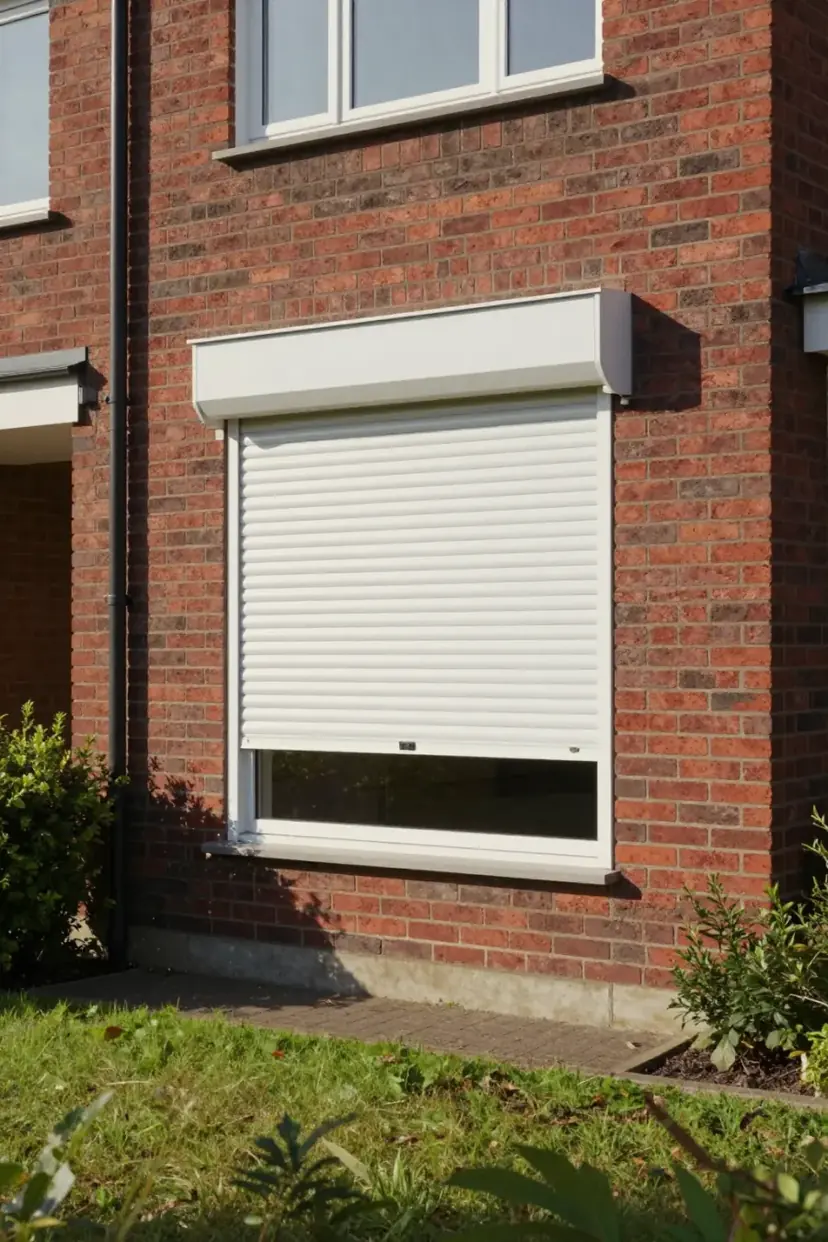
On the finished facade above the canopy there was no room for a built-in housing box, so we installed a surface-mounted one — we didn't open up the wall or touch the finish. But the guide rails still went into the load-bearing layer: otherwise the box would have hung there looking nice while the whole structure was pried off together with the anchor.
Case: a shop window that stays visible during the day
For the shop window we chose perforated anti-vandal roller shutters: at night the opening is closed, during the day the curtain is raised into the housing box and the window works for passers-by again. In resistance to prying, perforation is inferior to a solid curtain — it's a deliberate trade of visibility for strength margin, and for a shop window it's usually justified.
Winter care: lock, groove, blind
Anti-vandal roller shutters get through winter calmly as long as the guide rail groove is clean. Ice and dirt in the groove are the main cause of a stiff-running curtain. Extruded aluminium doesn't mind frost, but dirt gets in the way of the mechanism.
Almaty winters bring frost and a temperature swing between day and night. During the day the ice in the groove thaws, by evening it freezes again — and the blind runs stiffly. What usually freezes isn't the slat but the lock: the deadbolt goes into the groove of the side post, and ice holds there hardest of all.
What we do by season, before the first frosts and then through the winter:
- We clean the guide rail groove of dirt and ice — with a brush, no sharp objects, so as not to scratch the aluminium.
- We lubricate the groove and the lock deadbolt with a thin layer — then the blind runs evenly and the key turns without effort.
- We raise the blind without jerking if the opening has been closed for a long time: we let the slats come out of engagement gradually.
- We check the seals and fasteners after severe frosts.
In summer the same procedure applies — dust in the groove does the same as ice. Cleaning and lubrication restore smooth running of the mechanism; once a season is enough.
If after winter the blind runs heavily or the key turns with difficulty, this is post-installation service, and the warranty applies: 3 years on the mechanism, 1 year on installation from the date the acceptance report is signed. If the fault is covered by the warranty, we'll repair it at no charge within 5 working days. Once the warranty period has expired, a technician visit is still possible — we'll tighten, adjust, fit a new cord or chain. Mechanical damage, re-installation on your own, water and natural fading are not covered by the warranty.
Ice and dirt in the groove are the main cause of a stiff-running blind, so the groove is cleaned and lubricated once a season.
FAQ
Can roller shutters be broken into from outside, and how is it done?
A closed blind is broken into from outside in two ways. The first is prying off the guide rail: a crowbar is put under the post from below and bent out together with the fasteners. The second is lifting the blind: a lever is put in from below and the slats are pulled out of engagement if the lock and retainers don't hold. Against the first, fastening into the load-bearing wall works; against the second, the deadbolt lock and slat retainers.
Will the blind withstand a sledgehammer or a car?
Extruded aluminium won't resist such a blow — it isn't designed for direct destruction. Anti-vandal blinds solve a different task: not letting the opening be broken into quietly and quickly. The wall is thicker, the slat is heavier, prying is noisy and slow, and usually no one goes for it.
Steel or aluminium anti-vandal roller shutters?
Steel roller shutters are cheaper than aluminium ones, but heavier, rust from moisture and need more frequent care. Jalusso works with aluminium — a solid extruded profile without perforation. It doesn't corrode, handles closing shop windows, garages and ground floors, and it's easier to match a motor to it.
Can an electric motor and a deadbolt lock be combined?
Yes, they are combined. The electric motor pulls the heavy blind, while the deadbolt lock stays in the guide rail and works separately from the motor: when the power goes out, the blind is raised manually with a removable crank handle, after opening the lock first. For a garage and a single entrance we consider this combination essential.
What burglary resistance classes exist?
A burglary resistance class denotes the level of resistance of the profile to break-in — from weak to the highest. We don't go into specific classes and how they differ from one another in this article: we don't have such figures and breakdowns, and we won't promise resistance by class without checking the fastening at your site. Protection comes from the combination of profile, locking and installation.
From outside, roller shutters are broken into by prying off the guide rail or lifting the curtain from below — and that's what fastening into the load-bearing layer, deadbolts and retainers work against.
Conclusion
Anti-vandal roller shutters in Almaty are held together not by a name but by three links: an extruded profile, locking with a deadbolt lock and slat retainers, plus fastening of the guide rails into the load-bearing layer. Remove any link — and the other two no longer save you.
Solid extruded aluminium is the main anti-vandal option. A perforated profile is chosen for visibility and air, and it's a deliberate compromise: the shop window stays visible, but in resistance to prying the blind is inferior to a solid one.
Fastening goes into the load-bearing wall through the insulation and finish. A guide rail seated in insulation is pried off together with the anchor — that's where the most expensive configuration fails.
The price depends on the profile, the control and the set, not just on the area. Protective options — from 24,900 ₸/m², perforated — from 27,800 ₸/m², with an electric motor — from 35,000 ₸/m²; the final figure for your opening is quoted after measurement.
In winter the blind and the lock need attention. Ice and dirt in the groove are the main cause of stiff running, so the groove is cleaned and lubricated once a season.
We recommend starting with a free measurement: our measurer arrives with samples of profiles and locks, checks where the anchors will go and whether there's room for the housing box, and calculates the cost on the spot.

