




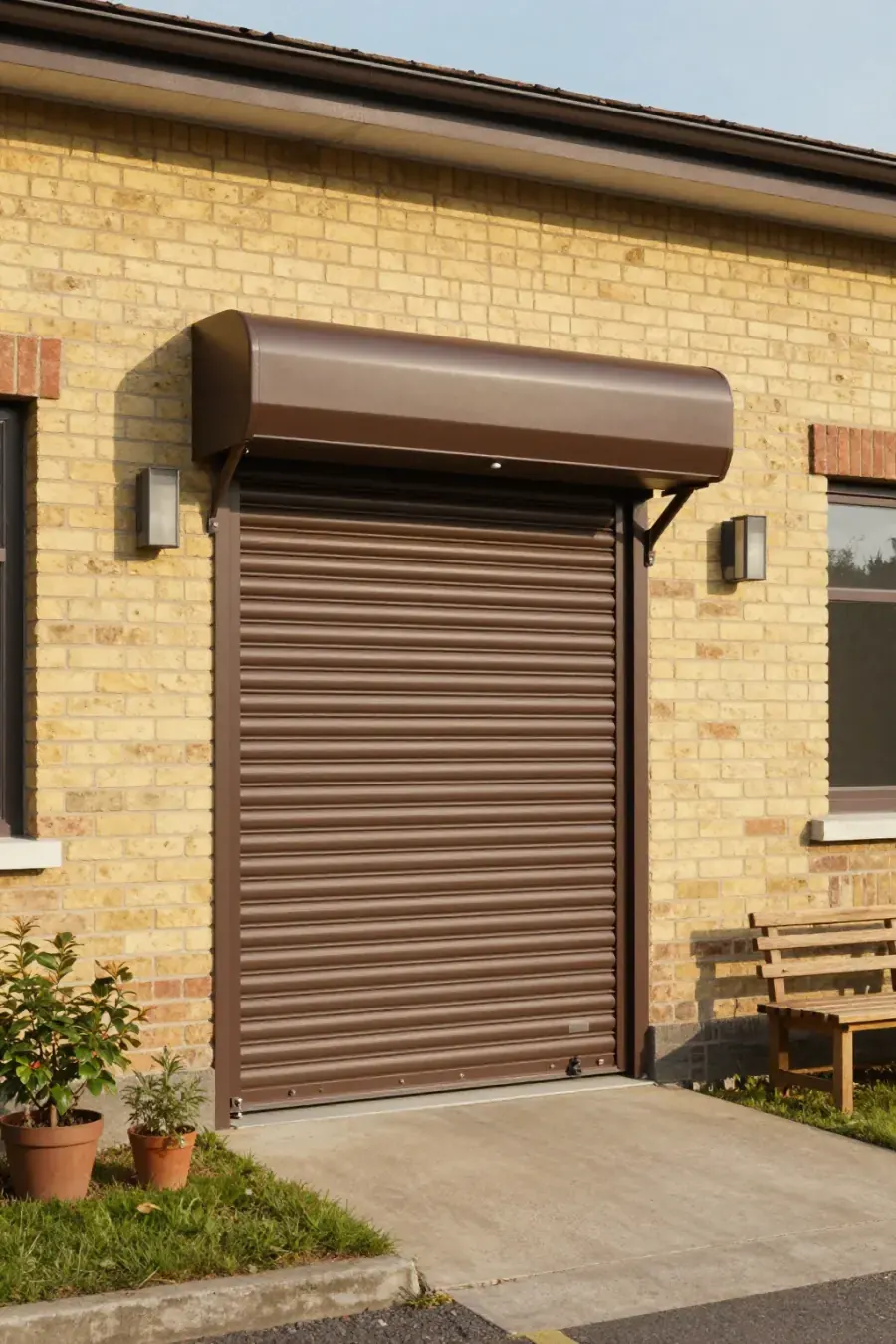

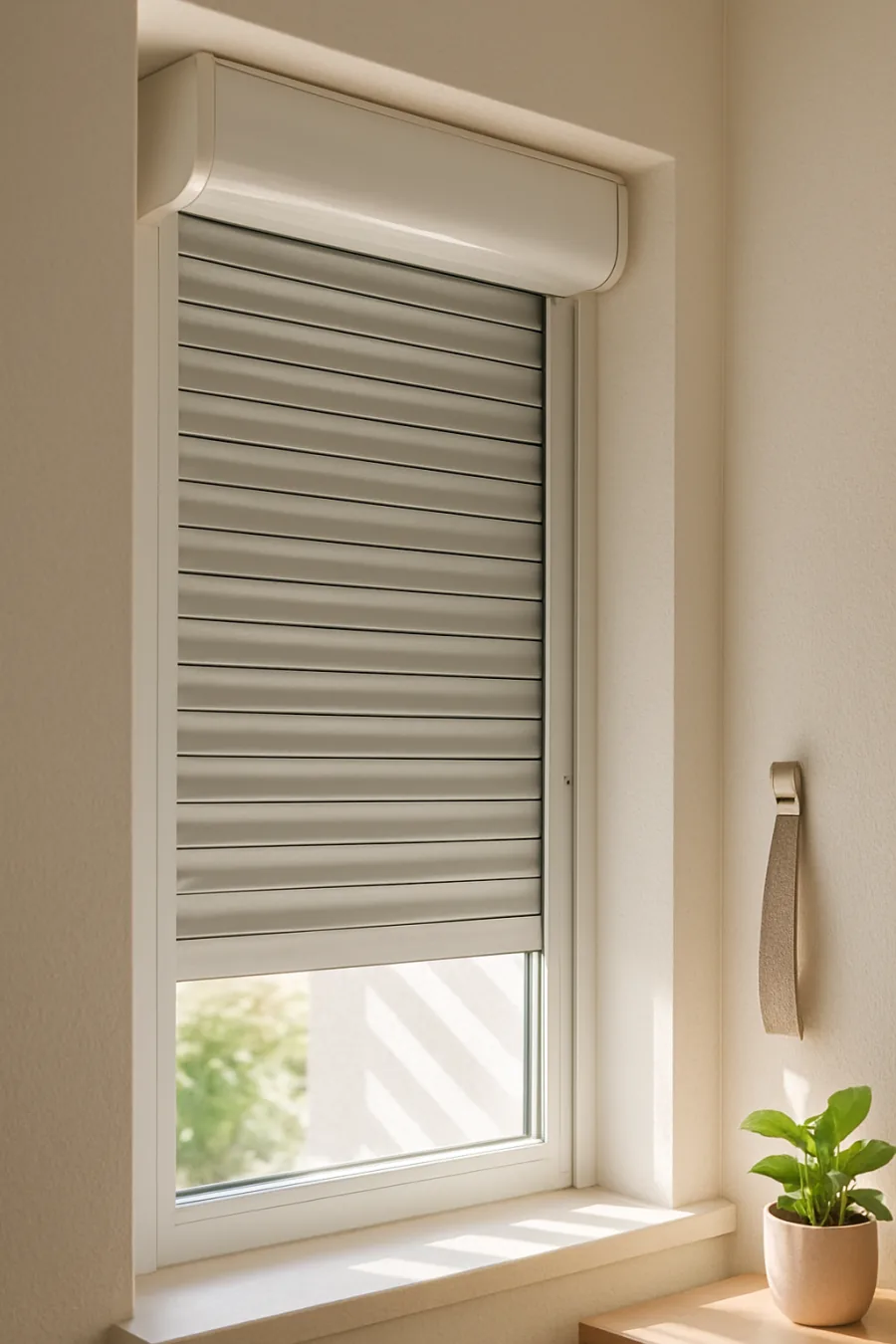

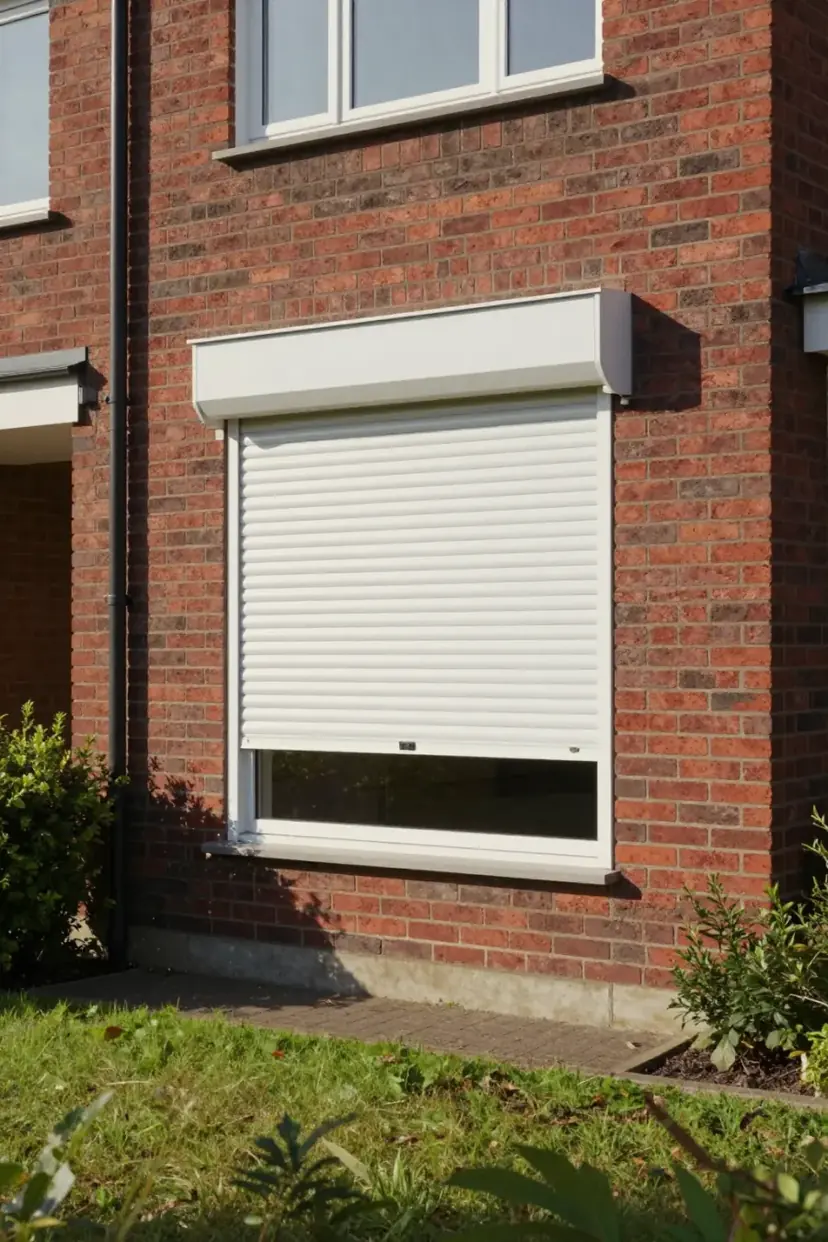


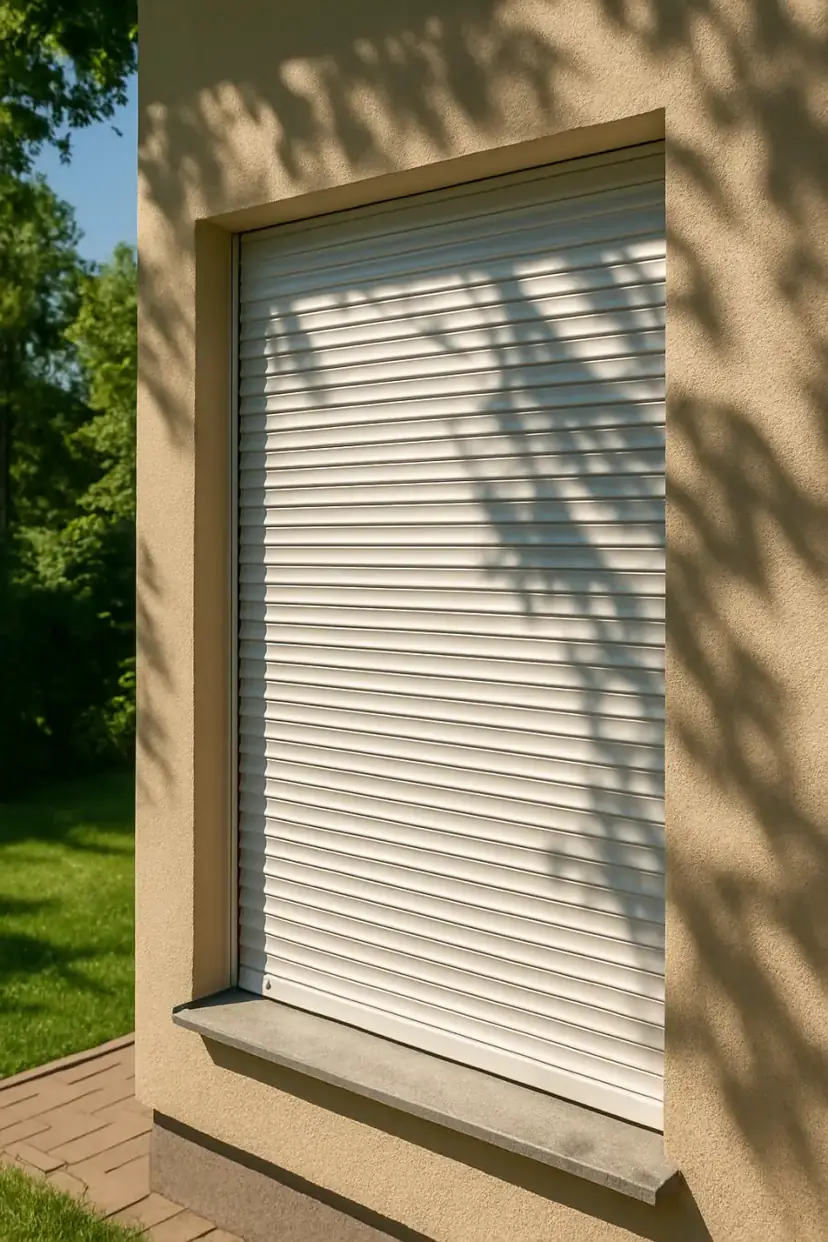


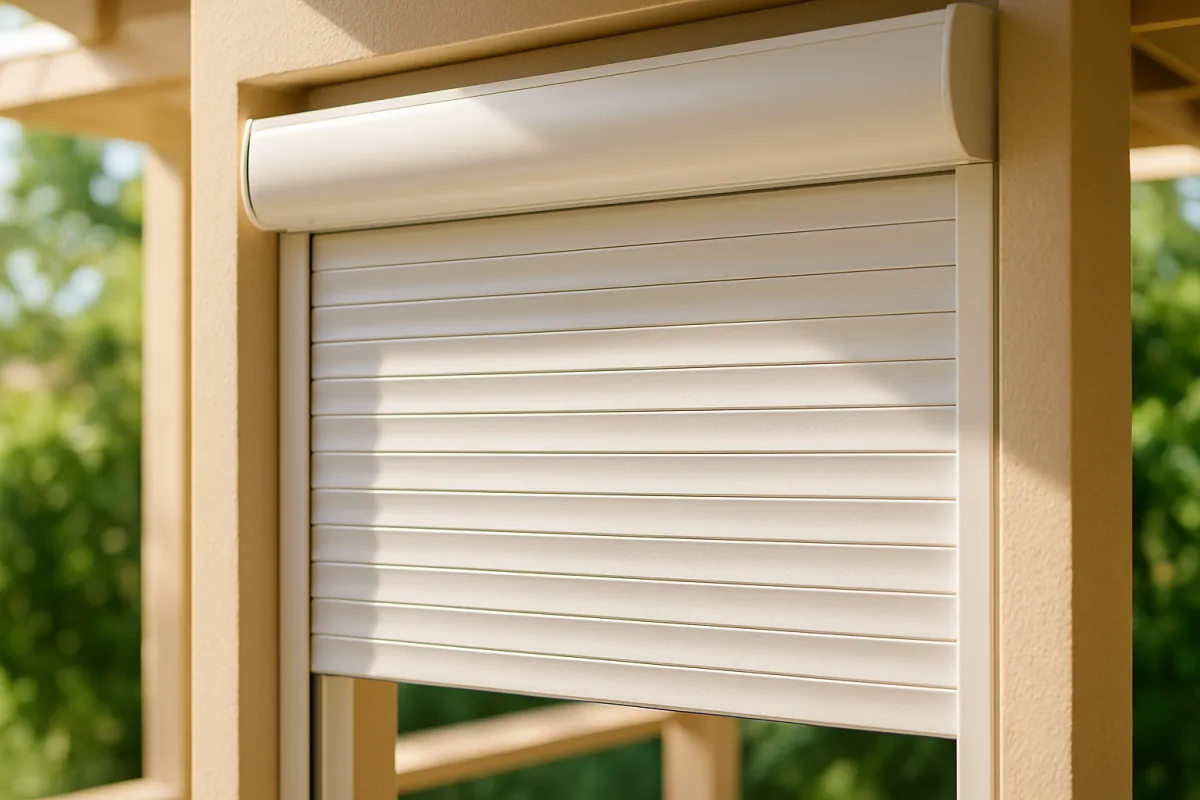











Roller shutters for a gazebo are fitted on the openings between the posts: the housing box and guide rails are fixed to the load-bearing frame, not to the cladding. A transparent profile keeps the light and the view, a solid foam-filled curtain cuts noise and dust, and extruded aluminium provides security. We quote by the area of the openings and make to measure in Almaty.
What gazebo openings are closed with: transparent, solid and security blinds
The choice here is not between “pretty” and “not pretty”, but between what matters more in your gazebo: light and a view, or quiet and security. Roller shutters for a gazebo are not windows in a wall, but a curtain that lowers between the posts and closes the opening completely. Different profiles can be used under one frame, and that is most often what people do.
Transparent roller shutters for a gazebo are assembled from polycarbonate profile. Such a transparent profile lets light through, scattering it slightly, so in the daytime it is bright inside, and from outside you can see the outlines, but not the furnishings. A solid curtain works differently: a roll-formed foam-filled profile lets no light through at all, but it cuts street noise and holds heat better. Extruded aluminium is the stiffest option: a closed curtain can't be pried open with a crowbar. A perforated profile sits in the middle: air passes through it, but prying eyes don't.
Transparent blind
A transparent profile holds back wind, dust and prying eyes, but keeps the gazebo bright. You can see the yard and hear what is going on in the plot. That is why it is usually fitted on the side where you sit in the evening.
What's worth understanding in advance: a transparent curtain protects from wind and dust, not from the summer sun. If the side faces south and it gets hot inside by midday, a transparent profile won't solve that — you need a solid one there. During the measurement Jalusso usually looks at which way the openings face and suggests a combination rather than one material for the whole gazebo.
Solid foam-filled curtain
A roll-formed foam-filled profile doesn't let light through: it gets darker inside, but the gazebo is quieter and holds warmth longer. This profile is lightweight, runs quietly and suits openings of medium width.
It's installed on the shaded side and on the side facing the street, where the view isn't the priority. The downside is obvious: there's no point turning the whole gazebo into a solid box — then the whole point of the structure is lost.
Security and perforated curtain
Extruded aluminium is chosen where the gazebo stands unguarded. The profile is heavier than roll-formed, the slat is stiffer, a deadbolt lock is fitted on the opening, and the guide rails are fixed into the load-bearing posts, not into the cladding.
A perforated profile is for stuffy days. A perforated curtain lets air through but doesn't expose the gazebo to view: from outside you see silhouettes, not what's on the table.
| Profile | Light inside | Noise and warmth | Protection | Who it suits |
|---|---|---|---|---|
| Transparent polycarbonate | Lets through | Weakly | Medium | Side facing the yard, where the view matters |
| Roll-formed foam-filled | Doesn't let through | Holds | Medium | Shaded side and side facing the street |
| Extruded aluminium | Doesn't let through | Holds | High | Gazebo without security |
| Perforated | Muffled | Weakly | Medium | A gazebo that's stuffy in summer |
A transparent polycarbonate profile lets light through and keeps the view, while a solid foam-filled curtain doesn't let light through but blocks street noise. This is the main difference, and everything else follows from it: which side of the gazebo gets covered with what, and how many openings are even worth touching.
Which side of the gazebo to cover with what
There's no universal answer: the curtain is chosen by side. Transparent roller shutters for a gazebo go where you need the view and light, a solid foam-filled curtain goes against wind and noise. The difference between the sides of one structure can be bigger than between two different gazebos.
Driving around a plot with four identical openings means deciding in advance that all four work the same way. On an open plot that's not the case: wind comes from one side, noise from another, and the view opens up from a third. During a measurement we always walk around the gazebo and look at what's where. In my view, this matters more than choosing the profile — you can buy an expensive curtain and put it in the wrong place.
Now, side by side.
- Side facing the yard. Transparent profile: light and the view of the plot are preserved, and the openings are closed off from dust and from being seen from the street.
- Side facing the street and the wind. Solid foam-filled or security curtain: it blocks noise and doesn't let wind through.
- Sunny side. Here what matters more isn't overheating but light inside: a transparent curtain keeps the gazebo bright with the openings closed.
Protection from the sun is handled by a solid curtain, not by a transparent profile. Transparent polycarbonate lets light through — that's its whole point, and you shouldn't expect shade from it. If the gazebo gets baking hot in summer, it makes more sense to put a solid foam-filled curtain on the sunny side and move the transparent curtain to where the view matters. A solid curtain also blocks street noise: a gazebo by the road gets quieter.
Whether to close all four sides is a question not of beauty but of how you use the gazebo. If you need a clear view through, leave one or two sides open and close the windy and street-facing ones. A fully closed gazebo loses the point of an open structure, but furniture and the grill stay inside when you leave. Combining transparent and solid curtains by side is both possible and worth doing: one frame, different curtains.
And one more thing about dust. Poplar fluff and dust in Almaty get into the openings on the side the wind blows from, so it's the windy side that gets closed with a dense curtain — it takes the main load and protects the inner openings.
Wind on an open plot means closing the windy side with a solid curtain, while the side facing the yard is left transparent for light and the view.
Where the housing box and guide rails go in a gazebo
The guide rails go into the gazebo's load-bearing posts or into the opening's frame, not into the cladding. This is the main condition: the curtain is held by the structure's frame, so it can't be bent outward or forced open from the street. The roller shutter housing box is fixed to the same load-bearing posts — above the opening, surface-mounted. A gazebo is a lightweight structure, and the whole load from the curtain is distributed across its structural frame, not across the decorative finish.
A surface-mounted housing box doesn't require opening up the cladding of a finished gazebo. We mount it over the opening, onto the posts or the frame, and don't touch the cladding. There's also a built-in option, but that's planned together with the structure, and on a finished gazebo almost always only surface-mounted is possible — and that's fine, it takes up minimal height, only its own cross-section.
Can you do without drilling into the posts and cladding? Yes, installation without drilling is possible. The housing box and guide rails are fixed to the existing posts or the opening's frame without opening up the cladding. But the measurement determines what exactly can be fixed to in a particular structure: it's what decides which fastener will hold the load of the curtain.
Wooden posts
For wooden posts, fasteners are chosen that hold the load of the curtain: a wood screw works differently here than an anchor in metal. The cladding isn't opened up — the fixing goes into the post itself. If there's a void under the cladding, the measurer will see it and suggest a solution.
Metal posts and a wrought-iron gazebo
For a wrought-iron or metal gazebo, roller shutters in Almaty are installed using embedded supports: anchors go into the metal, not wood fasteners. Wrought-iron posts can be thin and decorative — in that case we check whether there's a load-bearing element that can take the load. The measurer makes the call: he looks at what's behind the cladding and only then names the fixing method.
What we check during the measurement
The measurer arrives with samples, checks the posts and the frames of the openings, and calculates the cost on the spot — free within the city. He looks at the spacing of the posts, how level the frame is, and where the housing box will go. Without that conversation there's no point talking about fasteners: the same gazebo can be clad differently on the outside.
The guide rails go into the load-bearing posts of the gazebo, not into the cladding, so the blind can't be bent outwards or forced open.
Roller shutters, soft windows or glazing: a comparison by task
Roller shutters differ from soft windows and glazing in how they close the opening and what happens to the curtain when the opening is opened. Soft windows made of PVC film are stretched over a frame or a frame structure and taken off by hand; gazebo glazing is installed once and stays in place permanently; a transparent profile rolls up into the housing box in seconds, and the opening stays free. For a gazebo that is opened and closed every day, this difference matters more than the material.
Soft windows are inferior to roller shutters in rigidity and protection against break-ins. The film holds back wind, dust and slanting rain, but it is easy to cut or bend back — it does not create a rigid barrier. Roller shutters for a gazebo made of extruded aluminium work differently: the closed curtain cannot be forced open with a crowbar, and a deadbolt lock is fitted to the opening. If the gazebo stands unguarded and furniture and a mangal are left inside, this difference becomes the main one. And in winter the film stiffens — you have to take it off in the cold.
Glazing differs from roller shutters in that it does not roll up into the housing box. Frames with glass are mounted on the openings once — and the gazebo turns into a closed room with permanent frames. There is more light and visibility than with a solid curtain, but you can no longer “open up the gazebo”: in summer you will have to swing the sashes open rather than roll the curtain up.
| Task | Soft windows made of PVC film | Gazebo glazing | Transparent profile | Extruded aluminium |
|---|---|---|---|---|
| Light and visibility inside | Yes | Yes | Yes | No |
| Wind, dust, prying eyes | Holds back partially | Holds | Holds | Holds |
| Burglary protection | No | Medium | Medium | High |
| The opening opens fully | Taken off by hand | No | Yes, into the housing box | Yes, into the housing box |
| Seasonal removal for the winter | Yes | No | No | No |
What to choose depends on what you do with the gazebo during the day. Lunch under the roof with the openings raised, and closed at night and while you are away? Then transparent roller shutters for the gazebo will suit you: they keep the light while closed and do not get in the way when raised. If the gazebo is meant to be a warm room all year round, it makes more sense to look at glazing — but that is a different structure, not a summer gazebo.
Soft windows are inferior to roller shutters in rigidity and protection against break-ins, while glazing differs in that it does not roll up into the housing box.
How much it costs to close a gazebo completely
The price of transparent roller shutters for a gazebo is calculated by the area of the openings, not by the number of sashes: a transparent polycarbonate profile starts from 42,000 ₸ per m², a solid foam-filled curtain — from 17,500 ₸ per m². The difference is noticeable, so a single profile is rarely used on all sides of a gazebo.
The price of a set is made up of the type of profile, the area of the openings, the type of housing box, the controls and the locks. It is these five things that move the total, not the number of openings by itself: three narrow openings on the windy side will cost less than two wide ones with an electric motor and a deadbolt lock.
Prices by item
We calculate by price list items, each with its own manufacturing time.
| Profile | Price | Manufacturing time |
|---|---|---|
| Roller shutters for windows, roll-formed foam-filled profile | from 17,500 ₸/m² | 10–14 days |
| Security roller shutters, extruded aluminium | from 24,900 ₸/m² | 12–16 days |
| Perforated roller shutters | from 27,800 ₸/m² | 12–16 days |
| Transparent roller shutters, polycarbonate profile with UV protection | from 42,000 ₸/m² | 14–18 days |
| Motorised roller shutters | from 35,000 ₸/m² | 14–18 days |
The electric motor in the table is a surcharge for the controls, not a separate profile: the motor, remote control and emergency lift are fitted to the blind you chose for the task. Controls in the calculator are also counted as a coefficient: mechanical is the base, chain is a little more expensive, electric motor is noticeably more expensive, electric with remote control is the top tier. Installation will cost 4,500 ₸ per unit, but if the order total reaches 150,000 ₸, we install at no extra charge.
How the total is calculated by openings
The area of each opening is multiplied by the price of the profile, added up by side of the gazebo, and the controls and locks are added. If the gazebo is closed not completely but partially, the total is put together only for the sides you need — and this is a normal scenario, not a compromise.
Let's look at an example. A gazebo where the side facing the yard is closed with a transparent profile, and the side facing the street with a foam-filled one. We multiply the area of each side by its own price, add them up, and add installation and a deadbolt lock on the solid side. The result depends on how many square metres there are in reality.
The exact total for several openings is calculated on site by our measurer. Measurement and consultation are free, the measurer comes with samples and calculates the cost for your openings — it is honestly impossible to give a figure over the phone, because the area and type of housing box can only be seen on site.
Controlling the openings: from chain to remote control
The type of controls is chosen by the weight of the curtain and the width of the opening, not out of habit. The wider the opening and the heavier the profile, the greater the load on the mechanism, and a light chain can no longer cope. Roller shutters for a gazebo have few options, and each one dictates its own conditions for the frame.
- Mechanical controls are the base option, with a coefficient of 1. Suitable for narrow openings with a light blind: raised by hand.
- Chain — coefficient 1.06. Convenient on medium-width openings where the blind is not too heavy. It is not fitted to massive extruded aluminium: a chain will not pull that.
- Electric motor — coefficient 1.85, with remote control — 2.1. Fitted when there are several openings or the blind is hard to reach.
- Electric motor with remote control and emergency lift — the same blind weight, but controlled with one button. If the power goes out, the blind is raised by hand with a crank handle.
Let's sort out a common question: do you need electrics at the gazebo? Yes, the motor needs a power line to the housing box. If there is no power at the gazebo on the plot, it will have to be run — or you stay with a chain. And the electrics are laid before the housing box is installed; no one will chase grooves into a finished frame afterwards.
Can all the openings be put on one remote control? Yes. When the controls are the same, the openings are combined into one group and raised with one button. The motor can also be set with a schedule and a sun sensor: the blind lowers and raises by time on its own. In my opinion, for a gazebo with four openings this is not a luxury but a saving of time every morning and evening.
A heavy blind is not fitted with belt controls — the mechanism is simply not designed for that load. That is why the decision on controls is made together with the choice of profile: first the weight and width of the blind are looked at, then the motor is selected. An electric motor requires an emergency manual lift in case the power goes out.
A concrete example from practice: on a gazebo with a high opening we fitted a motor with an emergency lift, because the top of the blind cannot be reached by hand, and the owners leave and keep the gazebo closed. If we had gone with a chain, every evening they would have had to reach above human height. The measurer calculates this option on site: he sees the width of the opening and says what will suit.
Mangal, smoke and closed openings
Closed openings do not get in the way of cooking if the curtain is chosen for a gazebo with a mangal or kazan. The only question is when exactly you lower the roller shutters for the gazebo: during cooking or after it.
Heat and smoke rise upwards and escape through the top gap and the roof ventilation while the openings are open. As soon as the blind is lowered, the smoke has nowhere to go — it stays inside and settles on the slats, the furniture and the ceiling. And soot is harder to remove from the blind than ordinary dust: it eats into the surface of the profile. That is why a mangal inside the gazebo limits the use of a lowered blind — we do not advise cooking with the openings closed. Lower the blind after the coals have burned down and the smoke has cleared.
Is it stuffy in summer? It depends on the profile. A solid foam-filled blind does not let air through: on a hot day it gets heavy inside the gazebo, especially if there is no wind outside. A perforated profile lets air through but does not open the gazebo to prying eyes — the openings are closed, and the draft inside does not stagnate. From the outside you can see silhouettes, but not the interior. In my opinion, for a gazebo where a kazan stands in summer, perforation is more honest than a solid blind.
- Mangal and kazan — with the openings open; the blind is lowered once the smoke has cleared.
- Summer stuffiness — a perforated profile instead of a solid foam-filled one.
- Soot on the blind — it stays longer than ordinary dust, wipe it off carefully.
Mosquitoes and midges are a separate story. Neither a transparent profile nor perforation holds insects back on its own: the gaps between the slats and along the edges of the guide rails remain passable for small midges. Openings closed with a blind reduce the number of mosquitoes inside compared to an open gazebo, but they do not make it fully sealed.
A perforated profile lets air through but does not open the gazebo to prying eyes, so a gazebo with a mangal does not become stuffy.
Wind, dust, poplar fluff and winter at the dacha
Wind and dust in Almaty dictate which curtain to use to close the gazebo: on an open plot where the wind roams between buildings, transparent roller shutters for the gazebo are installed taking into account that the curtain must withstand pressure in the closed position. A transparent polycarbonate profile closes the opening from dust and wind, but a light slat resists constant pressure worse than rigid extruded aluminium.
If the plot is blown through from the side of a field or the street, Jalusso advises putting a solid foam-filled or protective blind on the windy side, and leaving the transparent one for the side facing the yard, where there is less wind. Poplar fluff and dust in Almaty settle on the blind in a thin layer, and this layer requires care regardless of the profile type.
Winter at the dacha is a separate question. A seasonal dacha leaves the openings closed while you are away: the blind is lowered, the gazebo is looked after, and the furniture and mangal inside are not visible from the street. But you should not keep the blind lowered all winter. Moisture accumulates between the slats, and in frost it turns to ice — then the blind freezes and may jam when raised.
What to do by season:
- Before the frosts, raise the blind and leave the openings open if no one uses the gazebo in winter.
- Clean the guide rails of snow and ice — a clogged guide profile prevents the blind from moving evenly.
- If the gazebo is used in winter, remove moisture from the slats before closing so they do not freeze.
- Inspect the blind after strong wind: a skewed slat is immediately visible from the way the blind moves along the guide rails.
The transparent blind should be washed with a soft cloth and water, without abrasives or stiff brushes: scratches on polycarbonate stay forever and spoil the view. Dust and fluff are washed off from top to bottom, without rubbing across the surface.
During the measurement we look at which side of the plot is open to the wind and where more dust settles — this determines which blind to install on each side of the gazebo.
Poplar fluff and dust settle on the blind, requiring care, and at a seasonal dacha the openings are left closed while you are away.
How ordering works in Almaty and the suburbs
Measurement is essential: without it you cannot understand what to attach the housing box and guide rails to on a specific gazebo. The measurer arrives with profile samples, checks the posts and the framing of the openings, calculates the cost on site — and only after that does the order go to the workshop. Measurement and consultation are always free.
A short answer about trips out of town: we travel to the suburbs of Almaty — Kaskelen, Talgar, Issyk, Kapshagay — the cost of the trip depends on the distance and is quoted before the visit, not after the fact. Within the city, measurement and delivery are free.
Then the order proceeds step by step:
- You write on WhatsApp, describe the gazebo and send photos of the openings.
- The measurer arrives with samples, checks the posts and framing, and calculates the amount on site.
- The order goes to the workshop: the blind and housing box are made to your openings, we do not have ready-made products in stock.
- Installation — 4,500 ₸ per unit. Free for orders from 150,000 ₸.
Installation on a finished gazebo is almost always surface-mounted: the housing box is placed above the opening on the posts or framing, and the cladding is not opened up. Transparent roller shutters for the gazebo are no different from solid ones at this stage in terms of installation method — the only difference is the curtain.
Timelines by item
The timeline depends on which curtain and control are chosen. Roller shutters for windows — 10–14 days, protective and perforated — 12–16 days, transparent and with electric motor — 14–18 days. There is no single figure for the whole gazebo: we calculate by order items.
Warranty and service
We count the warranty period from the signed acceptance report: 1 year for roller shutter installation, 3 years for the mechanism. Roller shutters for a gazebo that fail under warranty are repaired free of charge — the work takes 5 working days. The warranty does not cover water and mechanical damage, or self-reinstallation. Once the warranty has expired, you can still call us — we will tighten, adjust, and install a new cord or chain.
Gazebo under construction
If the gazebo is still being built, roller shutters for the gazebo in Almaty are planned in advance — this is cheaper than redoing the framing later. It is worth providing even posts for the guide rails and space for the housing box above the opening right away. Come for a measurement before you close up the framing: the measurer will tell you what to reinforce for the fasteners.
How to check a contractor before ordering? We work directly from the workshop, not through intermediaries, and during the measurement we show profile samples — you can touch and compare them before signing.
Conclusion
Roller shutters for a gazebo in Almaty solve one task: the openings between the posts are closed, while the gazebo stays bright and suitable for relaxing. The curtain is chosen for the side, not for taste.
A transparent polycarbonate profile lets in light and keeps the view, holds back wind, dust and prying eyes. A solid foam-filled curtain does not let light through, but it blocks street noise and holds heat better. Extruded aluminium cannot be pried open with a crowbar — it is chosen for a gazebo without security. A perforated profile lets air through but does not open the gazebo to prying eyes, so it suits places where it is stuffy in summer with solid roller shutters.
The guide rails go into the load-bearing posts or the framing of the opening, not into the cladding: the blind cannot be bent outward or pried open. On a finished gazebo, a surface-mounted housing box is almost always used, and the cladding is not opened up.
The price is made up of the profile type, the area of the openings, the type of housing box, control and locks, not the number of openings. A solid foam-filled curtain — from 17,500 ₸ per m², protective roller shutters made of extruded aluminium — from 24,900 ₸ per m², perforated — from 27,800 ₸ per m², a transparent polycarbonate profile — from 42,000 ₸ per m², a set with electric motor — from 35,000 ₸ per m². Timelines depend on the item: a transparent profile and electric motor take 14–18 days, protective and perforated — 12–16 days.
There is one practical recommendation: start with a measurement. The measurer arrives with samples, checks the posts and the framing of the openings and calculates the cost on site — within the city this is free. For Kaskelen, Talgar, Issyk and Kapshagay, a visit is possible, its cost is quoted before the visit, and we do not charge for installation on orders from 150,000 ₸.
Transparent roller shutters for the gazebo remain the option with the most expensive curtain — and the brightest of all.

