




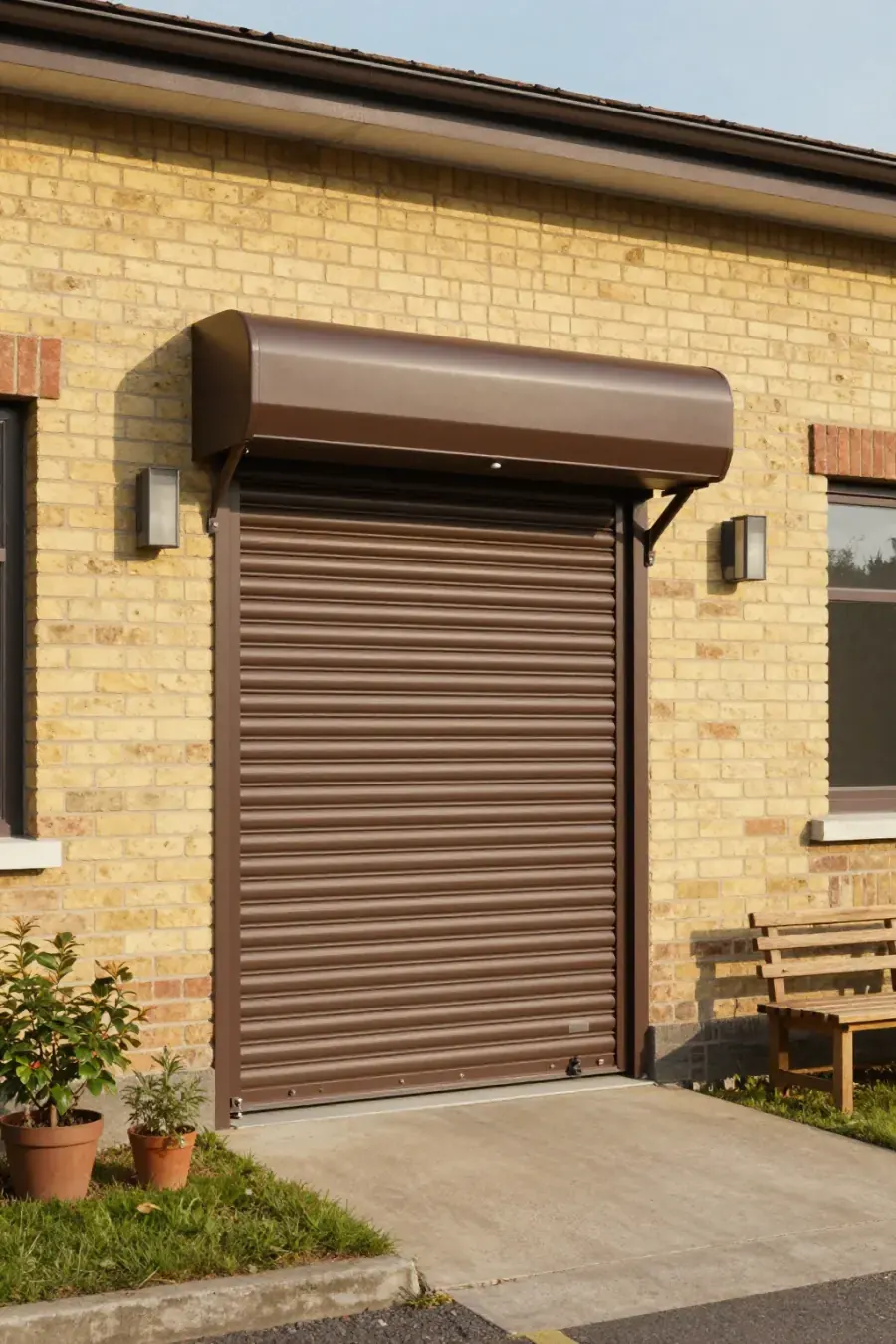

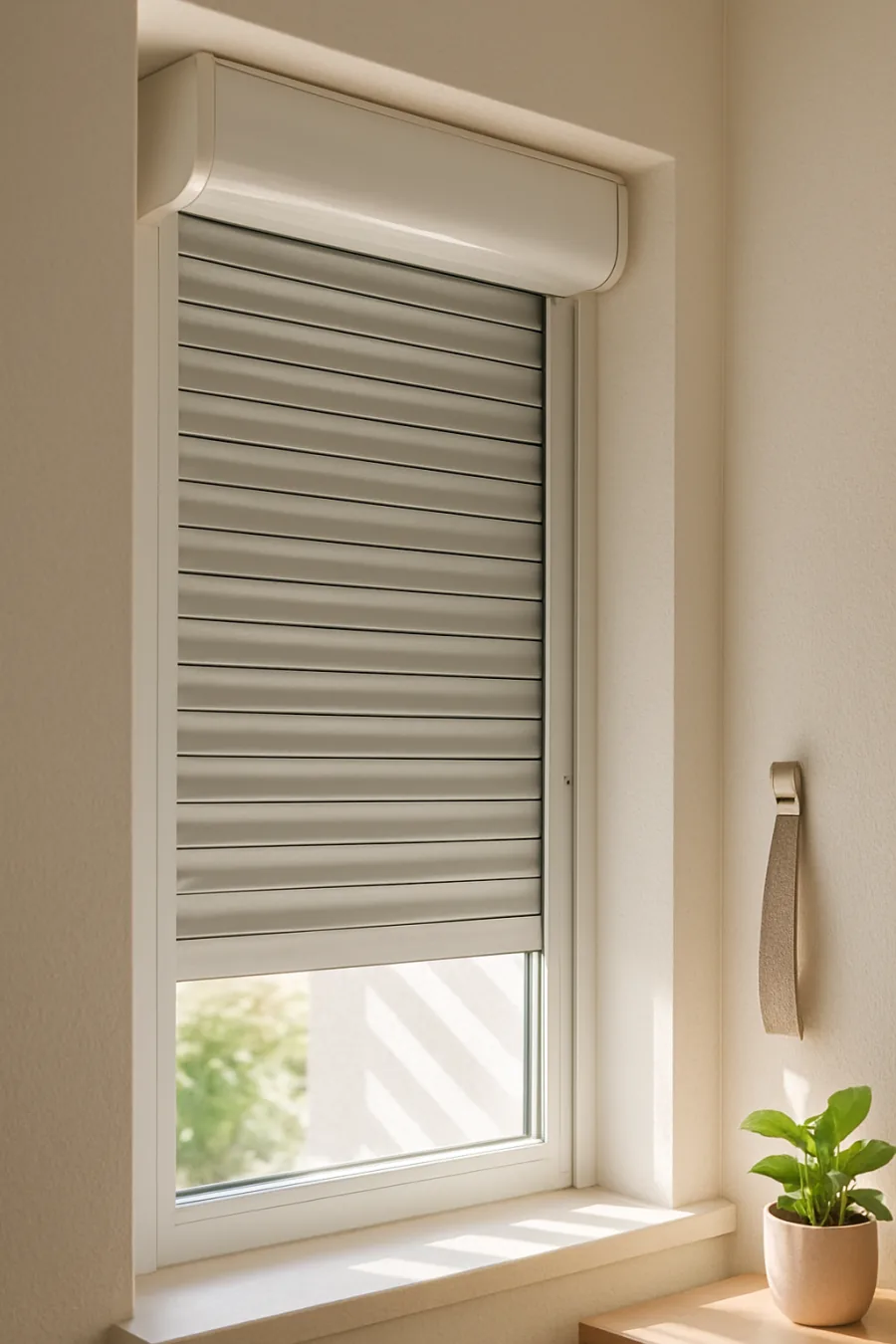

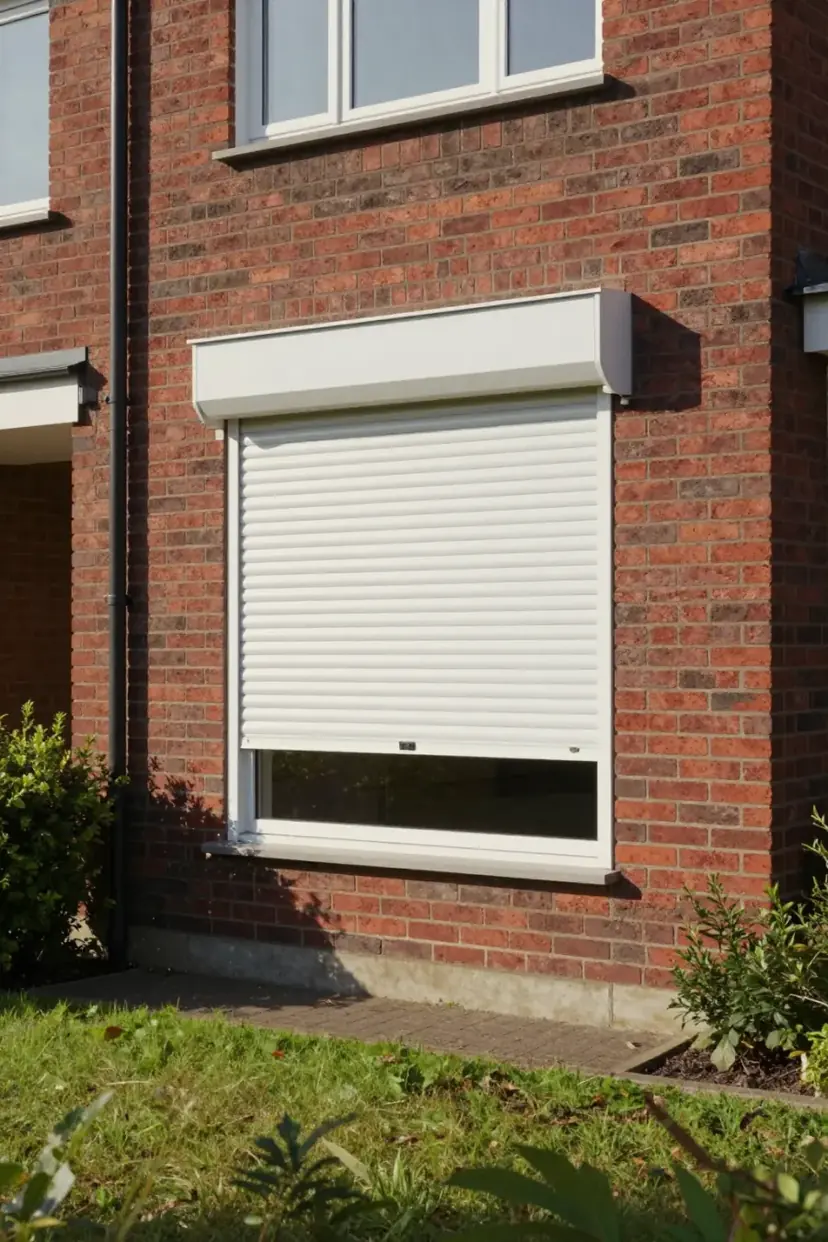


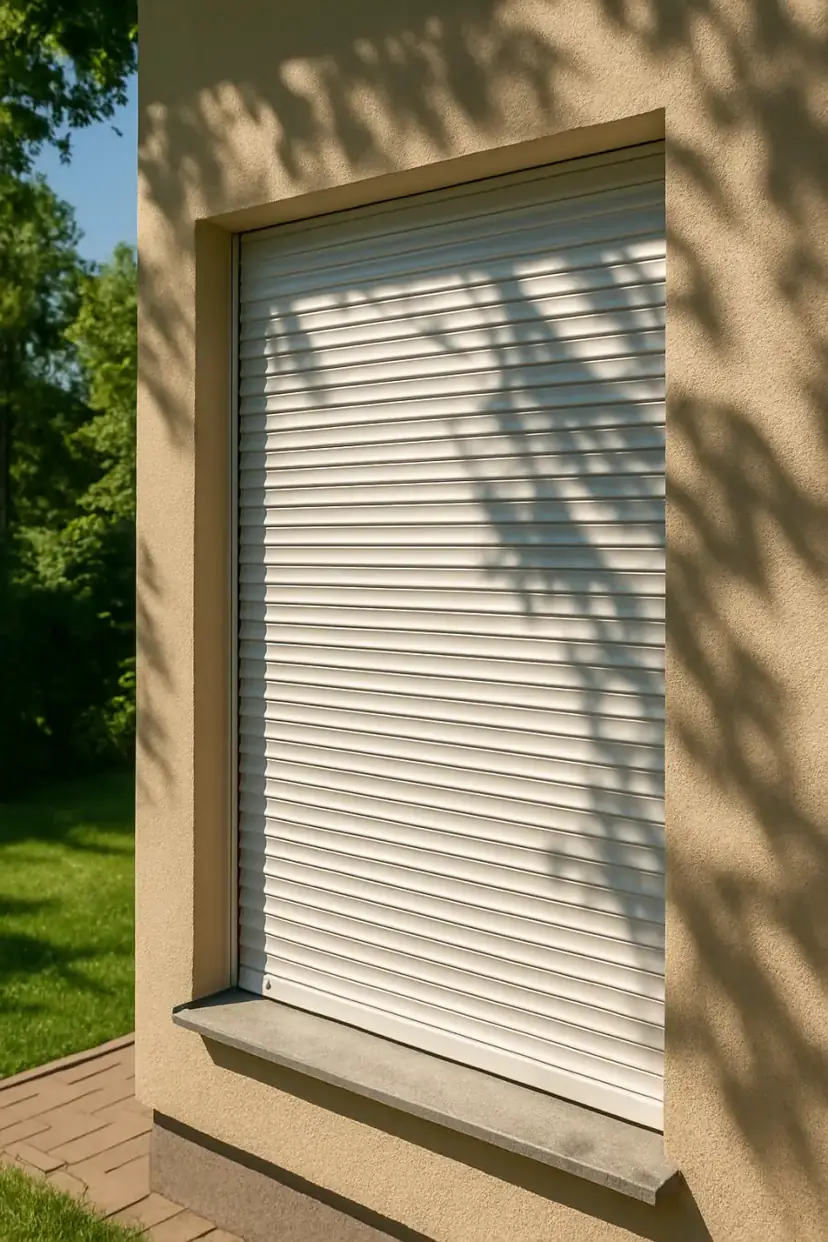











We make roller shutters for terraces and verandas to measurement: the curtain goes into the housing box above the opening and closes an open or glazed terrace. A transparent profile holds back wind, dust and prying eyes, while a solid foam-filled curtain closes the opening completely and takes the edge off street noise. Price — from 17,500 ₸/m².
Transparent or solid curtain: which one solves the problem on a terrace
We make roller shutters for terraces and verandas in Almaty to measure, and the first question at the measurement is not about colour or price, but about what task the curtain needs to solve. The choice here is not about “better or worse.” A transparent polycarbonate profile lets light through and keeps the view of the street, while a solid foam-filled curtain closes the opening completely. We install both — the difference is only in what you want during the day and what you want at night.
Transparent roller shutters for a veranda are most often chosen for one reason: you don’t want to lose the light. A curtain made of polycarbonate profile hides the terrace from prying eyes, but inside it stays bright, and you can see what’s happening in the yard. From the street, you can’t make out what’s on your table or who’s sitting in the chair. Just a silhouette, at most.
What a transparent profile does not do is block the sun and the heat build-up from glazing. Many people confuse this point: if the veranda is glazed and turns into a greenhouse in summer, a transparent curtain won’t fix the greenhouse. It protects from wind, dust and prying eyes, not from heat.
A solid foam-filled curtain behaves the opposite way. It closes the opening completely, and with it go prying eyes, the sun and some of the street noise — a thin aluminium strip with foam inside works quieter than solid metal.
What is visible from the street and what is visible from the terrace
From the street, a closed veranda with a transparent curtain reads as dark glass: the outlines of objects can be guessed, but there are no details. From the terrace, the picture is the opposite — the light stays, the yard is visible, and the day doesn’t turn into evening. With a solid curtain, you get neither: both outside and inside, it’s a solid plane.
When different curtains are installed on one terrace
A terrace doesn’t always follow one scenario. The outer side facing the street often works for the view during the day, while the side at the exit to the yard needs solid closure at night. And this isn’t a compromise, but normal practice: at the measurement, we look at which side the sun is on, where the passage is and what’s visible from the neighbours, and we select the curtain for each part separately.
You can close a terrace with roller shutters instead of glazing — the structure fits onto an existing opening and doesn’t require redoing the facade. But it’s not a replacement for glazing in terms of the task: roller shutters close an existing opening, while glazing creates the opening itself.
A transparent curtain lets light through and keeps the view of the street, but doesn’t hold back heat build-up from glazing; a solid foam-filled curtain closes the opening completely and takes on the sun and street noise.
Burglary protection and closing the terrace at night
Roller shutters for a terrace and veranda in Almaty don’t protect against burglary with just any curtain. Transparent roller shutters for a terrace don’t protect against burglary at all. A transparent polycarbonate profile isn’t designed for forced entry — it solves the tasks of sun, dust and privacy. And closing the exit to the street at night is a separate matter and a different profile.
We always separate these two tasks at the measurement, because the client comes with one thought: I’ll install transparent ones and sleep peacefully. A polycarbonate curtain does indeed hide the terrace from prying eyes and holds back wind and dust. But if someone comes up to the opening with a tool, it won’t be a serious barrier. A solid foam-filled curtain solves the other part: the strip with foam inside is lightweight, works quieter, and slightly reduces street noise. Extruded aluminium goes further — it resists being pried with a crowbar. That’s already burglary protection, not just protection from prying eyes. This version is from 24,900 ₸/m², lead time 12–16 days.
What to do if you want both the view of the street during the day and peace of mind at night:
- For a glazed veranda where the view and light matter, Jalusso installs a transparent polycarbonate profile.
- For the exit to the street, which becomes a weak point at night — a solid foam-filled curtain.
- Where burglary protection is specifically needed, extruded aluminium is used.
On one terrace, this can be two different curtains: during the day one side works for light, at night the other closes the exit to the street. This is how it’s done on projects — on a private house terrace, the opening is closed at night, and during the day the curtain is raised.
At night, the exit to the street is closed with a solid foam-filled or extruded curtain — a transparent profile isn’t intended for this.
What is visible from the street at night
When the curtain is lowered, neither the terrace nor what’s behind the glazing is visible from the street. A solid foam-filled curtain blocks both light and view: during the day such a veranda is darker, but in the evening nothing can be seen from outside. A transparent polycarbonate profile keeps the terrace visible from inside, but from the street in the dark it also doesn’t show the interior — a light switch on the veranda matters more than the type of profile.
Where to attach the guide rails if the veranda only has posts
Guide rails for roller shutters on a veranda are attached to a load-bearing wall or to the frame posts — not to insulation and not to the cladding. This isn’t a whim of the Jalusso installers. The curtain moves along the guide rails with force, the wind presses on the area, and all the load goes to the attachment point. An anchor set into insulation or thin cladding comes out of the base together with a piece of material — the structure is simply pried off.
If the veranda has no walls, only posts, the attachment is calculated based on them. The measurer looks at the cross-section of the post and its material: wood, metal — and selects the mounting unit accordingly. Sometimes the posts are thin, and then the guide rail is spread across several points or the post itself is reinforced. This issue can’t be resolved from photos, so we always come to the site.
Our lead measurer Kirill, over nine years on non-standard openings, has seen verandas where a post was held by two screws — and the owner wanted to hang a curtain several metres wide on it. Such an attachment doesn’t pass, and we say so honestly right away, before the order.
Surface-mounted housing box on a finished facade
Surface-mounted installation means the housing box is placed outside above the opening, on an already finished facade. We don’t open up the walls: the finish, insulation and cladding stay intact. This matters when the renovation is already done and no one wants to dismantle the facade for the box.
With this type of installation, the guide rails also go outside — along the wall or along the posts. We don’t touch the opening: the curtain simply goes into the housing box, and only the bottom bar is visible from outside.
A lightweight veranda without a load-bearing wall
A lightweight veranda may have no load-bearing wall at all — only a frame and cladding. In that case, the cassette system is attached to the frame posts, not to the cladding. The difference is fundamental: cladding is decorative, it doesn’t bear load.
Guide rails go into a load-bearing wall or into the frame posts — not into insulation and not into cladding, otherwise the structure is pried off together with the anchor.
What makes up the price of roller shutters for a terrace
The price is made up of four things: the area of the curtain, the type of profile, the type of housing box and the controls. Jalusso calculates roller shutters for a terrace and veranda in Almaty based on these items, not on a single figure per metre. The measurement determines where the housing box and guide rails will go — and from that, it depends which price item suits the opening. Basic roller shutters for windows start from 17,500 ₸/m². Transparent polycarbonate profile — from 42,000 ₸/m². Solid foam-filled and extruded protective curtain cost differently, and substituting one for the other breaks the estimate: they are different products, not one item with a surcharge.
Below are the price items we use to calculate a terrace and veranda. The price is also affected by the geometry of the opening: the wider it is, the more curtain is needed and the stricter the requirements for the housing box.
| Position | Profile | Price | Lead time |
|---|---|---|---|
| Roller shutters for windows | Roll-formed profile, foam-filled | from 17,500 ₸/m² | 10–14 days |
| Security roller shutters | Extruded aluminium | from 24,900 ₸/m² | 12–16 days |
| Perforated roller shutters | Perforated profile | from 27,800 ₸/m² | 12–16 days |
| Motorised roller shutters | Motor, remote control, emergency lift | from 35,000 ₸/m² | 14–18 days |
| Transparent roller shutters | Polycarbonate profile with UV protection | from 42,000 ₸/m² | 14–18 days |
What is included in the price
Made to measure includes the curtain itself, the housing box, the guide rails and the mechanism. The housing box and guide rails are not an accessory but part of the structure, so they appear as separate lines in the quote. That is exactly how the price of transparent roller shutters for a terrace adds up: curtain by area plus the fittings.
Installation is 4,500 ₸ per unit, free for orders from 150,000 ₸. The measurer works out the full amount on site, in front of you — and that same figure goes to the workshop. A nice detail: before the measurement you already know the rough figure, instead of staring at an empty line that says “ask for the price”. The price of transparent roller shutters for a terrace also starts with the curtain area, not with a fixed sum per opening.
How the coefficients work
Chain operation is a multiplier of 1.06 on the base position. Manual operation comes with a coefficient of 1. An electric motor is 1.85. An electric motor with a remote control included is 2.1.
Installation is counted as a separate multiplier. On the wall — 1. On the frame — 1.05. Without drilling — 1.1. Cassette system — 1.28: the housing box covers the curtain on all sides, and that is a different structure, not a surface-mounted option.
The maths is simple. An opening with a transparent polycarbonate profile and an electric motor with a remote control takes a multiplier of 2.1 on the profile price — that is why automation on a terrace adds noticeably to the quote. Measurement comes before manufacturing in the workshop: until the measurer visits, no exact sum exists, because the curtain area has not been measured yet.
The price depends on the curtain area, the type of profile, the type of housing box and the controls — all four are fixed at the measurement.
Wind on an open opening: what the curtain can take
A transparent polycarbonate profile can withstand strong wind, but only if the opening and the fixing are calculated for it. An open terrace opening faces wind load constantly — especially where open field begins behind the house or wind runs along the street. On such a terrace the curtain works like a sail, and the whole load comes not on the slats but on the guide rails and on what they are fixed to. Guide rails are fixed into the frame posts or a load-bearing wall — if you fix them into cladding or insulation, the wind pushes the structure out together with the anchor.
So what determines the permissible curtain width for a terrace? Not the price list and not the wish to close the opening in one piece, but the rigidity of the guide rails, the cross-section of the frame posts and how well the curtain is protected from the direct flow. The wider the span without an intermediate support, the more the curtain moves under a gust. That is why at the measurement the measurer looks not at the area but at the geometry: where the posts stand, whether there is a wall behind them, where the housing box will go. In such cases Jalusso honestly says that one wide span is better split into two curtains — otherwise the shutter will flap and catch on the guide rails. Dust in Almaty adds its share: on an open veranda it settles on the slats and in the groove of the guide rail, and under wind load a clogged groove works worse.
The Almaty climate is sharply continental: hot, sunny summers with dust, cold winters with frost and a temperature swing between day and night. Wind here is not a seasonal accident but a constant factor, so the measurer checks the width of the opening and the fixing of the guide rails on site before manufacturing.
Transparent roller shutters and PVC-film “soft windows” are different products
“Soft windows” are film stretched on straps, while transparent roller shutters are a rigid curtain in a housing box that runs along guide rails. The difference shows not against the light but in the structure: film has neither a housing box nor guide rails, it is held on straps and eyelets, and taking it down means unclipping it and folding it away. A transparent polycarbonate profile does not work like that: it is made up of rigid slats joined into a curtain, and it rests rolled up in the housing box above the opening.
And here is what matters in practice: these two products simply have different purposes. Film protects from wind and slanting rain while you are on the terrace, and it is stretched for the season. Transparent roller shutters for a terrace are about something else: they close and open the opening every day, keep out dust and prying eyes during the day, and go down to the bottom bar at night. Film holds wind on an open opening worse not because it is thinner — it sails, it has no rigid support.
Let us compare by structure and purpose.
| What | “Soft windows” made of PVC film | Transparent roller shutters |
|---|---|---|
| Made of | Film on straps, eyelets | Transparent polycarbonate profile in slats |
| Where the curtain goes | Taken down and folded away | Into the housing box above the opening, along the guide rails |
| Task | To close off wind and rain for the season | To close and open the opening every day |
About yellowing and scratches. A transparent polycarbonate profile darkens at the edges over time in the sun, while film yellows faster and across the whole area — it is soft and goes cloudy when washed if you rub it with a cloth that has sand on it. At the measurement we discuss this separately: where the curtain will stand in direct sun and where in the shade.
“Soft windows” made of PVC film differ from roller shutters by the absence of a housing box and guide rails, so choosing between them by price per metre makes no sense — they are two different products for different purposes.
Roller shutters, glazing or an awning: a comparison by purpose
Roller shutters on a terrace are installed instead of glazing, not on top of it — if the opening is open. These are three different products, and they compete only by purpose, not by structure. Terrace glazing turns an open area into a closed room: frame, glass unit, sashes. An awning covers the opening from above and cuts the sun, but the walls stay open. Roller shutters close the opening with a curtain that runs along guide rails and goes into the housing box.
| Task | Terrace glazing | Awning | Roller shutters |
|---|---|---|---|
| Daylight | Lets it through, but the glass heats up | Lets it through, cuts direct rays | Transparent curtain lets it through, solid curtain darkens |
| Heat | Keeps heat in if the terrace is insulated | Does not keep it in | Solid foam-filled curtain blocks street noise, but does not warm |
| Protection | Sashes lock | Sun only | Solid and extruded — against pressure, transparent — against prying eyes and dust |
Sliding glazing on the terrace is already in place, and you need roller shutters over it? Surface mounting makes this possible: the housing box is installed outside above the opening on the finished facade, we don't cut into the walls, and the finish stays intact. The guide rails run alongside the sashes without getting in the way of opening them. This way the sunny side stops being a problem: the outer curtain takes the heat itself, and the glass doesn't overheat during the day.
Which is cheaper is a question of area and operation, not the type of construction. We price each job individually: an awning gives only shade, glazing gives volume and sashes, roller shutters give a closed opening on a finished facade. At the same time, a roller shutter fits into an already glazed veranda without rework, but glazing can't be fitted into an existing roller shutter opening.
Roller shutters compete with glazing and awnings in terms of purpose, but they don't replace them where a heated room is needed. There are no ready-made products in stock; everything is made to measure: the measurer looks at the opening, the posts and the sashes already in place and says what can realistically be installed.
Operation: chain, spring, electric motor
Roller shutters on a veranda can be automated: the motor is mounted on the curtain and controlled by a remote. But automation isn't justified on every opening, and we say so honestly at the measurement.
Chain operation is familiar to everyone from ordinary windows: you pull the chain — the curtain goes up or down and stops at any position. Cheap, repairable, and unaffected by power cuts. On a low terrace opening this is a workable solution, and it's included in the base coefficient ×1.
The spring mechanism raises the curtain without a chain: you pull the bottom bar — the roller shutter stops at the height you need. The spring is adjusted to the weight of the curtain during installation. This option is chosen for summer kitchens and verandas where the opening is low and a chain would get in the way.
An electric motor and remote are needed when the openings are high and the curtain is heavy. On a terrace with panoramic glazing you can't reach the top by hand. The motor is controlled by a remote and a schedule: the curtain lowers itself in the evening and rises in the morning, and you can connect a sun sensor so it closes during the heat. We link several openings to one remote — exactly how many depends on the motor model, and we work that out at the measurement.
A separate electrical supply to the housing box on the terrace is needed: the motor runs on mains power. The cable is routed to the box, and the outlet is protected from rain and driving rain — the box itself is closed and the connection is sealed. Electrical work is done before the final finish if the veranda is still under construction.
If the power goes out, the curtain on the terrace can be raised by hand: the motor has an emergency output under a removable crank handle. This isn't a backup battery but a manual lift — an important thing for a terrace with a high opening.
A motor with a remote is chosen for high openings where reaching the top is inconvenient; when the power goes out, the curtain is raised by hand through the emergency output under a crank.
Measurement, manufacturing and installation: how an order goes
Measurement for terrace roller shutters is mandatory. We don't have ready-made products in stock: the curtain, housing box and guide rails are made for a specific opening, so first the measurer, then the workshop, then installation. The measurer comes free of charge, with profile samples, and calculates the cost on site.
The process is as follows:
- You message us on WhatsApp, describe the opening and send photos — whether it's an open terrace or a glazed veranda, and what's above the opening: a wall, a beam or nothing.
- The measurer comes with profile samples, checks the geometry of the opening and calculates the cost on site.
- The order goes to the workshop — the curtain is cut and assembled to size.
- Installation: 4,500 ₸ per unit, free installation on orders from 150,000 ₸.
What the measurer checks on site can't be decided from photos. Where the housing box and guide rails will go: into a load-bearing wall, into a beam above the opening or into the frame posts — the fastening depends on this. The cross-section of the posts on a lightweight veranda. The width of the opening, because on an open terrace wind is the main load. And the motor: if the opening is high, the box will need electrical supply, and that too is planned before manufacturing.
We travel to the suburbs of Almaty — Kaskelen, Talgar, Issyk, Kapshagay. We quote the call-out price in advance, before the specialist goes to the site, and it depends on the distance. We price a country-house veranda in Talgar and a terrace in Kaskelen the same as a city job — the only difference is the call-out.
As a rough guide on timelines: roller shutters for windows — 10–14 days, transparent and motorised ones — 14–18 days.
A practical example: a terrace on the sunny side
A typical situation — a glazed veranda on the sunny side plus a summer kitchen behind the same opening. During the day, the glazed part needs to keep the light and the view of the street, while the kitchen, on the contrary, needs the opening closed off from sun and dust. At the measurement we decide where we install a transparent curtain and where a solid foam-filled one, and we price both parts separately. The timelines are different too: transparent items take 14–18 days, solid roller shutters for windows — 10–14 days.
The measurement determines where the housing box and guide rails will go, and only after that does the order go to the workshop.
The Almaty climate and winter on an unheated veranda
If the terrace isn't used in winter, terrace roller shutters are simply left closed for the cold season. The curtain doesn't need to be removed, and the housing box doesn't need to be taken apart. But before the first frosts the mechanism is serviced: the guide rails are cleaned of sand and dust, lubricated, and the travel of the curtain is adjusted. Almaty winters are cold, with frosts and a noticeable temperature difference between day and night, so the curtain freezing to the guide rails is a seasonal issue for any outdoor construction, not a defect of a particular model. Servicing the mechanism before the cold removes most such cases.
How does the Almaty climate affect the choice of curtain? It doesn't become the deciding factor — rather, it sets priorities. Summers here are hot and sunny, with dust, and on an open terrace dust settles on everything: the floor, the furniture, the glazing. A solid foam-filled curtain closes the opening off from dust completely, while a transparent polycarbonate profile holds back wind and dust but lets in light and the view of the street. That's why on the south, sunny side a solid curtain is more often installed, and on the side where the view matters — a transparent one.
Condensation on a closed veranda is a question of the room's ventilation, not the curtain. If the veranda isn't heated and is closed on all sides, warm air from the house with the door open meets a cold surface — moisture settles on the glass or on the slats. But this doesn't happen because of the roller shutters: ice and snow on the outer curtain are a normal seasonal occurrence. Ventilating the veranda itself solves the issue better than any curtain.
A closed curtain affects the heat in the house indirectly. If the terrace adjoins the living room, a closed opening reduces draughts and heat loss through the door and the adjacent glazing, but an outdoor construction isn't full insulation. Moreover, on high openings the difference is more noticeable — and that's where a motor with a remote is chosen more often, because reaching the top by hand is inconvenient.
A short list of what we do before the cold:
- clean the guide rails of sand and dust;
- lubricate the mechanism;
- adjust the travel of the curtain;
- check that the curtain seats evenly in the housing box.
Terrace roller shutters in the Almaty climate are designed for outdoor use all year round, but they require servicing of the mechanism before the cold — and that's the main condition for their normal operation in winter.
Caring for the curtain and the mechanism
Transparent polycarbonate profile does not yellow in the sun the way cheap film does — it has UV protection — but fading and scratches on the curtain are still possible if you wash it with a stiff brush or an abrasive. Wipe it with a soft cloth or sponge, using ordinary water with a little dishwashing detergent. Leave the ammonia glass cleaner for your apartment windows; polycarbonate does not need it. Dust in Almaty settles densely after the wind: if you do not brush it off season after season, the slat goes cloudy from fine scratches. Clean the guide rails with the same cloth — sand in the groove works like sandpaper.
Before the cold weather we service the mechanism. The order is:
- Take the curtain off the guide rails or raise it into the housing box and secure it.
- Clean dust and sand out of the guide rail grooves — with a brush and a vacuum cleaner.
- Lubricate the mechanism and the grooves — apply the lubricant thinly, without excess.
- Check how the curtain moves: it should run evenly, without jerking or skewing.
- Tighten the fasteners if they have loosened over the season.
Servicing the mechanism before the cold weather is not a one-off job but a seasonal habit: winter on an unheated veranda calls for it every year. Doing it once a year is easier than later dealing with curtain that has frozen stuck or jammed.
The guide rails are fixed into the frame posts or a load-bearing wall — not into insulation and not into the cladding. Keep this in mind when you check the fasteners: if an anchor sits in the cladding, no amount of lubricant will save you from skewing.
The mechanism is serviced before the cold weather — cleaned, lubricated, adjusted; after the warranty we come to tighten, adjust, and replace the cord or chain.
Warranty and what it covers
The warranty on terrace roller shutters is 3 years on the mechanism and 1 year on installation, counted from the date the acceptance certificate is signed. The mechanism and installation are covered together: if the curtain was installed skewed or the chain breaks through our fault, it is a warranty case.
How does this work in practice? When it comes to a warranty on roller shutters, we do not charge for the work, and the timeframe is up to five working days. We come, sort it out and get it done.
But the warranty is not indefinite and not all-encompassing. Mechanical damage, reinstallation on your own, water and natural fading of the fabric are not covered. The list is short, and it is honest: if the curtain was dented during a move or you took it down and put it back up yourself, that is no longer about a manufacturing defect.
And after the warranty we do not disappear. We come to tighten, adjust, and replace the cord or chain — the mechanism needs attention over time, and that is normal.
The warranty on the mechanism and installation is 3 years and 1 year respectively, and a warranty case is resolved free of charge within 5 working days.
FAQ
Below are the things we are asked most often after someone has worked out how transparent curtain differs from solid curtain. These questions do not repeat the eight from the services page but go into the same topics in more detail.
Can roller shutters be fitted to a terrace if the opening is non-standard — arched or slanted? Yes, we make everything to size. The measurer takes the geometry of the opening, because it determines where the guide rails will sit and what size the housing box needs to be. An opening like that cannot be measured from photos.
Is separate wiring to the housing box on the terrace needed, and how is it protected from rain? It is needed if you choose an electric motor and remote control. The measurer plans the power point and the cable entry in advance so that the cable does not have to be run after installation. The outdoor housing box is closed, but we do not leave open terminals outside.
How many terrace openings can be put on one remote control? Several — the drives are programmed into one remote control, and the schedule is set on it as well. The exact number of channels depends on the drive model, which is selected according to the weight of the curtain.
How do you know the frame posts will hold the fastening? The guide rails go into the frame posts or a load-bearing wall, but not into the cladding and not into insulation. The measurer checks the cross-section of the posts on site and says whether reinforcements are needed. This is a question that can only be settled by an actual inspection.
Do you travel to dachas in the suburbs of Almaty? Yes, we travel to Kaskelen, Talgar, Issyk and Kapshagay. We quote the call-out price in advance — it is determined by how far from Almaty the property with the terrace or veranda is. Measurement and consultation are free.
Can different curtains be installed on one terrace — transparent on one side, solid on the other? Yes, and it is often sensible. Transparent curtain handles daytime privacy and keeps the view outside, but not protection at night. Different curtains on different sides cover the daytime and nighttime needs of one terrace.
What should be done about a tall terrace opening? This calls for an electric motor and remote control: you cannot reach the top by hand. The drive has an emergency output for a crank handle, so when the power goes out the curtain can be raised by hand. A spring on a tall sash does not solve the problem.
What to do about a tall terrace opening
A tall opening is first of all about control, not about the profile. The heavier the curtain, the more important the drive and the reserve capacity of the mechanism.
Fixing to a beam instead of a wall
If there is only a beam above the opening, the housing box is mounted on it. The fastening is thought through during measurement: the measurer checks how the beam is connected to the frame and what load it will take. There is no ready answer for every beam — the decision is made on site.
We do not keep ready-made products in stock: any terrace roller shutters are made to measure for a specific opening.
Conclusion
Roller shutters for a terrace or veranda in Almaty are a made-to-measure structure, not a ready-made product from a shop. We assemble the curtain for a specific opening at our own production facility in Almaty, and this determines almost everything: the lead times, the price, and how the mechanism will behave after a season.
The main thing to take away from this article is that transparent and solid curtain solve different problems. Transparent polycarbonate profile keeps the light and the view outside while hiding the terrace from prying eyes. Solid foam-filled curtain closes the opening completely and takes on the sun and street noise. On one veranda these two curtains can stand together: transparent on the side with the view, solid on the way out to the garden, which needs to be closed at night.
The second point, which is most often confused. Transparent profile is not designed to withstand forced entry — it is about sun, dust and privacy. If the way out to the street should stop being a weak point, a solid foam-filled or extruded curtain is installed for the night. Extruded aluminium resists being pried with a crowbar, polycarbonate does not.
The third conclusion concerns installation. The guide rails are fixed into a load-bearing wall or the frame posts — not into insulation and not into the cladding. Otherwise the structure is pried off together with the anchor. A lightweight veranda may have no load-bearing wall at all, and then the fastening scheme is calculated based on the posts.
The price is made up of the area of the curtain, the type of profile, the type of housing box and the controls. Basic roller shutters for windows are from 17,500 ₸ per square metre, transparent polycarbonate profile from 42,000 ₸ per square metre, a set with an electric motor and remote control from 35,000 ₸ per square metre. Installation costs 4,500 ₸ per item, but if the order total reaches 150,000 ₸, we carry out the installation free of charge.
The practical recommendation is simple. Before you write to us, photograph the opening and the posts of the veranda and send the pictures via WhatsApp. The measurer will then arrive with suitable profile samples and tell you right away where the housing box and guide rails will sit — instead of working that out on site.

