









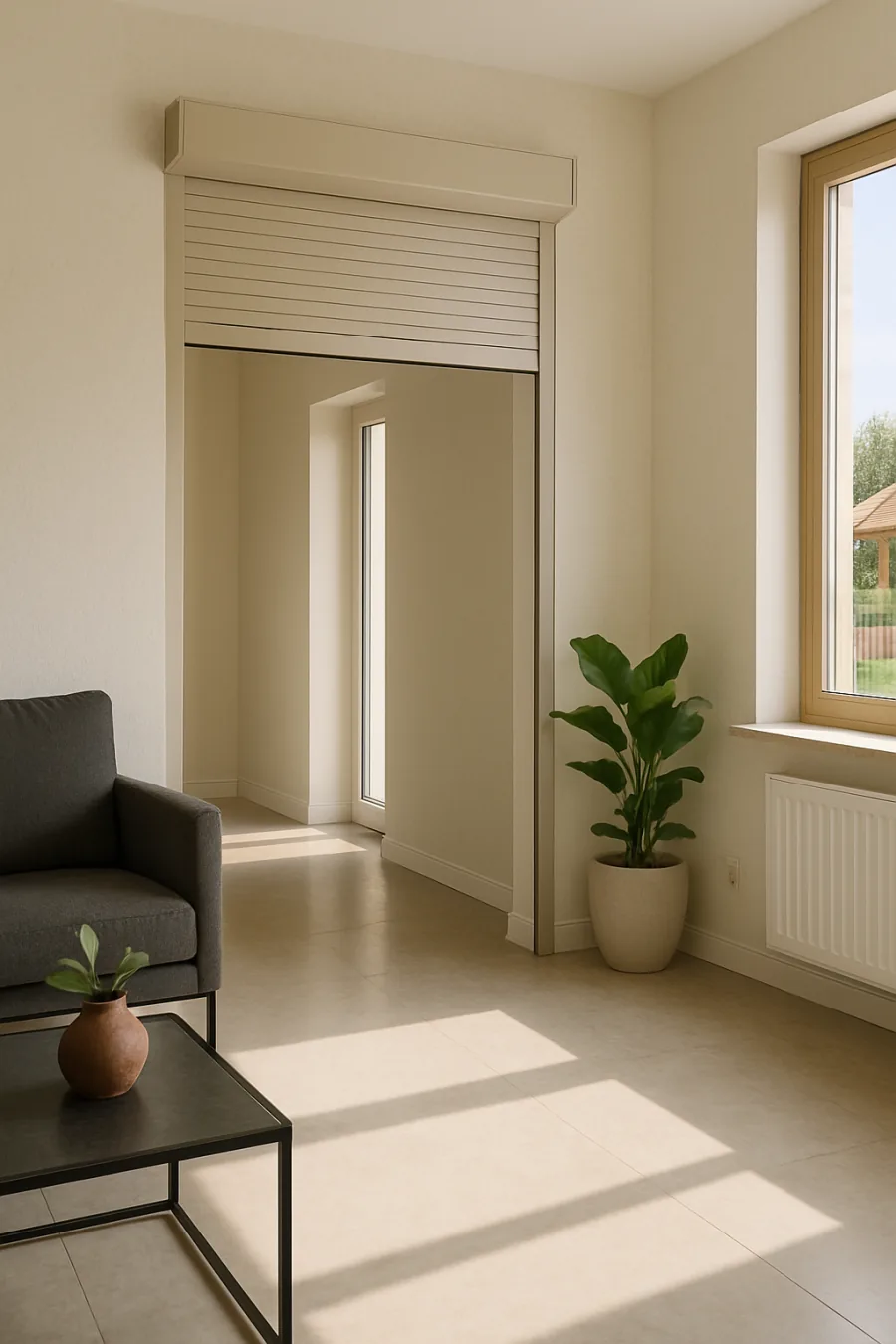











Interior roller shutters in Almaty are a curtain made of slats that goes into a housing box above the opening and completely replaces a hinged door: no threshold, the sash doesn't take up a corner. We manufacture to measurement, installation 4,500 ₸ per unit, price from 17,500 ₸/m², lead time 10–14 days.
What interior roller shutters are and how they differ from window and furniture ones
Interior roller shutters are a curtain made of slats that is mounted directly into an interior opening and completely replaces a hinged door. It doesn't supplement it, doesn't serve as a backup against drafts — it replaces it. The hinged door leaf is removed or left open forever, and the opening starts to work differently: it closes from top to bottom, without a threshold and without a hinge side.
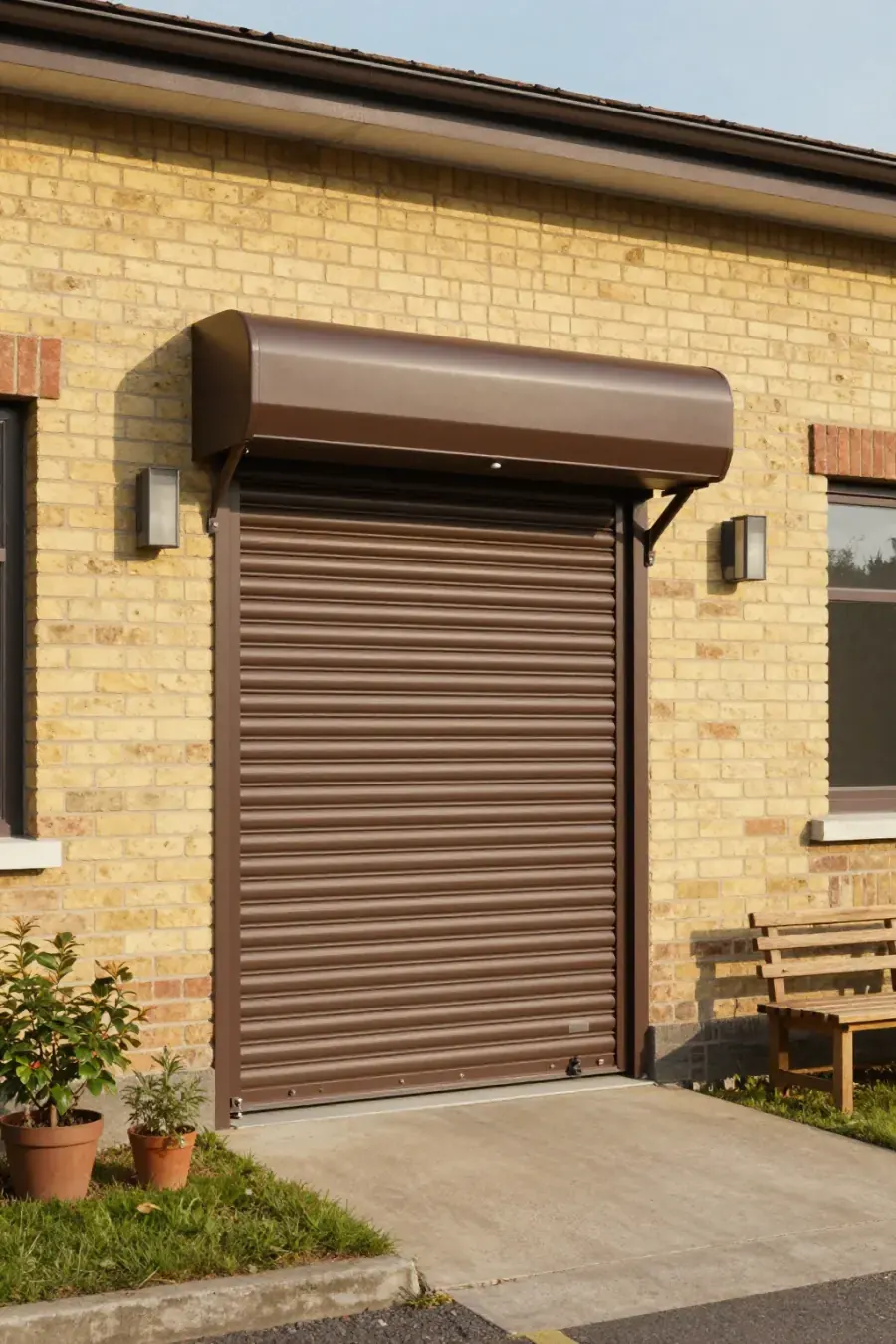
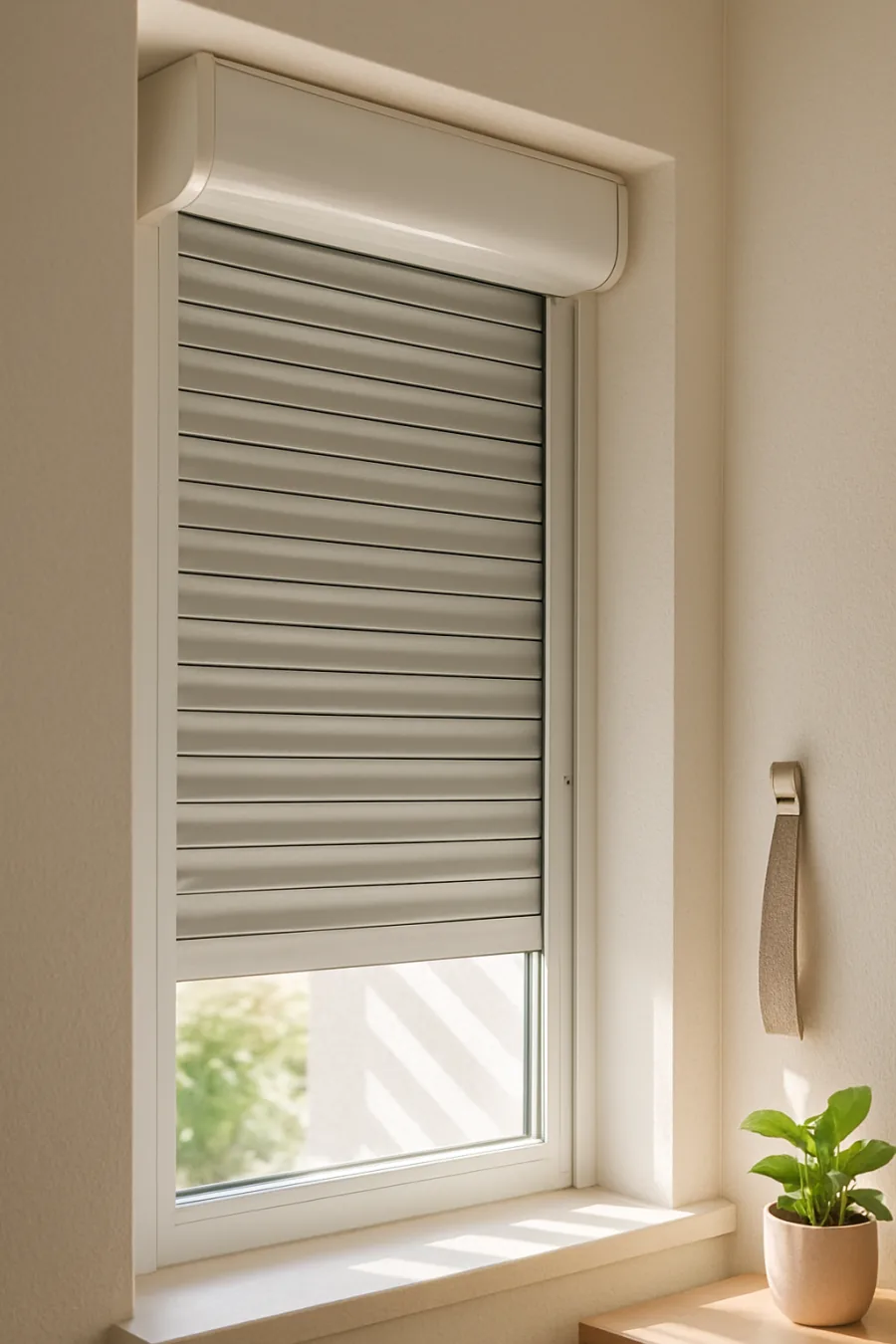
How does it work physically? A housing box is mounted above the opening, and the curtain rolls up inside the box. You pull the tape or cord — the curtain goes down and covers the opening. You release it — it goes up and is almost invisible. No corner for the sash to open into, no arc that a door describes. That's exactly why interior roller shutters are chosen where there's physically no space for a hinged door or it gets in the way of furniture.
Instead of a door, not next to it
The opening stays without a threshold and without a second sash: the blind goes into the housing box above the opening.
A common thought at first acquaintance: install a roller shutter together with a door, as a second contour. Technically it's possible, but there's almost no point — you pay for two structures where one does the job.
Three common confusions
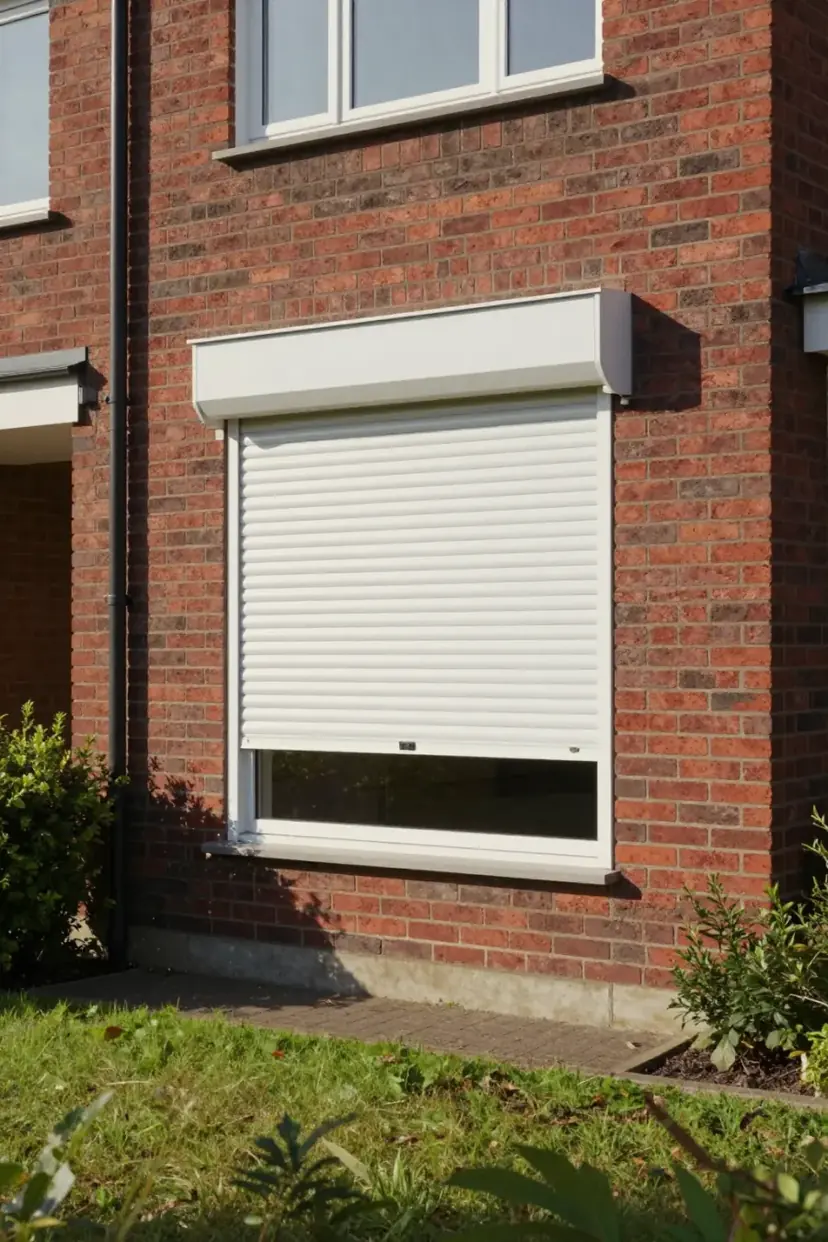
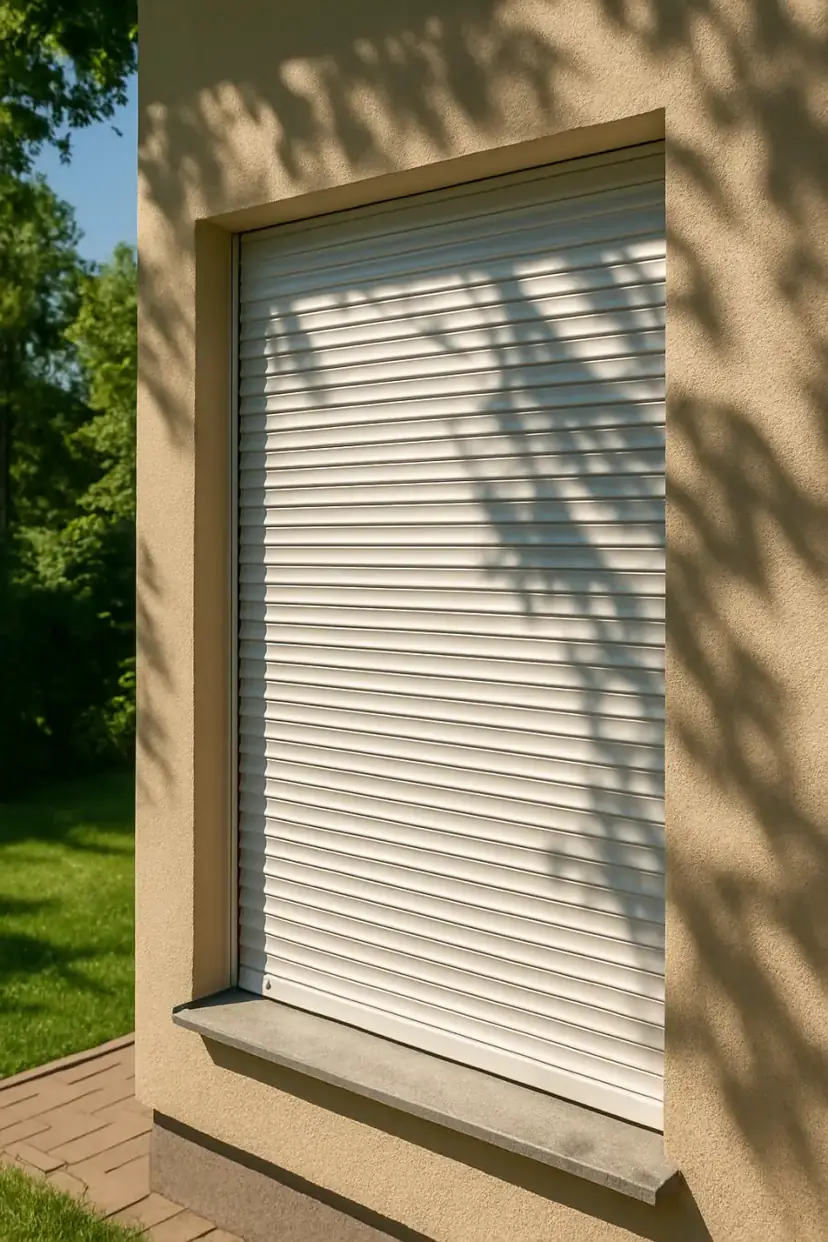
A window roller shutter protects from the street and outside noise. A furniture roller shutter closes a wardrobe section. Interior roller shutters work inside an apartment, between two heated rooms. Hence the difference in profile: protective and extruded systems are installed for the street, thin decorative slats for a wardrobe, and for an interior opening a roll-formed foam-filled profile is more often used — light and quiet.
The difference also shows in the measurement. A window roller shutter is calculated by the window opening, taking into account the reveal and windowsill; a furniture one by the inner wardrobe section; and an interior opening is measured by the actual height and width on both sides, because walls in older housing stock are rarely even.
An interior roller shutter covers the opening completely and replaces a hinged sash rather than supplementing it.
Sound and smells: what really changes if you replace a door with a roller shutter
An interior roller shutter is inferior to a hinged door in sound insulation — and this is the main thing worth knowing before ordering. A door has the thickness of the leaf and a seal around the perimeter, a roller shutter has thin slats in guide rails. The difference is audible if someone is talking or music is playing in the next room.
But here's what matters: in terms of sound and smells, a roller shutter is still closer to a closed door than to an open doorway. A curtain made of foam-filled slats covers the opening tightly, with no gaps around the perimeter. It holds back kitchen smells — not the way a solid door does, but noticeably better than an empty doorway.
For a bedroom, this is usually enough. If someone gets up earlier and clatters dishes in the kitchen-living room, the steady noise of the roller shutter is muffled, but sharp sounds will still get through. We say this straight, because you shouldn't expect complete silence from a roller shutter.
Solid profile
A solid blind is installed over the entire opening, with no perforation. Light doesn't pass through it, nor does air — the room is fully closed off. For a bedroom or walk-in closet, this is exactly the option people choose: sound is muffled, smells don't travel, and outside light doesn't disturb you.
Perforated profile
A perforated profile is the same slats, but with holes along the entire length. The perforation lets light and air pass between rooms. The kitchen-living room stays ventilated, and the hallway is bright during the day. The trade-off is simple: cooking smells drift into the next room along with the air, and sound passes through more freely. Here the blind works more like a sliding partition than a door.
What we don't promise
We don't quote sound insulation figures in decibels specifically for an interior doorway. The general figure for outside noise applies to roller shutters on a window, and it can't be carried over to an interior roller shutter. A solid curtain muffles sound between rooms and holds back smells; a perforated one deliberately lets through light, air, and smells — you need to choose based on what the opening is for.
Housing box and opening height: how much the blind takes up and what to do with a low opening
The rolled-up curtain takes up 15–20 cm of the opening's height. This is the price of interior roller shutters not swinging into the room: the slats collect in the housing box, and part of the opening's height goes under it. For a standard opening in a new building, the loss is unnoticeable. For a low opening in older housing stock, where the height is already less than usual, these centimetres have to be counted in advance.
The housing box can be mounted in two ways — surface-mounted or concealed in a niche. This also determines how much height will actually go under the structure.
- Surface-mounted housing box. It's attached to the wall surface above the opening; no chasing or dismantling of the window reveals is needed. It's most often chosen for finished renovations: the walls are already decorated, and no one wants to open them up.
- Housing box in a niche. If there's already a niche in the wall, or one is built during renovation, the housing box goes into it, and only the blind is visible from the outside. This option is planned before finishing work, because the niche has to be prepared in advance.
In photos, a surface-mounted housing box looks like a neat strip above the opening. I'll admit, at first I expected a catch — I thought it would stick out and get in the way. Nothing of the sort: during measurement, it's just one more parameter.
A separate story is a low opening in older housing stock. When the height is less than standard, we calculate the blind height from the actual measurement and select the housing box so that the passage remains comfortable for a person of average height. How much clearance to leave is a question for the specific opening, and the exact values are given by the measurer on site, not by a table from the internet.
For interior roller shutters, the price of the housing box is included in the overall calculation by curtain area; Jalusso doesn't list it as a separate line.
The rolled-up blind takes up 15–20 cm of the opening's height, and the surface-mounted housing box remains the most common option for finished renovations.
Surface-mounted housing
A surface-mounted housing box is installed on the wall surface above the opening. It doesn't require chasing, doesn't touch the window reveals, and is suitable when the renovation is already finished. That's why it's chosen more often than others: no dismantling of finishes is needed, and the housing box itself covers the joint between the blind and the wall.
Housing box in a niche
The housing box in a niche hides inside the wall, and only the blind remains visible from the outside. The niche must be in the wall from the start, or it's built during renovation. In a finished apartment, this option is almost never found — few people are willing to redo the window reveals for a concealed housing box.
Low opening in an old building
A low opening in older housing stock is not a dealbreaker for interior roller shutters. The measurer measures the actual height, we calculate the curtain height from it, and we select a housing box with minimal projection. The exact values are given by the measurer on site, because the clearance depends on the height of the residents and on just how low the opening turned out to be.
Installation in an apartment: mounting in the window reveals, rented housing, and installation without drilling
Interior roller shutters in an apartment are installed without touching load-bearing walls. Jalusso mounts the structure in the window reveals or directly on the wall of the opening — it doesn't touch load-bearing walls. This is standard practice, not an exception.
How the work proceeds, step by step.
- The measurer takes the dimensions of the opening and the walls on both sides.
- We agree on the side for the housing box and the side for the controls — so the blind doesn't get in the way of the passage.
- Manufacturing to the measured dimensions.
- Installation: 4,500 ₸ per item, free for orders from 150,000 ₸.
- We check the movement of the blind and show you how to operate it.
Measurement always precedes manufacturing: first the actual dimensions of the opening, then the workshop. It's never the other way around.
Rented flat
Installation without drilling is suitable when the walls can't be touched — for example, in a rented apartment. The structure is mounted without touching the wall, and when you move out, it comes off together with the blind. The coefficient for this type of installation is ×1.1 to the price of the product. This is convenient for the apartment owner: after you move out, only marks remain that can be covered cosmetically, rather than through-holes in a load-bearing wall. But there's a nuance here too: not every opening allows you to avoid fastening into the wall, so the decision is made by the measurer on site.
Roller shutter plus door on the same opening
Technically possible: the roller shutter is installed on one side of the opening, and the swing door remains on the other. In practice, this option is rarely chosen — usually one of the structures is redundant, and a month later the client says themselves that the second leaf could have been left out.
Mounting in the window reveals doesn't touch load-bearing walls, and installation without drilling is suitable for a rented apartment.
Profile for the job: foam-filled, perforated, moisture-resistant
For an interior opening in Almaty, people most often choose a roll-formed foam-filled profile. A blind made of such slats is lightweight, moves quietly along the guide rails, and doesn't overload the housing box. Inside, the slats are filled with foam — hence the name. If the opening leads to a bedroom, walk-in closet, study, or kids' room, there's no point choosing another profile: here you need a tight partition that closes the room off from the next one.
For light, people choose a perforated profile. Perforation means through-holes in the slats; the blind covers the opening but lets light and air through. The room doesn't become sealed off. Exactly how much light passes through a perforated blind depends on the size and spacing of the perforation, and that's a question for a specific batch, not a general rule. A kitchen-living room with such a blind stays ventilated. The flip side is honest: along with light and air, smells also travel between rooms.
A moisture-resistant profile is installed in bathrooms. Moisture is the main enemy of any structure made of slats, and the profile for a bathroom uses a different coating that withstands it.
| Profile | What it gives | Where it works well |
|---|---|---|
| Roll-formed foam-filled | lightweight and quiet blind, housing box not overloaded | bedroom, walk-in closet, study, kids' room |
| Perforated | lets light and air through, the room doesn't become sealed off | kitchen-living room, hallway |
| Moisture-resistant | moisture-resistant | bathroom |
For an interior doorway, a roll-formed foam-filled profile is used most often; for light, a perforated one; for a bathroom, a moisture-resistant one.
Control: tape, cord, chain, electric motor
Mechanical control with a tape or cord is the basic option: the blind is pulled by hand, there is no automation in the design. A chain raises the price of the product by 6% over the base, an electric motor by 85%, and an electric motor with a remote control by 110%. The difference between the last two options is not cosmetic: they are separate coefficients, 1.85 and 2.1, and they are not averaged in the calculation.
When is an electric motor actually needed? If there are several openings in an apartment or office and pulling the tape every time is inconvenient. On a single opening to a bedroom or walk-in closet, Jalusso more often installs mechanical control — both in price and in reliability, it is simpler.
Coefficient table
| Control | Coefficient to the price |
|---|---|
| Mechanical (strap, cord) | ×1.0 |
| Chain | ×1.06 |
| Electric motor | ×1.85 |
| Electric motor with remote control | ×2.1 |
The coefficient is multiplied by the cost of the blind, not added to it as a fixed sum, so the final difference in tenge depends on the area of the opening. On a narrow opening, switching to a chain adds less than on a wide one.
About quiet operation at night
We do not promise absolute silence. Mechanical blinds are closed smoothly by hand — but this is a manual operation, not a silent closer, and a light sound of the blind moving is audible. An electric motor runs on a motor and has its own sound, but you do not have to reach for the tape in the dark.
Mechanical control is pulled by hand; an electric motor is chosen if there are many openings: a chain raises the price of the product by 6%, an electric motor by 85%, an electric motor with a remote control by 110%.
Price: what it consists of and what is cheaper in the end
The cost of interior roller shutters consists of four things: the area of the curtain, the type of profile, the type of control and installation. The base price is from 17,500 ₸ per square metre with a roll-formed foam-filled profile and mechanical control included. A chain instead of a tape raises the price of the product by 6 percent, an electric motor by 85 percent, an electric motor with a remote control by 110 percent. We charge 4,500 ₸ for installing one product; if the order total is from 150,000 ₸, we install it free of charge.
| Position | Price from | Lead time |
|---|---|---|
| Roller shutters for windows, roll-formed foam-filled, mechanical control included | 17,500 ₸/m² | 10–14 days |
| Security, extruded aluminium | 24,900 ₸/m² | 12–16 days |
| Perforated, profile with perforation | 27,800 ₸/m² | 12–16 days |
| With electric motor | 35,000 ₸/m² | 14–18 days |
What is cheaper in the end
We do not have a direct comparison of the price of a roller shutter with the price of a hinged door in our data — and I will not invent one. We calculate by the area of the opening and control coefficients, and you should compare the door using your own quote from a door seller. A sliding door also takes up space for the guide rail and the leaf. A roller shutter saves space, but not necessarily money.
Measurement and delivery
Within the city, measurement and delivery are free — the measurer comes with samples and calculates the cost on site. To the suburbs, that is Kaskelen, Talgar, Issyk and Kapshagay, we do travel; the cost of the visit depends on the distance and is quoted before the visit, before you decide anything. A nice detail: they calculate in front of you, rather than sending a figure a day later.
Example calculation
An opening to a bedroom, roll-formed foam-filled profile, mechanical control, wall installation. We take the area of the blind, multiply it by the price from 17,500 ₸ per square metre, and add 4,500 ₸ for installation if the order is less than 150,000 ₸. The measurer gives exact figures for your opening.
The price of interior roller shutters in Almaty consists of the area of the curtain, the profile, the control and installation; the base price is from 17,500 ₸/m², installation 4,500 ₸ per product, free for orders from 150,000 ₸.
Where to install: bedroom, walk-in closet, kitchen-living room, bathroom, hallway, study
Interior roller shutters fit almost any opening inside an apartment or house — the choice is not “to install or not to install”, but which profile suits the room. There is exactly one difference between locations: what matters more in this opening — silence and a tightly closed opening, or light and air.
- Bedroom. We install a solid roll-formed foam-filled profile: it closes the opening tightly, without gaps around the perimeter, and in terms of sound and smell it behaves more like a closed door.
- Walk-in closet. Here interior roller shutters save the corner where a hinged leaf usually swings open — and in a narrow walk-in closet that corner is all the free space there is.
- Kitchen-living room. A perforated profile lets light and air through between the zones, so the living room is neither dark nor stuffy. It also lets cooking smells through — that is the flip side of the same perforation.
- Bathroom. A moisture-resistant profile holds moisture; we do not recommend a regular foam-filled one there.
- Children’s room. An opening without a threshold — a child does not trip over a strip that simply is not there.
- Hallway. Often chosen instead of the second leaf of a hinged door: one leaf stays functional, the second is replaced by the blind.
- Study. Closes the opening during calls — solid profile, mechanical control with a cord.
- Office meeting room. A solid profile on every opening, and if there are many openings, we calculate an electric motor: pulling the blind by hand in five places a day gets tiring (from our experience with meeting room projects, this is the first thing clients ask for later).
A separate question is pets. An opening without a threshold is safe: there is nothing to trip over, the blind moves from top to bottom and a paw does not get stuck under it. A cat or dog passes freely under the blind when it is raised, and the bottom edge has no groove where a claw could get caught.
An opening without a threshold is safe for pets: there is nothing to get stuck on or trip over, the blind moves from top to bottom.
Non-standard openings: uneven walls, narrow and non-standard openings
An uneven opening does not prevent installing an interior roller shutter, but it requires adjustment during installation. Walls in older housing stock rarely stand strictly vertical, and the reveals on the two sides of an opening can be of different depths. In such a case, the curtain is made to the largest dimension, and the housing box is set by level — the gaps are closed with covers. That is exactly why measurement precedes manufacturing to size: the product is not made to the nominal width of the opening.
We do not name a minimum opening width as a hard threshold. A narrow opening is calculated by the actual dimensions at the measurement: the smaller the width, the tighter the blind and the more compact the housing box. The limitation here is not in the design, but in how convenient the passage is to use after installation — the measurer discusses this point on site rather than leaving it to guesswork.
In our practice, narrow openings are more common in walk-in closets and bathrooms, where the passage width is initially smaller than a standard door. A roller shutter is more convenient there than a hinged leaf: no space is needed for opening, and the partition does not have to be redone.
Measurer’s checklist:
- check the verticality of the walls on both sides of the opening;
- measure the width at three points;
- measure the height at three points;
- determine the side of the housing box and the side of the controls;
- check the actual height against the height of the blind.
An uneven opening requires adjustment during installation, and the minimum opening width is determined at the measurement based on actual dimensions — it can’t be quoted in advance from a photo.
How we work in Almaty: measurement, timelines, warranty
We make interior roller shutters in Almaty only to measure: there are no ready-made units in stock, every curtain is assembled for a specific opening. Measurement and consultation are always free. Our measurer arrives with profile samples and calculates the cost on the spot — in front of the client, not over the phone.
From there everything moves step by step, and the client sees every step for themselves.
- Within the city, measurement and delivery are free.
- We travel to the suburbs — Kaskelen, Talgar, Issyk, Kapshagay. The call-out price depends on distance, and we quote it in advance — before we arrive, not after the fact.
- Manufacturing time: 10–14 days.
- Installation 4,500 ₸ per unit, free for orders from 150,000 ₸.
- Warranty: 3 years on the mechanism and 1 year on installation from the date the acceptance certificate is signed.
- If the case is recognised as a warranty case, we fix the fault at no charge within 5 working days. Once the warranty has expired, we still come out: to adjust, tighten, replace the chain or cord.
- Not covered by the warranty: mechanical damage, reinstallation by the client, exposure to water and natural fading of the fabric.
Sometimes a person hesitates: is it even worth letting someone into the flat just for a measurement? It is — the measurement is usually when it turns out a different profile is needed. In one opening in a finished renovation, the client wanted a perforated blind for the light, but in reality there wasn’t enough height for the housing box, and together we recalculated for an overlay housing box with a roll-formed foam-filled profile. Things like that are only visible on site.
We manufacture interior roller shutters in our own workshop in Almaty: measurement, manufacturing and installation without intermediaries, manufacturing time 10–14 days.
FAQ
Are roller shutters a full replacement for a door?
Yes. Interior roller shutters replace a hinged door: the curtain covers the opening completely, no second sash is needed. That’s exactly why they’re chosen where there’s nowhere for a door to swing open — in a bedroom against a wall, in a walk-in closet, in a narrow hallway.
Do you touch load-bearing walls?
No. Mounting into the window reveals or onto the wall doesn’t touch load-bearing walls — Jalusso works with the finish that’s already there. If the walls can’t be drilled, there’s a no-drill installation option: the structure is fitted without any intervention in the wall.
Which profile should I choose for an interior opening?
Most often people choose a roll-formed foam-filled profile: it’s light, quiet, and doesn’t overload the housing box. If it matters that light and air pass between rooms, choose a perforated profile. Perforated slats let both through, and along with the air, odours go too.
How much does the housing box take up?
The assembled blind takes up 15–20 cm of the opening height. The overlay housing box is the most common option in a finished renovation: it’s fitted over the wall, no chasing or dismantling of the reveals is needed. On a low opening, the measurer calculates the blind height from the actual dimensions.
How much more expensive are the chain and electric motor?
Chain — a coefficient of ×1.06 on the unit price, electric motor — ×1.85, electric motor with remote control — ×2.1. These are separate coefficients, not one range: the electric motor and the electric motor with remote control are calculated separately.
How much does installation cost?
Installation — 4,500 ₸ per unit, free for orders from 150,000 ₸. We give 3 years on the mechanism and 1 year on installation; the count starts from the date the acceptance certificate is signed.
Interior roller shutters replace a hinged door entirely, rather than complementing it.
Conclusion
Interior roller shutters in Almaty close an opening with no threshold and no hinged sash taking up a corner. The curtain retracts into the housing box above the opening, and the freed-up space by the wall can be used for furniture. That’s the main result people choose this design for instead of a door.
What’s important to remember about the profile. A solid roll-formed foam-filled profile muffles sound between rooms and holds back kitchen odours. A perforated profile deliberately lets light and air through — and cooking odours along with them. Perforation doesn’t make a room soundproof, it maintains air exchange. We warn about this before the measurement, so the choice doesn’t come as a surprise after installation.
About height. The assembled blind takes up 15–20 cm of the opening height. On a low opening in an old building, the measurer calculates the blind height from the actual dimension and selects the housing box so that the passage stays comfortable.
About mounting. We mount into the reveals or onto the wall, we don’t touch load-bearing walls. For rented housing where the walls can’t be drilled, there’s a no-drill installation option — the structure can be taken down and moved along with the blind.
About the numbers. Prices for interior roller shutters start from 17,500 ₸/m², installation — 4,500 ₸ per unit, free for orders from 150,000 ₸. Manufacturing time 10–14 days. Within the city, measurement and delivery are free; we travel to Kaskelen, Talgar, Issyk and Kapshagay, and we quote the call-out cost before we set off. We give 3 years on the mechanism of interior roller shutters and 1 year on installation work; both periods count from the day the acceptance certificate is signed.
There’s one practical recommendation: before ordering, decide on the main task of the opening — what you want to get, silence and no odours, or light and air movement. The profile depends on that, and the measurer will calculate the rest. They arrive with samples, calculate the cost on the spot, and you pay nothing for that visit.

