

























We make door blinds in Almaty to measure: a horizontal slat or a roller blind goes on the glass part of the sash, vertical blinds — on a wide opening, pleated and day-night — on the door glass. We mount without drilling the frame, and fix the bottom so the blind doesn't hit the glass. Price — from 4,200 ₸/m².
What door blinds are and what they are not
Door blinds are a sun-shading system fitted on a door leaf, on the glass part of a door or in a doorway. They have nothing to do with wardrobes and closets. The name is confusing: in Almaty people often search for a completely different product under it — a ventilated door panel used to close off a wardrobe section. The two things share only the word.
Blinds for a door and a louvred door
A louvred door is a leaf with angled slats that let air through. It is fitted on a walk-in closet, a storeroom or a wardrobe: the things inside are ventilated and stale smells don't linger. Door blinds are built differently — they are a blind of slats or fabric fixed at the glass. They block light, not air.
We don't make louvred doors. Our workshop manufactures blinds and roller shutters, while ventilated furniture panels are a separate production, ordered from furniture makers together with the wardrobe carcass.
Security blinds are roller shutters
Security blinds on a door are not blinds but external roller shutters for a doorway. The difference is in the design: roller shutters roll up into a housing box above the opening and come down as a solid blind that covers the glass from the outside. They are fitted on the entrance of a shop, office or private house. We do make such structures, but that is a separate category — see prices and lead times in the roller shutters section, we don't quote them here.
On one side of the glass or both
We fit internal blinds on one side — the side where the person is. If the door leads outside or onto a balcony, the blind ends up on the room side of the glass. The structure isn't visible from the street, but the glass stops being see-through: during the day a passer-by sees shaded glass, not the room.
Door blinds are sun shading for a sash, a glass part or an opening, whereas a louvred door remains a furniture part and security blinds are external roller shutters.
Why a door is not a window: what changes in the design
A door leaf opens many times a day — and over that time the blind experiences exactly what never happens on a window: a jerk, a slam, a hand moving right by the plane of the glass. That is why blinds on a door are mounted with the travel of the sash in mind, the bottom of the blind is fixed, and a gap is left under the door handle. Three things set door installation apart from window installation.
- The sash moves. The blind is chosen so that it moves with it and doesn't catch on neighbouring surfaces.
- The handle is right there. The handle's turning zone overlaps part of the blind if it isn't allowed for in advance.
- The bottom swings. When opening and closing, the lower edge of the blind swings more than the upper edge.
Handle and clearance
The door handle needs clearance or a cut-out in the blind: its turning part must pass freely past the plane of the slats. The measurer calculates the offset on site — based on the handle's projection, the thickness of the blind and the side it turns to. There is no universal figure here, because door handles are all different. During the measurement, we step back from the edge of the blind by a distance that lets the hand pass freely, and we check this on site by turning the handle.
Tilt-and-turn mode
Tilt-and-turn mode is trickier than it seems: the sash tilts at an angle to the frame, and the top corner moves into the room. The blind must stay in place and not rest against the window reveal, otherwise the sash simply won't go into that position. Moreover, on a plastic door with two modes — turning and tilting — the measurer checks both movements. If the clearance is small, the blind is cut narrower or the mounting method is changed.
Door slamming
A draught is the main reason why blinds on a door without bottom fixing start banging against the glass. A blind without a bottom support point swings on every sash, and the slats knock against the glass unit.
Fixing the bottom of the blind keeps it from banging against the glass: the bottom is either pulled towards the frame or runs in guide rails along the edges. During the measurement, we watch how the bottom behaves when the door slams, and we select the fixing for that movement. If the door is used constantly as a passage, we install a system with guide rails — it holds the blind steady through any jerk.
The sash opens many times a day, so the blind is mounted with its movement in mind, the bottom is fixed, and a clearance is left for the handle — and it is these three solutions that distinguish door installation from window installation.
Drill-free mounting: how to preserve the frame and the warranty
Drill-free mounting preserves the frame and the warranty on the door: the profile is left untouched, and no holes appear in it. Horizontal and roller systems are mounted this way on a plastic door — the weight of the blind is enough to hold on the glazing bead or clamps, rather than on screws. In our seven years in sun protection, we have seen plenty of frames drilled “just in case”: a hole in the profile is also a question for the window warranty, which is given not by our company but by the window manufacturer.
Heavy systems — pleated, day-night, electric motor — can also be mounted without drilling, but here the bracket already carries more load, and the method is selected individually. A bracket in the glazing bead does not damage the frame profile: the glazing bead is a removable element that holds the glass unit, and replacing it is not considered an intervention in the structure. Spring clamps and mounting on the wall next to the opening are two other options, and each has its own limits of applicability.
Three mounting options
- A bracket in the glazing bead is the basic option for a plastic door. The glazing bead is removed, the bracket is inserted under it, and the glazing bead is put back in place. The profile stays intact, there are no holes.
- Spring clamps — they hold by tension, no tools needed. We do not mount a heavy blind on clamps: when the sash jerks, the clamp may give way, and the blind will start banging against the glass.
- Mounting on the wall next to the opening — an option for cases when the glazing bead is narrow or absent: the blind is mounted not on the sash but above the opening. The movement of the door must then be taken into account separately — the measurer looks at which way the sash opens and how much space there is to the wall.
We choose the method during the measurement. The measurer arrives with samples, looks at the frame material, the weight of the blind and the geometry of the opening — and only after that names the fixing. There is no universal option: what suits one door will hold worse on another.
What about the warranty
Drill-free mounting does not touch the frame — which means the warranty on the window and door is not lost either. We give our own warranty separately: 3 years on the mechanism, 1 year on installation from the date of signing the acceptance report. If a case falls under the warranty, we will fix it within 5 working days, and you won't have to pay for it. The warranty does not cover mechanical damage, reinstallation on your own, water and natural fading of the fabric — that is, everything that happens to the blind after us and not through our fault.
Taking down and rehanging
A blind on a sash is easier to take down than a structure mounted on the wall next to the opening, or a system with an electric motor. If you rent an apartment and don't want to leave traces, this point is worth discussing during the measurement: some systems come off in seconds and go back on without tools, while others require a fitter's work. When moving, it is often possible to rehang blinds on another door, but not always: the size of the blind is cut for a specific opening, and the fixing is for a specific glazing bead. We insert the brackets into the glazing bead or install clamps, so the frame stays intact and the warranty on the door is not lost.
Which system suits your door
The system is chosen not by the name of the door, but by where the blind will go — on the glass part of the sash or in the opening. Horizontal blinds are mounted on the glass part of the door, vertical blinds — in the opening, not on the hinged sash, and a roller blind comes with guide rails along the edges. This determines whether the door will open freely.
For the sash
A horizontal slat of 25 mm is the basic option for the glass part of the door. The blind is cut to the glass, not to the whole sash, so it doesn't catch the handle and doesn't eat into the height of the opening. The slat turns and changes the light from dense shade to diffused. Made of aluminium or PVC — both can be wiped with a cloth right in place.
Pleated blinds fold into an accordion and hold their shape without slats — guide rails run along the edges, and the blind doesn't sag when the door slams. We install them on both narrow and non-standard glass units.
Day-night blinds adjust the light smoothly: two layers of fabric with alternating dense and transparent stripes slide relative to each other. For a door that is used often, this is a convenient thing — in the morning you open up the view, during the day you close yourself off from the neighbouring building. A roller blind on a sash comes in a cassette or on an open system: the roller tube is covered by a housing box, the fabric is stretched between the guide rails, and the blind comes off in seconds for washing.
For a door that is slammed dozens of times a day, fabric without guide rails is no good — it will quickly start to wave. Here either a slat or fabric with side guide rails is the way to go.
Inside the opening
Vertical slats of 89 mm are mounted in a doorway — for example, when there is no door but one zone needs to be separated from another. The blind is drawn to the side, and the passage stays completely free. The fabric diffuses the light rather than cutting it into stripes.
We don't hang vertical blinds on a hinged sash — it moves, and the slats will catch on the window reveal and the neighbouring wall. The opening and the sash are different units, and their mountings are different.
String curtains are also a blind in the opening, not on the sash: polyester threads are gathered across the width of the opening. They are chosen for zoning, not for covering the glass of a door.
Balcony door and window unit
A balcony door and the window next to it are covered with separate blinds. This is fundamental: the sashes open independently of each other, and a single blind for the door and window of a balcony unit cannot be installed right away — when the door opens, it will fall. A balcony door more often gets a horizontal slat or a roller blind with guide rails, while the window gets its own system.
An electric motor controls the blind from a remote control, a smartphone or on a schedule. Convenient for tall balcony doors and passage areas where reaching for the chain is awkward. We set up the controls during the measurement.
High-traffic areas and public spaces
Metal blinds made of galvanised steel are installed where the blind gets touched and rigidity matters — in industrial and public spaces, at the entrance areas of shops and offices. The slat does not dent from contact and spans large openings. Iron blinds on a door of this type withstand a stream of people, but in a living room steel is noisier than aluminium — if the door is to a bedroom, you will hear it.
Before choosing a system, it is worth thinking not about how the blind looks in a catalogue, but about how many times a day you open that door and what stands next to it. The measurer looks at which way the sash opens, where the handle is and how the opening is built, and only after that names a specific system.
Comparison of systems for a door
For a door that is used often, the system is chosen by how well you can pass through: a slat or fabric with guide rails holds its shape when the door opens, and an electric motor is convenient for tall openings you cannot reach by hand.
Horizontal blinds are mounted on the glass part of the sash and hold their shape thanks to the rigid 25 mm slat. Vertical blinds are installed in the opening, not on the hinged sash: the blind is drawn to the side and the passage stays clear. A roller blind works with guide rails at the edges — the fabric does not move away from the glass when the sash is opened. Pleated blinds hold their shape without slats, so they do not sag when the door slams. Day-night blinds adjust light smoothly by shifting two layers of fabric relative to each other. An electric motor controls the blind from a remote or on a schedule — this is convenient where you cannot reach the chain. Metal blinds are chosen for high-traffic areas where it matters that the slat does not dent.
Door blinds are mounted on the sash or in the opening — both the price and the controls depend on this. Comparison by price and lead time:
| System | Where it is mounted | Control | Price from | Lead time |
|---|---|---|---|---|
| Horizontal blinds, aluminium, 25 mm | Glass part of the sash | Chain | from 4,200 ₸/m² | 3–5 days |
| Vertical blinds, fabric, slat 89 mm | Opening | Chain or cord | from 4,600 ₸/m² | 3–5 days |
| Metal blinds, steel, 25 mm | High-traffic and public areas | Chain | from 5,200 ₸/m² | 5–7 days |
| Day-night blinds, two-layer fabric | Glass part | Chain | from 7,300 ₸/m² | 5–7 days |
| Motorised blinds | Sash or opening | Remote control, smartphone, schedule | from 7,800 ₸/m² | 7–10 days |
| Pleated blinds | Door glass | Cord or handle | from 9,800 ₸/m² | 7–10 days |
The roller blind stands apart in this table: it has its own system with guide rails, and the exact price for it is quoted by the measurer.
Chain or other controls
A chain is inconvenient in three cases: a tall opening you cannot reach, a small room with a child or a pet, and frequent opening of the sash when the chain is constantly touched. In a tall opening we bring the controls down to a convenient height or install an electric motor. Where there is a child or a pet, we suggest a side handle instead of a hanging chain.
You can buy door blinds with installation by measurement: the measurer comes with samples, looks at the nature of the door and shows how the system will behave when it opens. The door blinds price in the table is the price list per square metre, not the final amount for your door.
For a frequently used door, the system is chosen by how well you can pass through: a slat or fabric with guide rails holds its shape when the door opens, and an electric motor is convenient for tall openings.
Measuring a door: what to measure and why the tolerances are tighter
On a door you need to measure the glass, the glazing bead and the sash separately — these are three different values, and each is responsible for its own thing. On a window the frame stands still, but here the sash moves: it opens, tilts, comes back. Hence the tight tolerances. Measuring a door determines the mounting method and the size of the blind, and a mistake here costs more than on a fixed window: millimetres that would go into the margin on a window will mean, on a door, that the blind touches the handle or hits the reveal.
The glass gives the size of the blind if the blinds cover only the glass part. The glazing bead shows what the bracket will catch onto without drilling. The sash — its dimensions and thickness — tells whether it will hold the weight of the system. Door blinds are mounted either on the sash or in the opening, and everything else depends on this choice: without knowing where the blind will sit, you cannot name either the size or the mounting method.
What the measurer checks
Which way the sash opens — inward or outward. How much space there is to the wall: if the door opens towards the wall, the blind may not have enough clearance there. How the door rebate is built: on plastic doors it sometimes has a protrusion that prevents the bracket from sitting flush. Where the door handle is and at what angle it stands to the frame. How the bottom of the sash behaves when opening: whether it tilts, whether it catches the threshold.
The handle is a separate conversation. The handle must turn freely, which means there needs to be a gap between it and the blind — a cut-out or an offset, and the measurer chooses both on site; you cannot guess this by eye. In our work we most often adjust exactly this point: a person would put the blind right up against the handle, and a week later the handle stops turning.
Free measurement
Measurement and consultation are always free. The Jalusso measurer comes with samples, shows the fabric and slat on site and calculates the cost right there, at the door — so that you see the amount and the price of mounting straight away, not after a letter from the workshop.
Within the city, measurement and delivery are also free. To the suburbs — Kaskelen, Talgar, Issyk, Kapshagay — we do travel, and the cost of the visit depends on the distance and is quoted before the visit, no surprises at the end.
If after installation the blind still touches the handle, we come and reposition the mounting: measurement is not guesswork, but a living door sometimes behaves differently from how it stood in the opening.
How to order door blinds in Almaty: step by step
You can order door blinds in Almaty by measurement: we do not keep ready-made products in stock, every blind is cut for a specific door. It all starts with a message on WhatsApp — you describe the door, attach a photo, and then the measurer comes with samples of fabrics and slats.
Then the order is:
- You message us on WhatsApp and briefly describe the door: balcony, entrance, interior with glass.
- The measurer comes with samples, looks at which way the sash opens, where the handle is and how the rebate is built.
- On site, calculates the cost and suggests a mounting method without drilling for your frame.
- You choose the fabric or slat from samples — colour and density are better seen in person, not on a screen.
- The workshop manufactures the product, then installation and signing of the acceptance report.
Measurement and consultation are always free. Within the city, measurement and delivery are also free. To the suburbs — Kaskelen, Talgar, Issyk, Kapshagay — we do travel, and the cost of the visit depends on the distance and is quoted before the visit, so there are no surprises.
What happens after the measurement
After measurement, the order goes to the workshop. The lead time depends on the item: horizontal and vertical blinds take 3–5 days, day-night — 5–7, metal — 5–7, pleated — 7–10, electric motor — 7–10.
We charge 4,500 ₸ for the installation of each item; from 150,000 ₸ per order, installation is included at no extra charge. The company warranty covers the mechanism and the installation: 3 years on the mechanism, 1 year on the installation from the date the acceptance report is signed. We allow 5 working days to resolve a warranty case on door blinds, and we do not charge for it.
Almaty and suburbs
We work in Almaty: our workshop is here, the measurer comes here and the installation team sets out from here.
You can buy blinds for doors in Almaty only by measurement — we are a manufacturer, not a shop of ready-made products, and we cut the blind separately for each door.
How much do door blinds cost
The price is calculated per square metre of fabric. Door blinds in Almaty start from 4,200 ₸/m² — that’s a horizontal aluminium slat 25 mm, the most popular option for the glass part of a sash. Vertical slats 89 mm start from 4,600 ₸/m², metal ones from 5,200 ₸/m², pleated from 9,800 ₸/m². The spread is more than double — and it’s not about “expensive or cheap”, but about what the fabric is made of and how it’s operated.
| Price list item | Price from | Lead time |
|---|---|---|
| Horizontal blinds, aluminium, 25 mm slat | 4,200 ₸/m² | 3–5 days |
| Plastic blinds, PVC, slat 25 mm | 3,600 ₸/m² | 3–5 days |
| Vertical blinds, fabric, slat 89 mm | 4,600 ₸/m² | 3–5 days |
| Metal blinds, steel, slat 25 mm | 5,200 ₸/m² | 5–7 days |
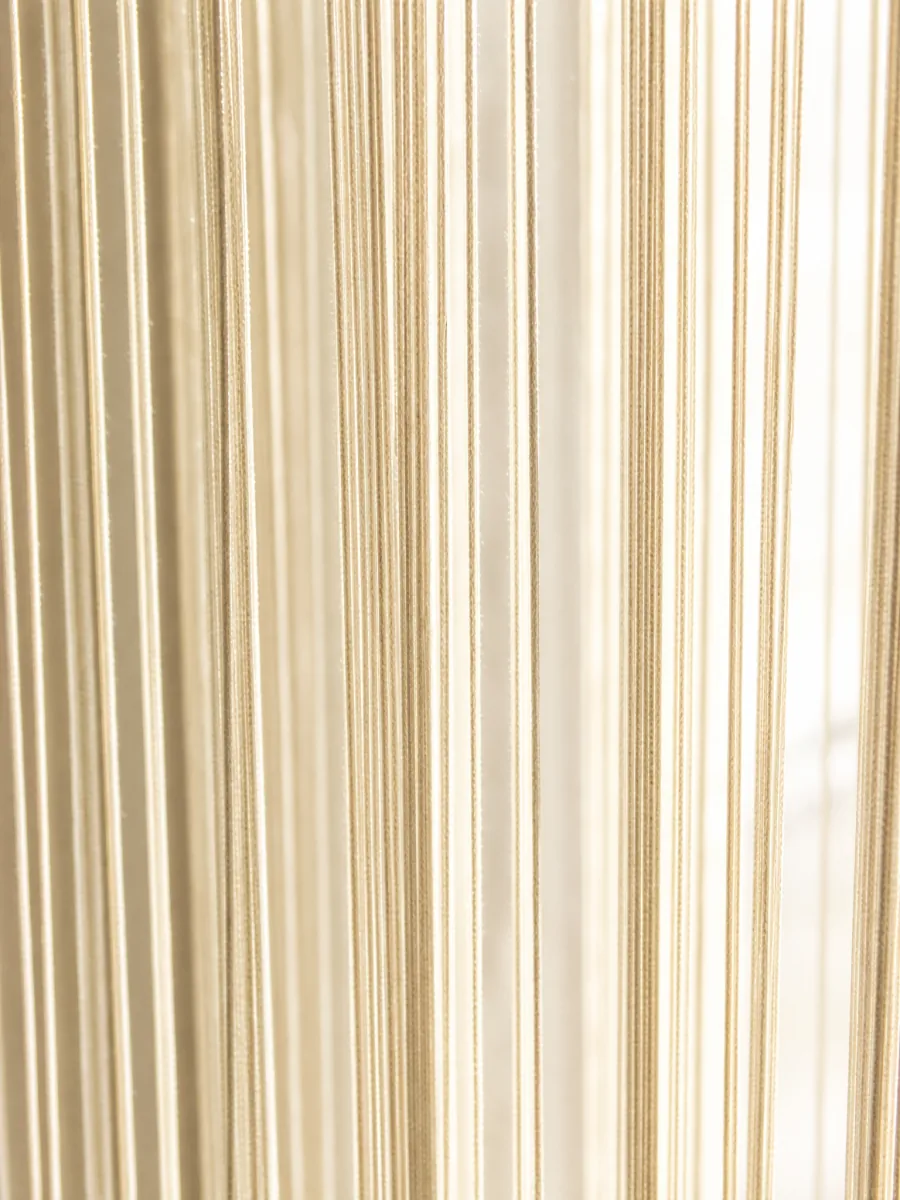
| Rope blinds, thread, polyester | 5,800 ₸/m² | 5–7 days |
| Day-night blinds, two-layer fabric | 7,300 ₸/m² | 5–7 days |
| Blinds with electric motor, 220 V or battery | 7,800 ₸/m² | 7–10 days |
| Printed blinds, photo printing | 8,900 ₸/m² | 7–12 days |
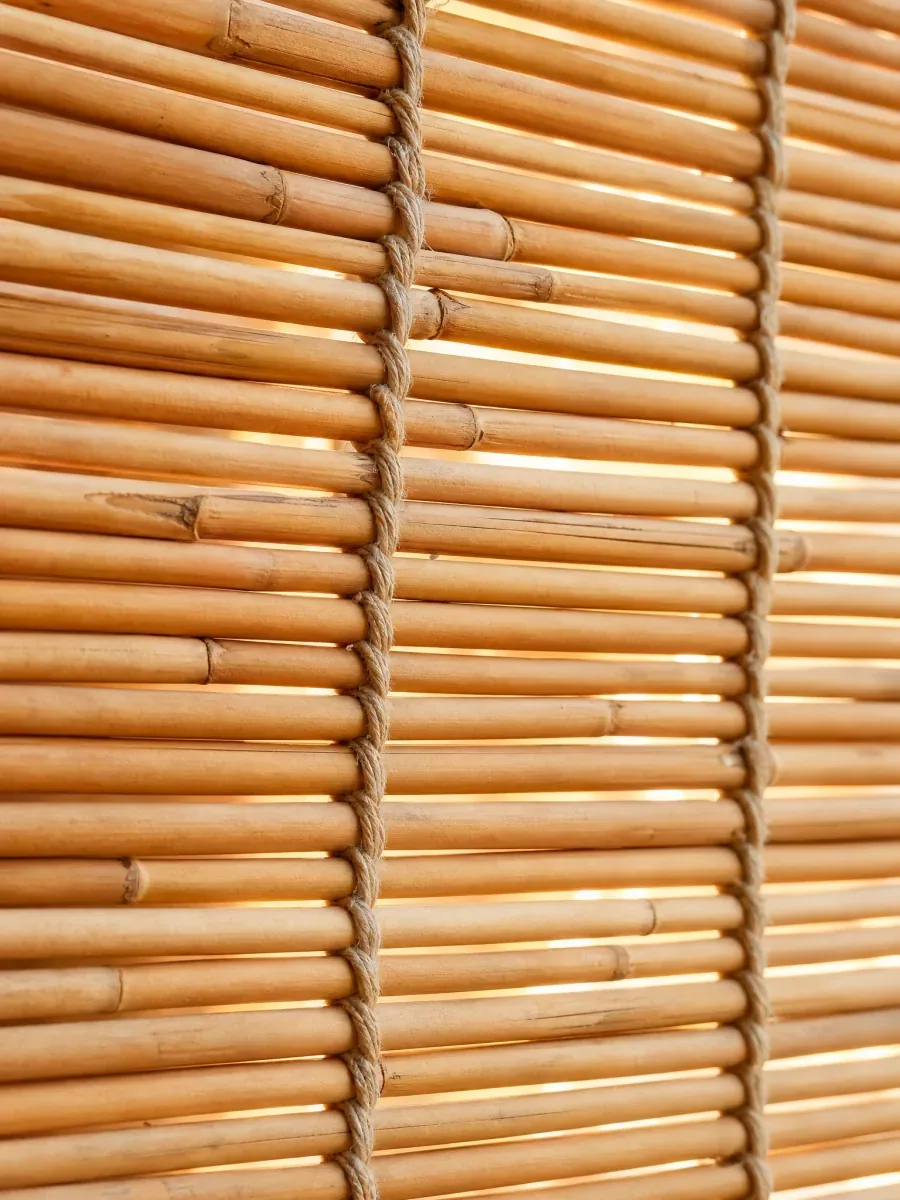
| Bamboo blinds, bamboo straw | 9,400 ₸/m² | 7–10 days |
| Pleated blinds, pleated fabric | 9,800 ₸/m² | 7–10 days |
| Wooden blinds, linden, slat 50 mm | 12,400 ₸/m² | 7–12 days |
Installation of one unit costs 4,500 ₸, but if the order total reaches 150,000 ₸, the installers come at no extra charge. Four things affect the final amount: the fabric material, the type of control, the shape of the opening and the mounting method. Control is calculated as a coefficient to the base price — a chain adds 6 percent to the mechanism, an electric motor almost doubles it, an electric motor with remote control gives more than double. Mounting on the frame is 5 percent more expensive than mounting on the wall, no-drill mounting is 10 percent more, a cassette system is 28 percent more. A non-standard opening shape — a narrow sash, tall glass, a slope — also moves the price, because cutting is more complex and there’s more waste.
Metal blinds are installed in passage and public areas, where the fabric gets touched and rigidity matters, so steel is what we quote for a shop or office door.
Measuring the door determines the mounting method and the size of the fabric — and therefore the final amount. Before measurement, any figure remains a range: the measurer comes with samples, calculates on site and gives the exact price. Measurement and delivery are free within the city. Kaskelen, Talgar, Issyk and Kapshagay are also in the service area: we quote the travel cost in advance, before the measurer sets off, and it depends on the distance.
A shop or office entrance: where blinds end
We install internal blinds on a glass entrance door only from inside the premises. From the street the unit isn’t visible — you only see that the glass no longer shows through. We don’t make external blinds for doors: if you need protection from the street side, that’s roller shutters, a different unit and a different section.
A glass entrance door itself raises the question of external protection. An entrance area has two tasks, and they aren’t always solved by one fabric: during the day you want the shop window to stay bright, and in the evening you want to close the room off from passers-by. An internal horizontal aluminium slat 25 mm handles both: the slat turns and changes the light from dense shade to diffused. The polymer coating isn’t afraid of moisture and can be wiped with a cloth right in place, which matters in a passage area.
We install metal blinds made of galvanised steel with a polymer coating where door traffic is high and the fabric is constantly touched. Steel stays rigid and doesn’t crease from contact, and it withstands large spans. In a living room steel is noisier than aluminium — at a shop or office entrance this drawback doesn’t matter. We manufacture iron door blinds in Almaty in our own workshop, the lead time according to the price list is 5–7 days.
A metal entrance door with a glass unit takes the same fabric for the glazing as a glass one. The difference is in the mounting: on a steel profile the measurer chooses the method on site — where the glazing bead runs, how the rebate is built, which way the sash opens. Fabric rigidity matters more here than decoration: on a high-traffic door a thin slat loses its shape faster.
Scenarios people come to us with for an entrance area:
- A glass entrance door with a horizontal slat: during the day you can see who’s at the door, and glare at the reception desk is gone.
- A glass entrance area with metal blinds: in the evening the room is closed off from passers-by, during the day the shop window works towards the street.
- An entrance area with a glass door on an electric motor: the fabric opens from a remote control or on a schedule, no need to reach for a chain across a passage area.
- An office entrance door with glazing: metal blinds hold their shape without replacing slats under daily load.
Inside or outside
On a glass entrance door, blinds are installed on the inside of the glass. The street side stays free: the shop window doesn’t get cluttered with a unit, and in winter the mechanism doesn’t work in frost and temperature swings, which are sharp in Almaty. From the street you only see the glass darkened.
Internal blinds don’t protect the glass from break-ins. This is sun protection and privacy, not burglary protection. Where you need street-side protection specifically — we cover that in the roller shutters section, that’s a different unit and different tasks.
A metal entrance door with a glass unit
For the glazing of a metal entrance door we install a horizontal steel slat — here fabric rigidity and resistance to contact matter.
For a metal entrance door with a glass unit, a metal slat 25 mm made of galvanised steel is suitable: it doesn’t bend when the fabric is touched in a passage, and it holds its shape on large glass. The measurer selects the mounting for the door profile, without touching the frame.
Internal blinds on a glass entrance door are installed from inside the premises, and where you need protection from the street — that’s roller shutters, a different unit.
Care and safety in a passage
A door in a passage collects dust faster than a window, so the fabric has to be cleaned more often. Aluminium, plastic and steel can be wiped with a damp cloth and a mild product right in place — no need to take the unit down. Fabric is cleaned with a vacuum cleaner on low power or a sponge without soaking. Once a year the mechanism should be cleaned of dust: in a passage it settles more densely. Slats and the mechanism are replaced one by one, without replacing the whole fabric. Metal blinds are simpler in this respect than others — they’re chosen for passage and public areas precisely because they get touched by hand and washed more often.
- Aluminium, plastic, steel: a damp cloth with a mild product right on the door.
- Fabric: a vacuum cleaner on low power or a sponge without soaking.
- Mechanism: dust cleaning once a year.
- A failed slat or mechanism: replaced one by one, without dismantling the whole unit.
Fixing the bottom of the fabric keeps it from hitting the glass when the door opens and slams. This isn’t a separate order item, but a solution the measurer selects on site.
Privacy on an interior door
A dense fabric hides silhouettes behind a glass interior door: the slat is turned all the way, and the fabric is chosen with a density that doesn’t show through in the light. If a silhouette must not be visible under any light, fabric on both sides of the glass — on the sash and on the other side. During the day in diffused light one fabric is enough. The measurer gives the answer using samples: they hold the fabric against the glass and show the result in different light.
Cords and children
A chain on a door requires attention if there’s a child or a pet in the room: a hanging cord gets pulled, tugged, wrapped around a hand. A side handle control removes the hanging chain from reach — in a child’s room we most often suggest this option. The door handle isn’t affected: the clearance for it is calculated during measurement.
Aluminium, plastic and steel can be wiped with a damp cloth right in place, fabric is cleaned with a vacuum cleaner on low power, and the hanging chain in a child's room is replaced with a side handle.
FAQ
How long does on-site installation take? The team installs one unit in a single visit: marking, mounting, chain adjustment and checking the sash movement go one after another. The longest part is not the installation itself but fitting on site if the door is slightly skewed. The exact time is given by the installer on site; before the visit it is an estimate.
Can door blinds be installed if the door already has a door closer? Yes, a door closer does not get in the way. It changes something else — how the sash closes: sharply or smoothly, with a jerk at the end. The measurer looks at the area near the rebate and selects the bottom fixation so that the door closer does not hit the fabric against the glass. If the closer arm passes close to the frame, we leave a gap for it during measurement.
What to do if after installation the fabric catches on the handle? Call us — we will come and reposition it. Most often the issue is that the handle turns in an unexpected direction, or the sash has sagged after installation. Door blinds are mounted on the sash or in the opening, and in the second case the handle area is not involved at all. We will tighten the mounting or move the bracket.
What if the door is non-standard? We work with non-standard cases: narrow openings, tall glass panels, arched and sloped tops. For such cases we select a mini-system or a smaller fabric — there is no standard size here. A balcony block, a sloped reveal, glass with milling — we calculate everything based on the actual situation.
Are there metal blinds for doors? Yes, we make metal blinds from galvanised steel with a polymer coating and install them in passage areas and public facilities. Drill-free mounting also works for them if the weight of the fabric allows. The company warranty is 3 years for the mechanism, 1 year for installation from the date of signing the acceptance report; warranty cases are resolved free of charge within 5 working days.
Conclusion
Door blinds in Almaty are a fabric on a door sash, on the glass part of a door, or in the opening. Not a louvred door for a wardrobe and not roller shutters: those two products solve different tasks, and we do not make them.
A door sash moves. It opens and closes dozens of times a day, turns and tilts, catches draughts. That is why the mounting and gaps are selected for the door's movement, and the bottom of the fabric is fixed — otherwise the fabric hits the glass with every slam.
Drill-free mounting does not touch the frame. Brackets are inserted into the glazing bead or clamps are used, the profile remains intact, and the manufacturer's warranty on the door from the window manufacturer is not lost.
The price depends on the fabric material, the type of control and the shape of the opening. Horizontal blinds start from 4,200 ₸/m², vertical — from 4,600 ₸/m², metal — from 5,200 ₸/m², pleated — from 9,800 ₸/m². The exact amount is given by the measurer on site: before measurement it is an estimate, not an invoice.
The company warranty is 3 years for the mechanism and 1 year for installation from the date of signing the acceptance report. If a warranty breakdown occurs with door blinds, we will come and fix it free of charge — within 5 working days. When the warranty period has already expired, we are still ready to come — tighten the fasteners, adjust the movement and replace the cord or chain.
There is one practical recommendation. Before choosing a system, call a measurer with samples — they look at where the sash opens, where the handle is and how the bottom of the door behaves when opening, and based on that select the mounting. Measurement and consultation are always free with us; within the city, measurement and delivery are also free, and to the suburbs — Kaskelen, Talgar, Issyk, Kapshagay — we travel, the cost of the visit depends on the distance and is stated before the visit.

