




















Mechanical roller shutters in Almaty close a window, door, shopfront or garage by hand — with a strap, cord, chain or crank handle, without electricity or remote controls. We make them to measure in our own workshop: price from 17,500 ₸/m², manufacturing time 10–14 days, measurement free.
What mechanical roller shutters are and how they differ from automatic ones
Mechanical roller shutters are a curtain that is raised and lowered by hand, without a motor, remote control or mains connection. There is no automation in them at all: you move the curtain yourself, and that is exactly why such roller shutters work in a house, garage or site where the power is cut.
Manual control includes four mechanism options: strap, cord, chain and crank drive. The choice between them depends on the weight of the curtain and on how often you open the opening. Mechanical roller shutters are the same product — people just often use a shorter word for them in conversation.
What actually moves the blind
The basis of the design is a spring-loaded roller tube and a gearbox. The spring inside the roller tube balances the blind, the gearbox transfers the force from your hand to the roller tube, and your hand pulls the strap, cord or chain, or turns the crank handle. There is no electric motor here.
How easily it lifts depends on how accurately the spring is matched to the weight of the blind. The mechanism itself is chosen for the same weight: the strap and cord are designed for light and medium blinds, the chain is convenient for frequent use, and the crank handle is for heavy and wide blinds.
How it differs from automation
With an electric motor, the same roller tube, housing box and guide rails gain a motor, a remote control and an emergency lift for power cuts. The blind stays the same — only what you move it with changes.
Hence the main difference. Automation depends on electricity and on the charge in the remote control; the manual mechanism needs neither.
Mechanical roller shutters are moved by hand — with a strap, cord, chain or crank handle — so they do not depend on the mains or remote controls.
Strap, cord, chain, crank handle: how the manual mechanisms differ
The difference between the four manual mechanisms is in what blind they can lift. The strap and cord are designed for light and medium blinds, the chain is convenient for frequent use, and the crank handle is needed for heavy and wide blinds. They differ not in “power” in the everyday sense, but in how the force of your hand is transferred to the roller tube.
| Mechanism | For which blind | What the control looks like |
|---|---|---|
| Strap | Lightweight fabric | A hanging strap, pulled down |
| Cord | Light and medium blind | Cord with a mating part, lock |
| Chain | Medium blind with frequent use | Chain loop down-up |
| Crank winch | Heavy and wide blind | Removable handle on a cardan |
| Gearbox | Any mechanism | Transmits force from the handle to the roller tube |
The strap suits a light blind — it is cheaper than a chain and does not require a lock. The cord suits a light and medium blind, because it has a counterpart: the blind is fixed in the desired position without “slipping”. The chain is chosen for frequent use — kitchen windows, terrace doors, apartment entrance doors. The cardan winch is needed for a heavy and wide blind that you can no longer pull by hand with a strap. The gearbox transmits force from the handle to the roller tube in all four cases — it is a common unit, and its condition determines how easily the blind moves.
What breaks more often? In our experience — consumables, not the metal. The strap and cord wear out first: they fray where they meet the gearbox. The chain lasts longer, but it stretches. The cardan mount is almost never found broken in everyday use, but we do see a loose gearbox after overloading. The strap is not a “cheap replacement” for the mechanism, it is a standalone option for a light blind. True, if the strap is used to pull a blind that is clearly heavier, the gearbox will be the first to say so.
What to choose for a light blind
Strap and cord — control at windowsill level, pull down. The handle or hanging end is placed on the side by the window reveal, at a convenient height. You must not let go abruptly: a freely falling blind hits the roller tube and the gearbox, not the strap.
What to choose for a heavy blind
Chain and cardan winch. The chain is a loop that goes down and up without jerking. The cardan winch is a removable handle: the longer the lever, the less effort on the hand, and that is exactly why it suits wide openings. Moreover, its lever is detachable, and the handle can be removed from the facade.
The mechanism is chosen by profile and by the area of the opening, not by price, so for a light apartment window we do not offer a cardan winch, and for a shop window — a fragile strap.
How to choose a mechanism for the area and weight of the blind
The mechanism is selected for the profile and size of the opening: roll-formed foam-filled profile goes with a strap and cord, extruded aluminium and wide openings — with a cardan winch. Perforated profile lets light and air through, but weighs more than solid, and the manual mechanism for it is taken with a reserve of force. Roll-formed foam-filled profile is installed on windows and in residential buildings — the blind made from it is light, so the strap and cord cope without a gearbox. Extruded aluminium is installed on shop windows, garages and ground floors: rigidity is needed there, and therefore a cardan winch. It is easy to make a mistake here — and it cannot be redone on site.
Checklist before ordering
Going through four points before calling is cheaper than redoing. First: the height of the opening. If the top of the blind is above an outstretched arm, the strap and cord are out — you simply cannot reach them, you need a chain or a cardan winch with a lever down to your waist. Second: access to the handle. A corner cluttered with a wardrobe or a windowsill with flowers eats up space, and then the handle is moved to the side guide rail. Third: how often you open it. A kitchen window is raised every day, a shop window — once a day at night, a windowless bathroom — as needed; for frequent lifting, a mechanism with less effort on the hands is chosen. Fourth: whether there is stable electricity at the site. A country house without stable electricity is a direct argument in favour of mechanics; the drive there works only when there is power.
What most often ruins the choice? Trying to save on the mechanism with a heavy blind. Extruded aluminium with a strap will have to be lifted with both hands, and after a month that gets tiresome.
If there are several windows
One mechanism works for one opening — this is not a limitation, but the design. You cannot control two blinds with one handle: each opening has its own roller tube, its own spring and its own gearbox, and a common drive for several windows is already automation with an electric motor, not manual control. In practice we do this: we equip neighbouring windows with identical mechanisms with the same handle height, so that lifting goes with one familiar movement. It looks like a system, works as a set of separate products.
The mechanism is selected for the profile and size of the opening: roll-formed foam-filled — with a strap and cord, extruded aluminium and wide openings — with a cardan winch.
Mechanical or automatic roller shutters: comparison by price and scenarios
A set with an electric motor and remote control costs about twice as much as mechanics with the same protection of the opening. Roller shutters for windows with manual control cost from 17,500 ₸/m², the same construction with a drive — from 35,000 ₸/m². The difference is not in the curtain: the housing box, guide rails and profile remain the same, you pay for the motor, remote control and emergency lifting. Mechanical roller shutters work without electricity and remote controls, and it is this independence that determines where they are appropriate and where they are not.
| What we compare | Manual mechanism | Electric motor with remote control |
|---|---|---|
| Price per square metre | from 17,500 ₸/m² | from 35,000 ₸/m² |
| Control | by hand: strap, cord, chain, cardan winch | remote control, button, emergency lifting |
| Dependence on power supply | no | wiring and power supply needed |
| Repair | on site, without dismantling the construction | access to the drive is more often needed |
| Noise when lifting | you can hear the blind moving along the guide rails | the motor adds its own sound |
When mechanics is enough
A country house without stable electricity, an unguarded garage, a shop window, a windowless bathroom, a walk-in closet — in all these cases the curtain is opened rarely, sometimes once a day. If electricity at the site is cut off seasonally, automation turns into useless ballast: the drive is there, but it cannot work. Mechanical roller shutters in such a situation are not a luxury or a compromise, but the only option that closes the opening every day. At a country house we advise installing exactly the manual mechanism — there it is more honest than automation.
When an electric motor is better right away
A high window that you cannot reach, or a blind that is opened several times a day — these are scenarios where the hand gets tired. Daily repeated opening, an elderly person in the house, a child who cannot reach the handle — here an electric motor with a remote control justifies its price. And one more point that people remember later: the heavier the blind, the harder it is to lift it by hand.
About noise. Mechanical roller shutters are noisy when lifting — you can hear the curtain moving along the guide rails and the gearbox working. Automation adds the sound of the motor to this. Does it interfere much? On a bedroom window it is noticeable, on a shop window or above a garage door — no.
About durability. Mechanics has fewer units that can fail: no motor, no control unit, no remote control that needs a battery. An electric motor adds electronics and power supply — and these are additional points of failure. Mechanics is cheaper than automation with the same protection of the opening, and in terms of the number of breaking units it is simpler.
How much do mechanical roller shutters for windows cost in Almaty
Our mechanical roller shutters for windows start from 17,500 ₸/m² — this is a basic set with manual control made of roll-formed foam-filled profile. Protective roller shutters made of extruded aluminium start from 24,900 ₸/m², perforated profile — from 27,800 ₸/m². Manufacturing time is 10–14 days for window shutters and 12–16 days for protective and perforated ones, because everything is made in the workshop after measurement, not taken from stock.
| What you order | Profile | Price | Lead time |
|---|---|---|---|
| Roller shutters for windows | Roll-formed foam-filled | from 17,500 ₸/m² | 10–14 days |
| Protective roller shutters | Extruded aluminium | from 24,900 ₸/m² | 12–16 days |
| Perforated roller shutters | Perforated profile | from 27,800 ₸/m² | 12–16 days |
| Motorised roller shutters | Motor, remote control, emergency lift | from 35,000 ₸/m² | 14–18 days |
What makes up the price
Four things determine the price: the profile, the area of the opening, the type of mechanism and the installation method. The profile sets the base — extruded aluminium is more expensive than foam-filled, because it bears the load and does not bend. The area is multiplied by the rate per square metre. The mechanism adds a coefficient: mechanical control goes as one unit, a chain — 1.06. Installation on the frame adds 1.05, without drilling — 1.1, a cassette system — 1.28.
Installation itself is a separate line: 4,500 ₸ per unit. For orders from 150,000 ₸ we do it free of charge. Measurement and consultation are always free — our measurer comes with samples and calculates the cost on the spot.
Example calculation
Let’s calculate for a typical kitchen window with a vent pane. We take the base rate of 17,500 ₸/m², apply the control coefficient 1.0 and the frame installation coefficient 1.05 — the total comes out at the measurement, when the exact area of the opening is known. If instead of a strap you want a chain for frequent opening, a multiplier of 1.06 is added. The figure changes with the area, so it cannot be named in advance — but the calculation logic is transparent, and the measurer breaks it down line by line right at your place.
Measurement always comes before manufacturing in the workshop: the manufacturer in Almaty makes the product to measure, with no stock of ready sizes. That is exactly why the price is tied to your opening, not to an average catalogue item.
How mechanical roller shutters work during a power outage
Mechanical roller shutters work during a power outage because there is no electricity in them at all. No motor, no control board, no remote control — the curtain moves by hand only. A spring-loaded roller tube, a gearbox and a strap, cord or chain: a closed mechanical loop that needs no mains power in any form.
For Almaty this is not an abstract advantage. Seasonal power outages happen here, and at a country house near Kaskelen or Talgar the power can be out for weeks. Automation fails in such a situation: the motor is de-energised, and the curtain stays in the position it was in when the power went out. Mechanical roller shutters know no such scenario — you open them by hand, and it works any day.
Smooth movement comes from the spring inside the roller tube. It balances the weight of the blind: you still have to lift it with effort, but without jerking, and the gearbox transfers that effort from your hand to the roller tube. The blind also lowers under the spring’s control, not in free fall.
Why you must not let go suddenly
You should not suddenly let go of the strap or cord halfway up — the blind will go down not smoothly, but in a fall. At that moment the spring uncoils without load, the roller tube spins, and the edge hits the guide rails. That is where a skewed blind, a torn strap and a weakened spring that then has to be tightened come from.
The rule is simple: guide the blind by hand all the way, in both directions. The mechanism does not jam in the cold, it is not afraid of a house without power, but a jerk and a free fall are the only things that really put it out of action.
Mechanical roller shutters for a window, door, shopfront and garage: one mechanism or different ones
The mechanism is the same in principle, but not in design. Everywhere the blind is lifted by hand through a gearbox, but the profile, the type of mechanism and the mounting are chosen for the specific site. The mistake is to take a set for a kitchen window and put it on a garage door: the blind there is heavier, and the strap will not pull it.
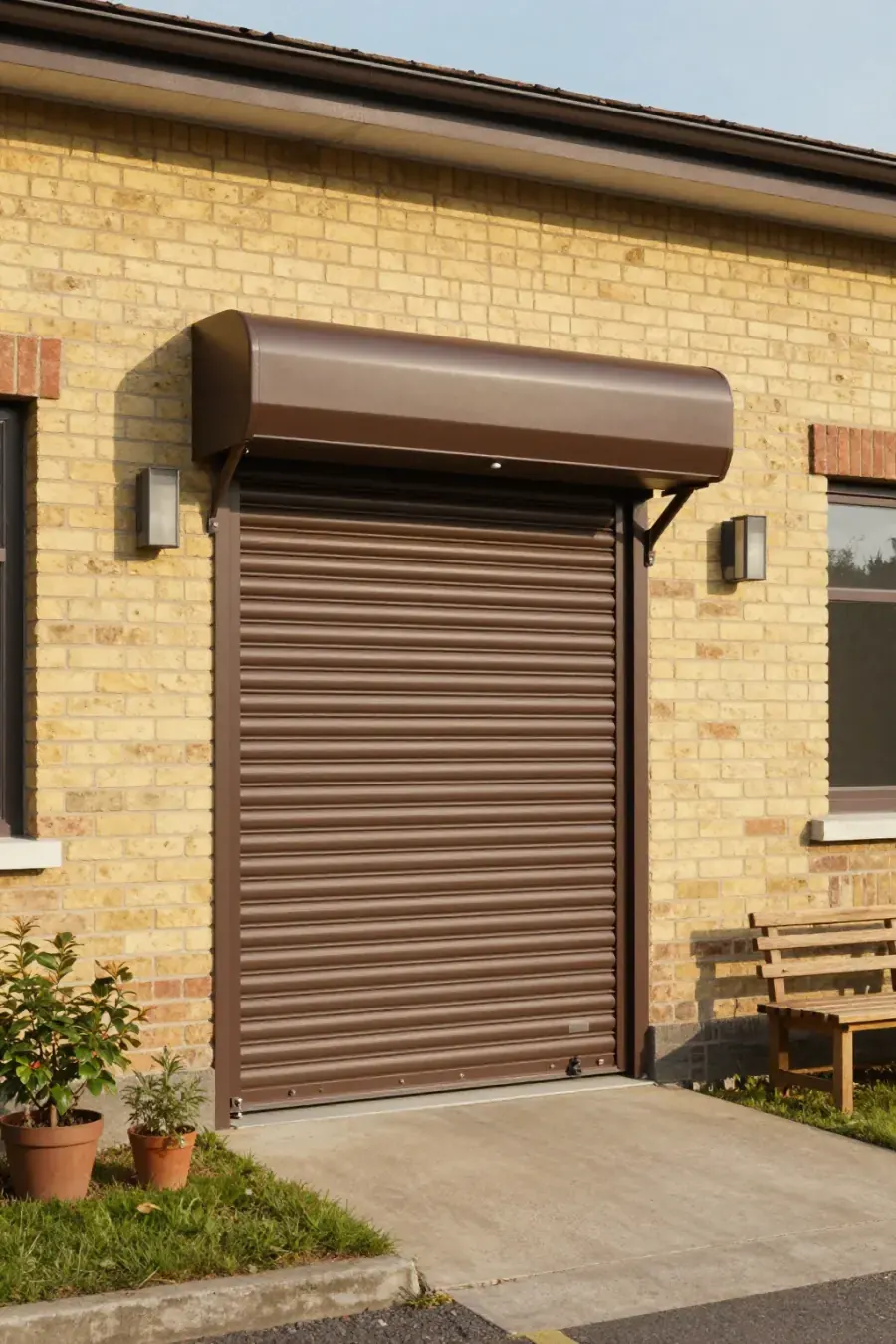
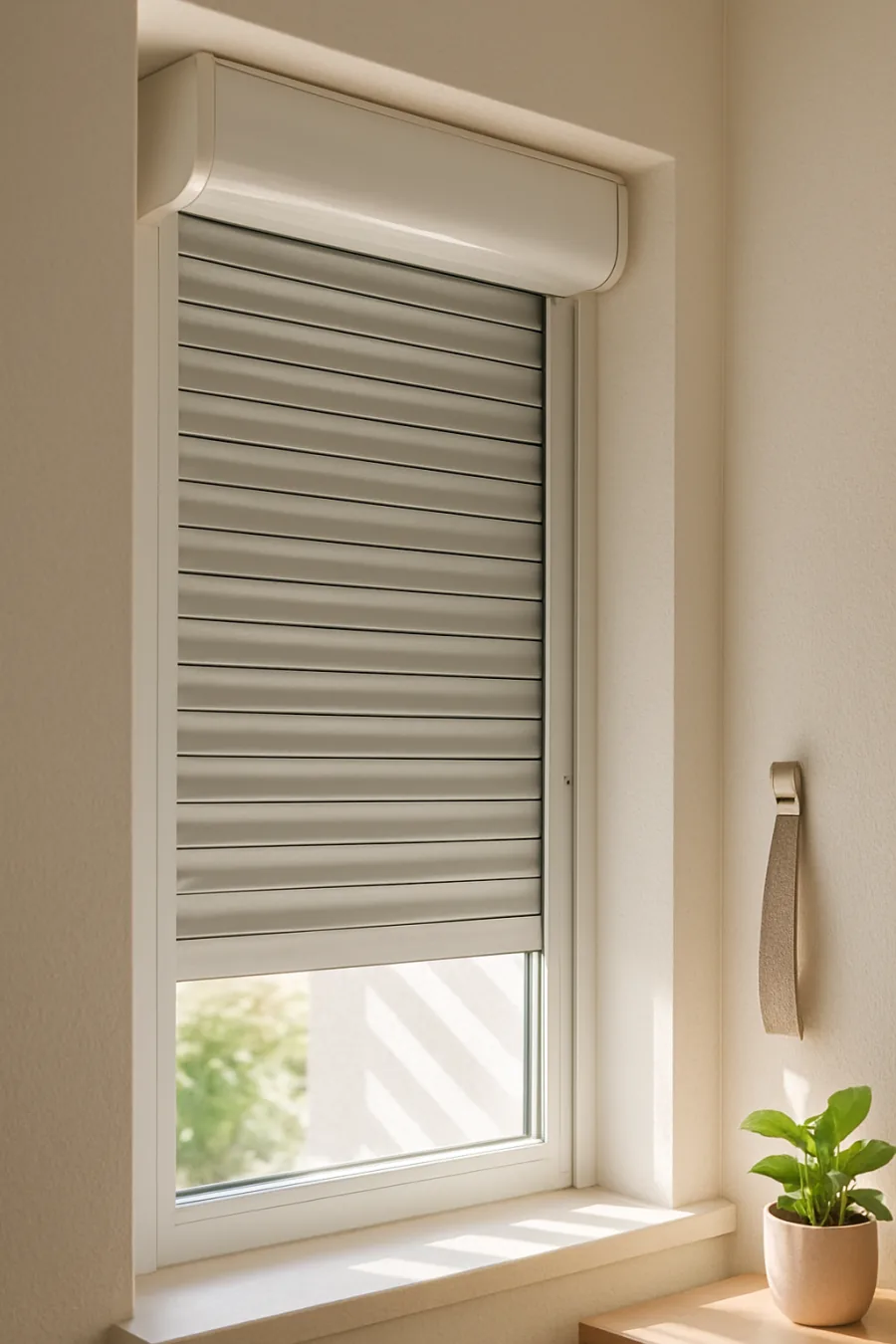
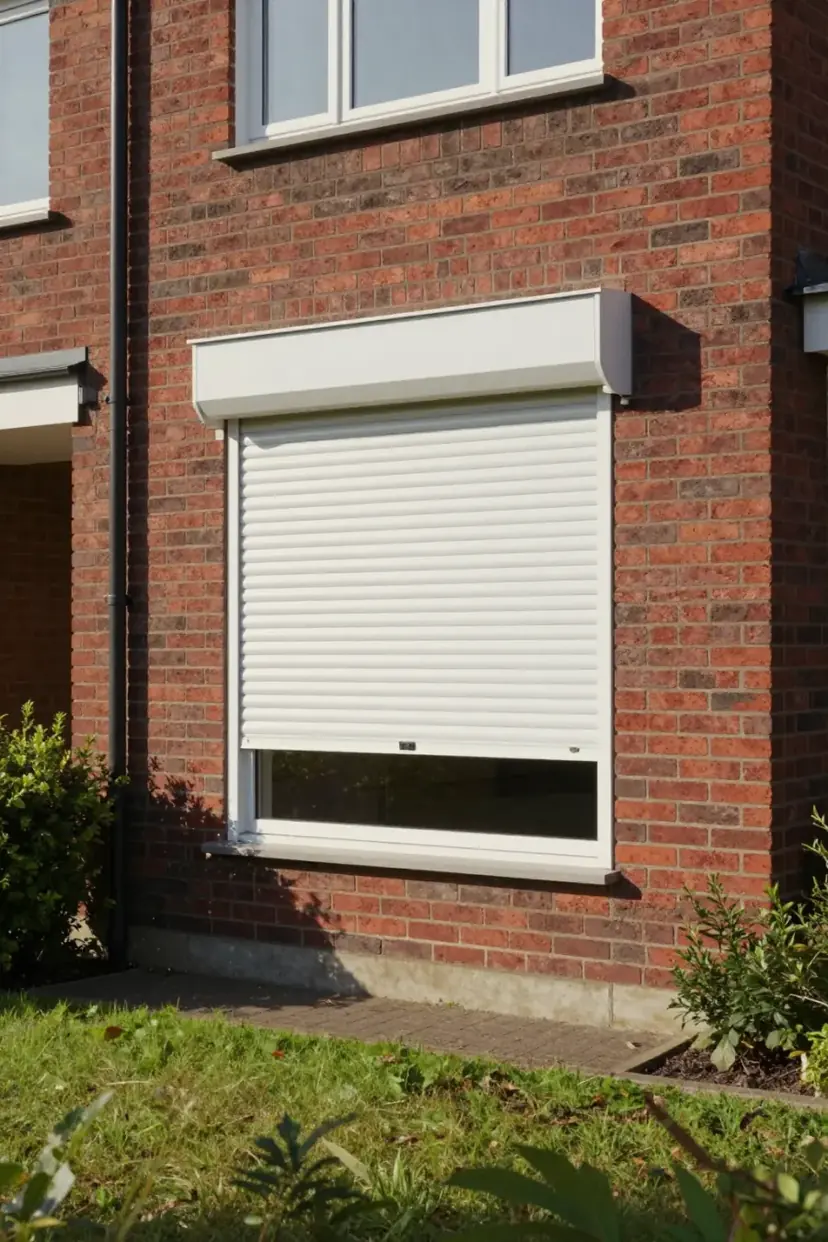
Roll-formed foam-filled profile is installed on windows and in homes — it is light, works quietly, and a strap or cord is enough for it. Extruded aluminium is installed on shopfronts, garages and ground floors: the blind is reinforced, it cannot be prised open with a crowbar, and it needs a matching mechanism — a crank winch. Perforated profile lets light and air through, so it is chosen for a bathroom without a window, a walk-in closet and shop windows where the view must be kept.
Projects from our practice
Below are the cases we come across most often during measurements.
- A ground-floor apartment. Roll-formed foam-filled profile, strap, closed from the inside. Protection from prying eyes and dust.
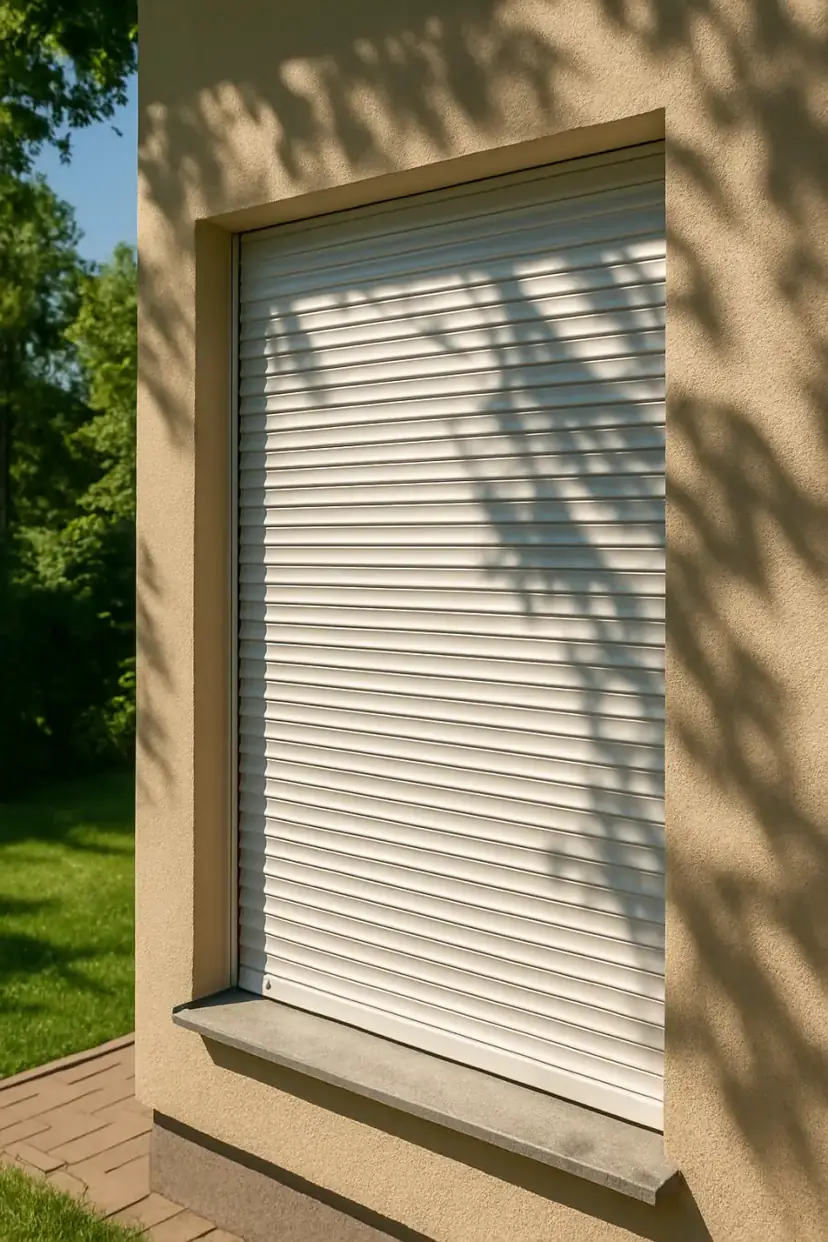
- A private house on the sunny side. The same light profile, but with foam filling — it takes away the overheating of the room on a hot day.
- An unguarded garage. Extruded aluminium and a crank winch: a handle with a lever, effort through the gearbox.
- A shop window. Extruded profile, closed by hand at night. Lower it in the evening, raise it in the morning — a chain is more convenient here than a strap.
- A door to the terrace. A chain from inside the room: the blind is used often, and the chain withstands that.
- A walk-in closet. A cord instead of hinged doors — saves space in front of the wardrobe.
- A bathroom without a window. Perforated profile, closed with one hand and leaves gaps for air.
- A ground-floor office. Roll-formed profile, no remote controls: the employee closes the window themselves when leaving.
And what about several windows at once? You cannot control two blinds with one handle — the mechanism is installed on each opening separately. A window, a door, a shopfront, a garage each get their own set, and their own drive.
For windows and homes, a light foam-filled profile with a strap or cord is installed; for shopfronts, garages and ground floors — reinforced extruded aluminium with a crank winch.
Maintenance and repair: what you can fix yourself
The strap, cord and chain do not need lubricating. These parts work dry, and oil on them only collects dust, which then packs into the gearbox. The gearbox and roller tube are another matter: a technician services them, and does so without removing the structure from the opening. Tightening the spring, replacing a worn cord or chain and adjusting the roller tube can be done on site — there is no need to take the roller shutters apart and bring them to the workshop.
What breaks most often? In Jalusso practice — the consumables, that is the strap and cord. They wear through at the bends, because every lift and lower is a bending cycle. A chain lasts noticeably longer than a strap, but it too stretches over time. The gearbox and the mounting fail less often, usually after sudden jerks or an attempt to lift a frozen blind by force.
- The strap and cord wear through first — they are consumables, and we replace them on site.
- A chain stretches more slowly, but with frequent use it also needs replacing.
- The gearbox and mounting break less often — more from a jerk than from wear.
- Adjusting the roller tube and tightening the spring is scheduled work, not an emergency.
What we do ourselves and what the technician does
Replacing a cord or strap by hand is theoretically possible, but the spring inside the roller tube is under tension, and if removed carelessly it uncoils. We do this on site in one visit. Replacing the gearbox is a different job: it needs access to the roller tube, and sometimes the roller tube itself has to be replaced.
Warranty
We service the roller shutter mechanism under a 3-year warranty, and the installation work carries a 1-year warranty — counted from the day the acceptance certificate is signed. If the case is covered by the warranty, we fix it free of charge within 5 working days. Once the warranty period has expired, we still come out to you — we tighten the mechanism, adjust the travel of the curtain, replace the cord or chain. The warranty does not cover cases where the roller shutters have suffered mechanical damage, were reinstalled on your own, got wet, or the fabric has faded over time.
Mechanical roller shutters are repaired on site, without dismantling the structure: tightening the spring, replacing the cord or chain and adjusting the roller tube do not require removing the product from the opening.
Mechanical roller shutters in winter in Almaty
In severe frost, a mechanical drive does not require noticeably more effort. The mechanism works thanks to the spring in the roller tube and the gearbox, not thanks to current in the windings, so the cold itself does not slow the travel and the force needed by hand does not increase. The problem comes from another direction — from moisture.
The edge of the blind freezes to the windowsill or to the guide rail when moisture gets in during frost. Condensation, snow, ice on the external sill flashing — and the bottom slat sticks firmly to the surface. The mechanism has nothing to do with it. The tape, cord or chain are fine, the roller tube is intact, but the blind will not move until you tear the edge free.
How to avoid this? Don’t yank. We always mention this at handover: lift smoothly, without a jerk. A short, sharp effort is exactly what causes the tape to tear or the chain to stretch — and all because the hand pulled before the edge came free. A smooth movement at the start tears the ice off without loading the mechanism.
Sharply continental climate
Almaty has a sharply continental climate: cold winters, with frosts and a big temperature difference between day and night. During the day the moisture thaws a little and runs down onto the edge, at night it all freezes again. It is precisely on such temperature swings that the blind most often freezes.
In winter, the chain and the tape behave the same way — both stay in your hand, both do not depend on electricity. And pulling them in gloves is awkward, which is exactly where smoothness helps: a few calm movements instead of one strong one.
Mechanical roller shutters do not jam from the cold in winter — they are driven not by grease in a motor, but by a spring and a gearbox, so frost is no obstacle for them.
Can an electric motor be fitted later
Yes, switching to an electric motor is possible. But it is not a matter of replacing one part with another — the structure will have to be taken apart and reassembled. The electric motor is fitted inside the roller tube, and the roller tube on a mechanical unit is shorter and designed for the force of a hand, not a motor. That is why, when switching to an electric motor, the roller tube is replaced and the motor itself is installed. The housing box and guide rails stay the same, provided they were sized with a margin.
The housing box and guide rails are sized in advance for the mechanism — that is what decides how much such a switch will cost in a year or in three. If the housing box was chosen for a manual roller tube, there may not be enough room inside for a motor, and then the whole assembly is replaced, including the housing box. Jalusso always asks at the measurement whether automation is planned for the future, and it selects the housing box with that answer in mind. It costs nothing now and saves a noticeable sum later.
What changes in the structure
The roller tube is replaced, the electric motor is added, and a remote control is included. The mechanical tape, cord or chain are removed — they are no longer needed. Emergency lifting remains: it lets you open the roller shutters by hand if the power goes out or the remote control fails. The price guide is simple: a set with an electric motor and remote control starts from 35,000 ₸/m² with us, against 17,500 ₸/m² for a mechanical one. The difference is roughly double — for the convenience and for the ability to open the curtain without walking up to it.
The roller tube on mechanical roller shutters for windows and on the motorised version differ in their mounting dimensions, so when switching to an electric motor it is replaced together with the motor, rather than the old one being modified.
Switching to an electric motor is possible, but requires replacing the roller tube and installing the motor, so the housing box and guide rails are best sized for the mechanism in advance.
How to order mechanical roller shutters in Almaty
We are a manufacturer in Almaty, we do not keep products in stock — every set is made to measurement. The order goes like this.
- You write to us on WhatsApp or call: describe the site — a window, a door, a shopfront, a garage.
- The measurer comes with samples of profiles and manual mechanisms. Measurement and consultation are always free.
- On site we calculate the cost: profile, area of the opening, type of mechanism, method of installation.
- Then comes the workshop. The blind and the housing box are manufactured to your size.
- Installation: 4,500 ₸ per product, free for orders from 150,000 ₸. Measurement and delivery within the city are free.
Measurement always comes before manufacturing in the workshop — it is from the measurement that the dimensions of the housing box, the guide rails and the exit point of the tape, cord or chain are taken.
At a country house without a stable electricity supply, a mechanical unit really does remain a working option rather than a compromise. There is nothing to power a motor with there. And the tape, cord or chain do not depend on the mains: you bring it, install it, and close up.
Suburbs
We travel to Kaskelen, Talgar, Issyk and Kapshagay. The cost of the visit depends on the distance and is quoted before the visit, so there are no surprises on site.
Mechanical roller shutters in Almaty are ordered in five steps — from a WhatsApp message to installation, and measurement and consultation are free at any site.
FAQ
Short answers to what people ask most often before a measurement.
Questions
What are protection classes P1–P8 and do they matter for a mechanical unit?
Protection classes P1–P8 describe the resistance of the curtain to break-in — that is, how much time and what tools are needed to force open a closed opening. They have nothing to do with manual operation. Mechanical roller shutters and a set with an electric motor on the same profile give the same class. When choosing what to close a shopfront or a ground floor with, look at the profile and the method of installation, not at whether you have a handle or a remote control.
Is it true that a mechanical unit lasts longer than an electric motor?
We do not give a service life in years — we do not have such a figure, and any promised term would be made up. But the comparison by design is honest: mechanical roller shutters have no motor, no board and no power supply, and there is not much in them that can break. Compare for yourself: on a motorised unit the electrics wear out, on a mechanical one the gearbox, the spring and the pulling element. We can tighten the spring, replace the chain or adjust the roller tube on site, without dismantling the structure.
Is it hard to lift the blind by hand if there is an elderly person or a child at home?
It depends on the mechanism and the blind. A tape and cord on a light blind need little effort — even a teenager can manage it. A chain helps thanks to the gearbox, while a crank drive is used on heavy and wide blinds, and there you need to put your body into it. If the blind is lifted several times a day and there is an elderly person in the house, an electric motor is not a luxury. You can switch to it later, but the housing box and guide rails are best sized for the mechanism in advance.
Are mechanical roller shutters noisier than motorised ones?
Mechanical roller shutters are quieter: there is no motor, so you only hear the curtain in the guide rails and the gearbox working.
Protection classes P1–P8 describe the resistance of the blind to break-in and do not depend on whether the mechanism is manual or motorised.
Conclusion
Mechanical roller shutters in Almaty are chosen by three things: the profile of the curtain, the mechanism for that curtain and the scenario of use. Everything else is secondary.
The bottom line.
Manual control is not a compromise but a solution in its own right. A strap and cord suit a lightweight curtain, a chain is better where the blind is used often, and a crank handle is for heavy and wide ones. The mechanism runs without electricity or remotes, so a site without a stable power supply does not depend on one.
The price is predictable. Roller shutters for windows start from 17,500 ₸/m², security shutters made of extruded aluminium from 24,900 ₸/m², and perforated ones from 27,800 ₸/m². A set with an electric motor and remote control costs about twice as much as a manual one with the same opening protection. Manufacturing takes 10–14 days, installation is 4,500 ₸ per unit.
Maintenance is simple: the spring can be tightened, the cord or chain replaced, and the roller tube adjusted on site, without dismantling the structure. Warranty is 3 years on the mechanism and 1 year on installation.
Switching to an electric motor later is possible, but it is cheaper to allow for the mechanism in the housing box and guide rails from the start — otherwise the roller tube will have to be replaced and the motor fitted.
We are a manufacturer with our own workshop in Almaty, and we do not keep finished products in stock. So there is one practical recommendation: start with a free measurement. Our measurer arrives with samples, you handle the strap, cord and chain yourself, and he calculates the cost on the spot — for your opening and your scenario, not from a catalogue. Measurement and delivery within Almaty are free; outside the city — to Kaskelen, Talgar, Issyk, Kapshagay — we travel at a call-out price quoted in advance.
The mechanism of this design can be repaired on site, so the decision does not lock you in: you can go with the manual option now and keep the possibility of upgrading later.

