












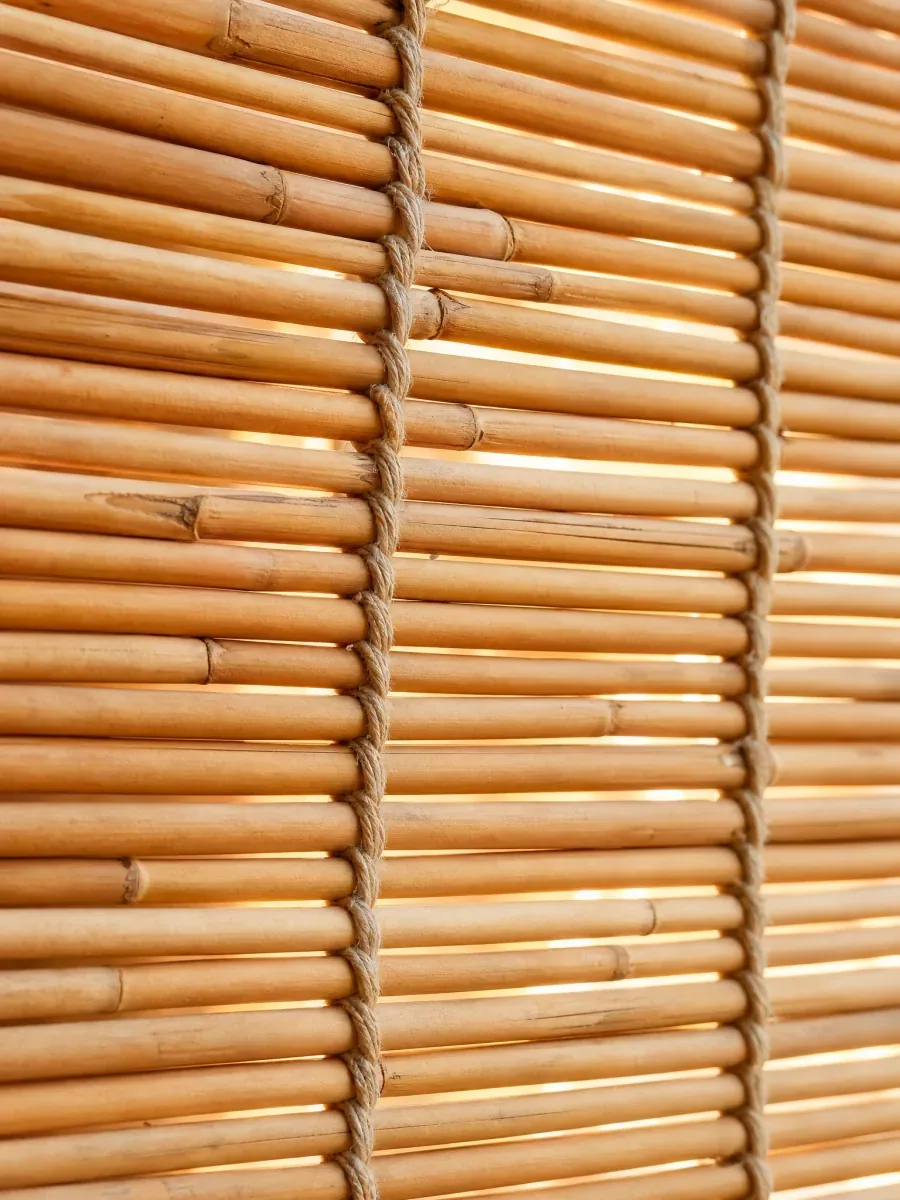











Removable blinds in Almaty are a system where the fabric together with the tube comes out of the open slot of the brackets without tools, while the brackets stay on the window. We manufacture such systems to measure: we don’t drill the frame, we select the fabric for washing, and the blind can be washed, taken along when you move or put away for the winter.
How removable blinds differ from no-drill blinds and from stick-on blinds
Removable window blinds are a design in which the blind together with the tube lifts out of the open slot of the bracket without tools, while the brackets themselves stay on the window. When the blind is removed, only the brackets fixed into the glazing bead or on the mounting tape are visible on the frame: the frame is intact, no drilling needed.
The confusion arises because removability and no-drill installation are two different properties. No-drill answers the question “what to fix it with”, removability answers “how to take it off and put it back”. Fixing into the glazing bead gives both properties at once: the bracket fits into the slot of the glazing bead, the blind rests on it, and the window stays as it was when removed. But there are also non-removable no-drill systems — they are installed the same way, but you won’t be able to take them off as a whole.
The stick-on blind with Velcro, suction cups or a clip stands apart. Velcro holds light fabric and is meant for a ready-made store product, not for fitting to a specific window. Jalusso makes the system to measure: tube, mechanism, brackets and fabric to your dimensions. A blind on suction cups for a kitchen with grease and a kids’ room with handprints is a compromise, not a solution that lasts for years.
Removability is a property of the design: the blind together with the tube lifts out of the open slot of the brackets without tools, while the brackets stay on the window.
Removable and no-drill are not the same thing
No-drill is about fixing, removability is about how the blind comes off and goes back. We usually combine both properties in one system. A non-removable no-drill option also exists, and it’s cheaper — with the same fabric, the difference is in the brackets.
Why a stick-on blind is not the same thing
Velcro, suction cups and spring clips hold light fabric and are meant for a ready-made product. We assemble the system for your window: tube, mechanism, brackets and fabric. And one more thing: fixing into the glazing bead doesn’t touch the frame, so the window manufacturer’s warranty stays valid — for a rented flat this matters more than it seems when choosing.
How to take the blind off and put it back: what stays on the window
The removable blind lifts out of the open slot of the bracket upwards and towards you, without tools and without removing the brackets themselves, in about ten seconds. Back on — with the same movement, only in reverse order: the slot sets the position, it’s hard to miss.
Step-by-step
Lower the blind all the way so the tube is released from the fabric tension. Then take the tube with both hands at the quick-release brackets — not in the middle, otherwise the tube will skew — and pull upwards and towards you. The blind comes off together with the tube and mechanism. No tools needed: a screwdriver plays no part in this operation, the brackets are not removed from the window.
Installation repeats removal in reverse order. The tube goes into the slot all the way, settles into it, and that’s it: no clicks, latches or effort required. Taking the blind off and putting it back is a standard operation, it’s built into the design, not something you put up with as a temporary solution.
On a tall window the order is the same, but you’ll have to stand steady. The blind is lifted out with both hands at the brackets, so holding on to the frame with one hand and pulling the tube at the same time is awkward — you need solid footing and both hands free. A stepladder isn’t required, a stable footing is.
What stays on the window
The brackets stay. They sit in the glazing bead or on the mounting tape, the frame is intact, the glazing bead is untouched — no holes, no screw marks. When the blind has gone off to be washed or stored, the window looks almost as it did before installation, apart from two small clips.
So the blind doesn’t pull away
The tube rests in the slot under its own weight, and the bottom rail pulls the blind down. The system is deliberately not made tight — otherwise the blind couldn’t be removed in one movement. On a tilt-and-turn sash we add a bottom fixing for the blind: that’s the case where the blind would otherwise catch on the windowsill when opening.
And how many times can you do this? As many as you need in everyday life. The slot is designed for repeated removal and installation, and the fit doesn’t loosen: the blind returns to the same position because it’s set by the slot itself, not by the fixing. What can loosen is not the fit of the blind, but only the bracket, if you rehang it yourself.
How to know when ordering that the blind can be washed
The answer is simple: ask about the fabric before ordering, not after the first Friday in the kitchen. Removable window blinds come off in seconds, but removability alone doesn’t make the blind washable — washing is determined by the fabric’s coating, and at the measurement we say so straight. The measurer comes with samples, and the question is settled while the product is not yet in production.
The choice of fabric depends on whether the blind will be washed. This is the first thing we clarify: grease in the kitchen, handprints in the kids’ room, soot after renovation — if that’s ahead, we take fabric without coating. It can handle water. If dense blackout or dirt repellency matters more, the blind will look better in the first months, but won’t survive washing.
What to ask at the measurement
A measurement with fabric samples is the only place where the answer is honest. You can crumple the sample in your hands, look at it against the light, judge the density. Which fabric is in front of you and how it handles water — we say right away, before signing. After that a clear task goes to the workshop.
Dirt-repellent coating washes out when washed. The blind loses its properties gradually: first it repels dust worse, then it absorbs grease. Blackout coating behaves worse — it causes the fabric to shrink, and the blind stops rolling up evenly on the tube. Visually this shows up as skewed folds that can no longer be smoothed out.
Hand wash without spinning or ironing
Fabric without coating can handle hand washing in cool water. Laundry soap, gentle movements, no soaking overnight. No spinning, no ironing, no rolling up while damp either. Lay the blind out flat to dry and wait until it’s completely dry.
The table is simple:
| Fabric | Washing | Care |
|---|---|---|
| Without coating | Hand wash, cool water | Laundry soap, no spinning, no ironing, don’t roll up while damp |
| Dirt-repellent treatment | Not allowed | Dry dusting with a brush in place or professional dry cleaning |
| Blackout coating | Not allowed | Dry dusting with a brush in place or professional dry cleaning |
If washing is not allowed
Dry dusting with a brush in place or professional dry cleaning remains. For a blind with coating this is a workable option — a soft brush removes dust without touching the layer. Professional dry cleaning is ordered less often, usually at sites with many blinds: in a meeting room with dry cleaning once a year, four windows, and it’s cheaper than replacing the fabric.
Washing the blind is not a universal procedure. A blind with coating must not be washed: the coating washes out, the fabric shrinks and stops rolling up evenly, and there’s no way to fix it.
Kitchen, kids’ room, rented flat, country house and office: where removability is needed and where a brush is enough
Ordinary dust is easier to remove with a brush in place, while removability is needed where there’s grease on the blind, handprints, soot after renovation, a move or seasonal storage. Removable window blinds are chosen not by window type, but by the care scenario: the same roller blind can be in a bedroom where dry dusting is enough, and in a kitchen where washing is unavoidable.
When cleaning in place is enough
A vacuum cleaner on minimum power and a dusting brush cover most everyday care. Run the brush over the fabric from top to bottom, go over it with a vacuum cleaner with a soft attachment at low speed — and that's it. This is how dust is removed in the bedroom, living room and study.
The fabric stays in the bracket slot. Nothing is unscrewed, removed or taken to the bathroom.
This method works for regular care. Dust builds up slowly, and if you remove it every couple of weeks, the fabric stays neat for a long time.
When you can't do without taking it down
Kitchen. Grease settles on the fabric as a film, and a brush won't remove it — it just smears. Here the fabric is taken down and washed.
Kids' room. Handprints, marker, playdough, juice — all of this lands on the fabric below the reach of a child's outstretched arms. Not every fabric can be wiped with a damp cloth in place, but taking it down and washing it carefully is fine, as long as the fabric has no coating.
Rented apartment. Here it's not about dirt, but about the fact that the item should move with you. The fabric is taken down, the brackets are pulled out of the glazing bead, and the window stays as it was.
Country house and balcony for the winter. The fabric is taken indoors, the mechanism stays on the window for the winter. In spring it's put back.
Office with a cleaning schedule. In the meeting room and office, cleaning follows a schedule, and the fabric is taken down to fit that schedule, not when it gets dark.
Soot after renovation is a separate case. Dust from plaster and paint gets packed tightly into the fabric, and a brush only pushes it deeper. Our measurer on such jobs immediately suggests fabric that can be washed.
Short conclusion: if there's only dust on the fabric, a brush is enough. If there's grease, handprints, soot, a move or seasonal storage — you need a system that comes down.
A removable system is needed for the kitchen, kids' room, rented apartment, country house for the winter and an office with a cleaning schedule, while ordinary dust is removed with a brush in place.
Which systems can be removable: roller, day-night, aluminium, vertical
Roller systems, day-night, aluminium with a 25 mm slat and vertical blinds, whose slats are removed one by one, can be made removable. The magnetic cassette comes out as a whole — together with the mechanism and guide rails. Below is how each system is taken down and what stays on the window.
| System | How it is removed | What stays on the window |
|---|---|---|
| Roller blinds | the fabric on the tube is pulled out of the open slot of the brackets | brackets |
| Day-night | the two-layer fabric on the tube is pulled out the same way | brackets |
| Aluminium, 25 mm slat | removed from the brackets together with the top rail | brackets |
| Vertical | slats are removed one by one | rail with runners |
| Magnetic cassette | the housing box is removed in one motion | magnetic plates |
| Quick-release brackets | the rail unclips by pressing the catch | bracket |
Roller and day-night
Roller blinds are simpler than the rest: the fabric is wound on a tube, and the tube sits in the open slot of the bracket. Grab the tube at the brackets, pull up and towards you — the fabric is in your hands. With day-night, the fabric is two-layer, and washing is decided separately: the two-layer fabric behaves differently from a single fabric, so we ask about water at the measurement.
Aluminium and vertical
Aluminium blinds are assembled on a 25 mm slat — the fabric is rigid and bends poorly, but dust is brushed off it faster than off textile. They are removed together with the top rail, and the brackets stay on the window. Vertical blinds are built differently: the slats hang on the runners of the rail and are removed one by one. This is convenient when a couple of slats near the stove get dirty — you wash them separately, and the rest stay in place.
Magnetic cassette
The magnetic cassette works on a different principle. The housing box sits on magnetic plates glued to the frame and is removed in one motion — together with the fabric, mechanism and guide rails. No tools needed. Only the plates stay on the frame, and they don't interfere with the sash. The version with spring catches is built similarly: the bracket stays on the window, and the rail unclips by pressing the catch.
The magnetic cassette and spring catches are good where the fabric leaves as a whole: in a rented apartment or on a balcony before winter.
Removability is a property of the design, not a separate model: roller systems, day-night, aluminium with a 25 mm slat and vertical blinds are removed in different ways, but the brackets or rail always stay on the window.
Removable system and cassette system: comparison by price, mounting and care
A removable system is cheaper than a cassette system, and that's the main difference in price. With mounting, the difference is subtler, and it's worth understanding before the measurement: removable window blinds are held on quick-release brackets, while a cassette system covers the fabric with a housing box.
What we compare
A removable system is taken off the open slot of the bracket: the fabric with the tube comes off, the brackets stay on the window. A cassette system is built differently — the fabric is hidden in a housing box, the box covers the tube from above, and you can't remove all of it in one motion.
Care differs for the same reason. For a removable system, washing is a standard operation: take out the fabric, wash it, put it back in the slot. With a cassette system, the housing box is removed, not the fabric, so cleaning is more complicated and is more often done in place.
What determines the price within removable systems
Within removable systems, the price depends on two things: the brackets and the fabric. The brackets are more complex than fixed ones — that's the difference. There's a version with a magnetic cassette: the housing box sits on magnetic plates glued to the frame and is removed as a whole together with the fabric, mechanism and guide rails, in one motion, without tools. This is a convenient option when the fabric should leave as a whole.
The fabric pricing breaks down like this: fabric without treatment is cheaper, fabric with treatment or blackout costs more. The exact price is calculated by the measurer on site, based on your dimensions, because it depends on the window area.
As for the question “are removable ones more expensive than regular ones” — you have to look at the whole scenario, not just one line item. If the fabric has to be taken down and washed anyway, the removable system works out cheaper: there is nothing to dismantle and no need to call in a technician.
A removable system is noticeably cheaper than a cassette one, and the price difference within removable systems comes down to the brackets — they are more complex than fixed ones.
Replacement fabric for the same brackets: when it is possible and what it costs
If the brackets are ours and the roller tube type matches, the fabric can be replaced on its own, and that is cheaper than replacing the whole structure. Replacement fabric requires the same roller tube type and an open bracket slot — then the new roller tube with the fabric goes in where the old one was, while the mechanism and mounting stay the same. The difference is noticeable: you pay for the fabric and the roller tube, not for brackets, measurement and installation all over again. It is also a way to change the colour if the room no longer goes with the previous fabric.
Removability and fabric replacement are two different scenarios. Taking the fabric down makes sense when it is still in good shape but has kitchen grease or renovation dust on it: you wash it and put it back. Replacing the fabric is the better option when it has faded, lost its colour, or you simply want a different one.
We manufacture blinds in Almaty to measure, so fabric replacement is a routine job for our workshop.
When replacement goes smoothly
- The brackets are ours: left over from a system we installed.
- The roller tube type and the open bracket slot match.
- The window size has not changed — the fabric is made to the same width.
The exact price is quoted by the measurer: it is made up of the fabric footage, the type of fabric and the work, and the dimensions are taken from your window.
When an inspection is needed
With someone else’s system, the slot and roller tube diameter may not match — we check on site. Brackets from another manufacturer can be deeper or narrower, the roller tube thicker, the slot spacing different. Sometimes it fits, sometimes it is easier to install a complete removable system. The measurer comes with fabric samples and tells you right away what will work with your brackets.
When you move, the fabric can be taken down, brought along and fitted onto new brackets — if the roller tube type matches. Replacement fabric for the same brackets is cheaper than a new structure, but it requires the same roller tube type and slot — that is the main condition for this kind of replacement.
Washing and cleaning the fabric: what you can and cannot do, and what to use instead of washing
Removable fabric can be washed in only one case — if the fabric has no treatment. Then hand washing in cool water is fine, without spinning or ironing. Fabric with a dirt-repellent or blackout treatment must not be washed: the treatment washes out, the fabric shrinks and no longer rolls up evenly. That is exactly why the fabric is chosen at the measurement stage, before ordering, and not after the first Friday in the kitchen.
Hand washing
Cool water, laundry soap, gentle hand movements. Do not soak the fabric for long and do not scrub the front side with a brush — that leaves bald patches on the fabric. Do not spin it in the machine and do not wring it out by hand either. Let the water drain on its own, smooth the fabric out and let it dry flat. No ironing needed: moderate moisture goes away without an iron, and a hot iron damages the structure of the fabric.
Drying and storage
Do not roll the fabric up while it is damp — otherwise it keeps creases that will not smooth out. Drying before rolling up is essential: first the fabric dries completely, then it is rolled onto the roller tube or folded for seasonal storage. A fabric that has been taken down is stored until the season without creases — in a dry place, rolled or hung, but not squashed in a stack under other weight. We mention this at the measurement stage, because a crease in the fabric cannot be removed afterwards.
What not to do
Washing fabric with a treatment. Spinning. Ironing. Rolling up damp. If the fabric does have a treatment, the only options are dry dusting with a brush on site or professional dry cleaning — this kind of fabric does not take water.
Cleaning without taking it down
Ordinary dust is removed with a dusting brush or a vacuum cleaner on the lowest power setting, right on the window. For fabric with a treatment, that is enough in most cases. Removability is needed where dust has mixed with grease, where there are hand marks or soot after renovation: a brush does not remove that kind of dirt.
Fabric with a treatment must not be washed — for it, dry cleaning or professional dry cleaning is the only option, while fabric without a treatment handles hand washing in cool water just fine, without spinning or ironing.
A rented flat and moving out: what happens to the frame and how to take the blinds with you
The frame stays intact. Mounting into the glazing bead requires no holes in the profile, so when the brackets are removed, the window goes back to the state you received it in. The window manufacturer’s warranty stays valid too — we did not drill into the frame.
How it works in practice. The brackets of a removable system sit in the glazing bead — the very bead that holds the glass unit. No fasteners through the profile, no anchors, no screws. When you leave a rented flat, you take down the fabric, pull the brackets out of the glazing bead slot, and no marks are left on the window. The landlord has nothing to claim, and you have nothing to explain.
What goes with you:
- the fabric together with the roller tube and mechanism;
- the brackets, if you take them out yourself;
- the bottom fixing, if it was fitted on a tilt-and-turn sash.
What stays on the window: nothing but a clean glazing bead.
What stays on the window after removal
The glazing bead is intact. That is the main argument for a rented flat, where you are responsible for the condition of the window. The frame was not touched during installation — so there is nothing to touch during removal either. We mount the brackets into the glazing bead or on mounting tape with exactly that in mind.
What counts as a routine operation and what does not
Taking the fabric out of the bracket slots and putting it back is a routine operation. Do it as often as you need — the mechanism is made for it. Rehanging the brackets themselves is another matter: if you decide to reposition them yourself, that is a separate reinstallation, and the warranty does not cover mechanical damage in that case.
When you move, the fabric is taken down, the brackets are pulled out of the glazing bead, the window stays as it was, and the window manufacturer’s warranty stays valid because the frame was not drilled.
A balcony in winter, Almaty dust and heat: seasonal storage and care
Fabric on a balcony or at a country house is taken down for the winter and stored indoors, while the mechanism stays on the window. That is what seasonal storage means: the fabric comes out of the open bracket slot with the usual movement and goes to the flat until spring. Fabric should not spend the winter on an unheated balcony.
Winter storage
In the cold it is not the roller tube or the brackets that suffer, but the fabric. Winter in Almaty means frost and sharp temperature swings between day and night, and a blind left on the balcony goes through these swings while stretched. A blind that has been taken down is folded carefully, without creases, and is not rolled up damp. The mechanism stays on the window for the winter — nothing happens to it, and in spring the blind goes back into the same slot.
Is there any point in taking the blind down if the balcony is insulated? Here it is not the frost that decides, but dust and condensation. An insulated balcony is still a room that is hardly ever aired in winter.
Dust and heat
Summer in Almaty is hot and sunny, and over the dry season so much dust builds up that the blind has to be cleaned more often than you would like. Dust settles more densely than it looks: first it lands on the fabric, then it is driven against the window when you air the room. The kitchen adds grease to the dust — and this is where the choice of fabric works for you or against you.
We match the fabric to how you will care for it, and you can see this in the samples at the measurement. If the blind will live on a balcony and in a kitchen, it is wiser to take a fabric without coating: it can be cleaned with a brush in place, and once a season taken down and hand-washed in cool water. A coated fabric will not survive washing in the kitchen, but dry dusting helps less there too — grease does not come off the coating with a brush as easily.
A removable system is exactly what such situations call for: kitchens, kids’ rooms, moving house and seasonal storage. A blind that has been taken down is stored until the season without creases, and in spring it does not need steaming or ironing.
Warranty, installation and measurement: how we work
We manufacture removable blinds in Almaty with our own workshop. There are no ready-made items in stock — everything is made to measure, because the bracket slot and the width of the blind are calculated for a specific window. Measurement and consultation are free: our measurer comes with fabric samples and works out the price on the spot, before you order.
How ordering works
The client writes on WhatsApp. Then our measurer comes with samples, you choose the system and the fabric together, and only after that does the order go to the workshop. We deliver and install the finished product ourselves — installation is part of the job, not handed off to someone else.
Installation costs 4,500 ₸ per item. For orders from 150,000 ₸ it is free. Within the city, measurement and delivery cost nothing.
Measurement and visit
We travel to the suburbs — Kaskelen, Talgar, Issyk, Kapshagay. The call-out price is calculated by distance, and we tell you it in advance — before the technician sets off to you.
Warranty
Installation carries a one-year warranty from the moment the acceptance report is signed, and the mechanism three years. If a case is recognised as a warranty case, we do the work free of charge — within 5 working days. When the warranty has already expired, we still come: we tighten the mechanism, adjust it, fit a new cord or chain.
What the warranty does not cover: mechanical damage, reinstallation done yourself, water and natural fading of the fabric. There is a subtlety here that is better to know in advance: taking the blind out of the bracket slots and putting it back is a standard operation, but rehanging the brackets themselves with your own hands is already a self-installation.
A kitchen with grease, a kids’ room, a rented flat, seasonal storage at a country house — each situation calls for its own fabric and its own type of bracket. Fixing into the glazing bead preserves the window manufacturer’s warranty: we do not drill the frame. That is why we do not undertake to name the system and fabric in advance, over the phone — that decision is made at the measurement.
In practice: how a removable system is chosen on real projects
The system is chosen for how you will care for it, not for the type of window. Jalusso comes to the measurement and first of all asks not about the size of the opening, but about what will happen to the blind afterwards: who takes it down and how often, whether there are pets, whether anyone cooks near the window. Both the type of system and the fabric depend on this.
Kitchen, kids’ room, flat after renovation
A kitchen in a private house, three windows. Here the blind collects grease faster than anywhere else, so we install a removable roller system with uncoated fabric — it can be hand-washed. The lead time according to the price list is 4–6 days.
A kids’ room, two windows. Handprints and plasticine on the blind are normal. The same logic: a removable blind made of fabric that can take washing. If the window opens fully, we fit a bottom fixing on the tilt-and-turn sash, otherwise the blind will catch on the frame when it turns.
A flat after renovation, five windows. Here soot settles on everything at once, and washing it in place is pointless — we take the blinds down and wash them. Day-night blinds are chosen less often: a two-layer blind needs its own approach to care.
Country house, balcony, office
A country house with four windows and a balcony with four sashes — a classic seasonal situation. For the winter the blind goes into the house, the mechanism stays on the window. This is exactly why people choose a removable design in the first place.
An office with a cleaning schedule: a meeting room with four windows, dry-cleaned once a year. Here what matters most is that the blind sits evenly after every cleaning, so brackets with an open slot are the best fit. In the office a spring clip was enough. In the hallway, with a window 2.2 m high, we installed the same removable system: the blind is taken out with both hands at the brackets, without tools, but at that height you need a stable footing.
In the kitchen, the kids’ room, the country house, the balcony and the office, a removable system is chosen for how the blind will be cleaned, not for what kind of window it is.
FAQ
Will the blind wobble on a tilt-and-turn sash?
It will not, if the system was put together for that sash. The roller tube rests in the open bracket slot under its own weight, and the bottom bar keeps the blind taut. The system is deliberately not made tight — otherwise the blind could not be taken out by hand. On a tilt-and-turn sash we fit a bottom fixing for the blind: when the sash opens, the bottom does not flap or come away. This is what sets a properly assembled system apart from a blind on suction cups that lasts until the first draught.
How many times can the blind be taken down and put back?
Taking the blind down and putting it back is a standard operation, not a one-off event for washing. The slot sets the position of the roller tube, so the blind sits back in its place every time and keeps the same fit. The limit here is not the number of times you take it down, but how careful you are: there is no need to pull the blind sideways, take it out at an angle or twist the roller tube. Do it with the same movement — up and towards you.
Will I lose the warranty if I take the blind down myself?
No. Taking the blind down and putting it back is a standard operation, and the warranty does not penalise it. Rehanging the brackets themselves with your own hands is another matter: that is a self-installation, and mechanical damage after it is not covered by the warranty. The difference is simple. The blind out of the slot — you can. The brackets out of the glazing bead — only with our team.
How hard is it to take the blind down on a high window?
The movement is always the same: with both hands at the brackets, up and towards you, without tools. The difficulty is not in the mechanism but in the access — on a high window you will need a stable footing. We do not recommend a stepladder on a slippery floor: better to wait until someone can steady you.
How should a blind that has been taken down be stored?
Until the season, without creases, and not rolled up damp. A damp blind put away in a roll keeps a fold that is then hard to smooth out. Let it dry spread out, and only then put it away for seasonal storage.
Conclusion
Being removable is a property of the design, not a marketing name. The blind together with the roller tube comes out of the open bracket slots without tools, the brackets stay on the window, and not a single new hole appears in the window.
We make removable blinds in Almaty only by measurement. Mounting into the glazing bead means we don't drill the frame and the window manufacturer's warranty stays intact — for a rented apartment that's the main argument. We don't keep any ready-made products in stock: our measurer comes with samples, and the system is assembled for your specific window.
The fabric is chosen before the order, not after the first wash. Fabric without treatment can be hand-washed in cool water; fabric with a dirt-repellent or blackout treatment must not be washed — the treatment washes out, the fabric shrinks and stops rolling up evenly. We tell you this at the measurement, while the fabric hasn't been cut yet. It's better to understand this difference in advance — redoing it later costs more.
Removability is needed where the fabric gets grease, hand marks, soot after renovation, where a move or seasonal storage is coming up. The kitchen, a child's room, a rented apartment, a country house and a balcony for the winter, an office with a cleaning schedule — these are the places where the fabric is taken down regularly. Ordinary dust is brushed off in place, and for that the system doesn't need to be taken apart.
A replacement fabric for the same brackets is cheaper than a whole new system, if the roller tube type and groove match. Our brackets meet this condition; with someone else's system the groove and roller tube diameter may not match — we check that on site.
If you've read this far, you probably already have a window in mind. Message us on WhatsApp and call a measurer with samples: the measurement is where we decide on the system and the fabric for your care routine.

