















Security roller shutters in Almaty are chosen based on the site, not the name. Three things together secure the opening: a solid extruded profile, a lock, and guide rails anchored into the load-bearing wall. Manufacturing to measure takes 12–16 days, the price is from 24,900 ₸ per m², installation is 4,500 ₸ per unit.
How security roller shutters differ from regular and anti-vandal ones
Security roller shutters are not a separate product brand, but a selection of profile, lock, and fastening for a specific opening. The word itself describes the task: to close a window, shop window, or garage so that no one can get inside. This task is solved not by the name of the item in the price list, but by what the structure is made of and how it is held on the wall.
Hence the confusion. A person searches for “security” and expects a special product, but in fact gets the same roller shutter box, just equipped differently. Security roller shutters on third-floor windows and on a solid shop window without security will look similar, but their contents are different.
What is called “security”
Security is a characteristic of the opening, not the product. If a window faces the street and can be reached from the ground, a solid profile and a locking lock are installed there. If the window is high up and cannot be reached from outside, a security filling is not needed — a regular one is sufficient. So the same profile is security in one opening and not in another, and the price per m² does not change because of this.
Where the line with anti-vandal lies
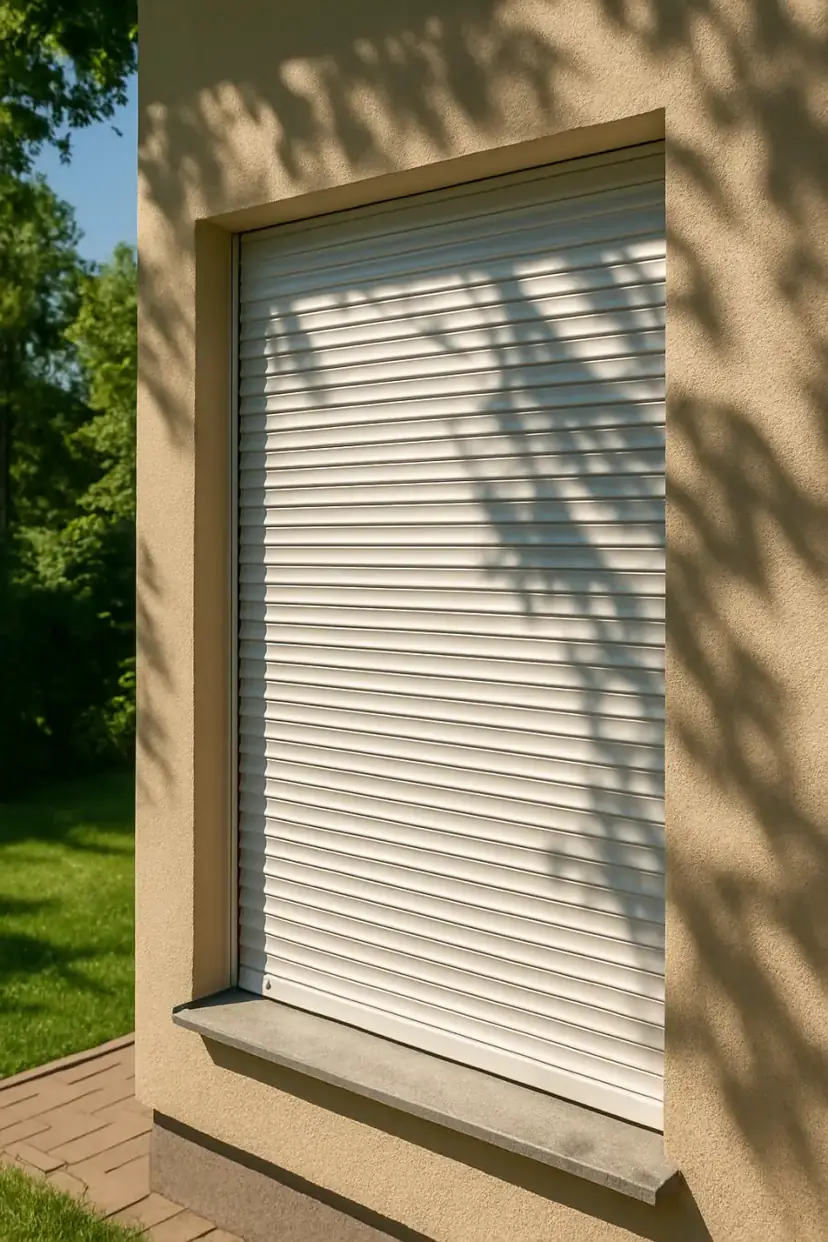
Anti-vandal is a class of execution. It includes reinforced extruded aluminium, a locking unit, and fastening into the load-bearing wall. A solid extruded slat cannot be pried with a crowbar: it is pushed out as a whole, the wall is thicker, the weight is greater — prying it with a crowbar and quietly opening the opening will not work.
And the roll-formed profile, the very foam-filled one, is roll-formed from thin aluminium tape. It honestly holds out sun, dust, and prying eyes, but does not protect against quiet break-ins. On ground floors and shop windows, this difference blurs: that is exactly where extruded aluminium is needed, so the security and anti-vandal versions come down to the same set.
Here’s what we see at measurements all the time. We arrive at a ground-floor flat, the owner shows us the window from the street and asks about “nice shutters”. We quote two options — roll-formed foam-filled and solid extruded — and the price difference is roughly one and a half times. The first option shields the room from prying eyes and heat. The second resists being forced open. For a ground floor with no security, we bring the second. Buying security roller shutters for a window like that means going for the extruded option, not the roll-formed foam-filled one.
“Security” is not a class of product, but a selection of profile, lock, and fastening for a specific opening, and only all three components together give the result.
What makes up the security of an opening
Three components together secure the opening: a solid profile, a lock, and fastening of the guide rails into the load-bearing wall. A profile or lock on its own does not solve the task. Break-ins always happen at the weak link — if there is only one, the structure holds exactly until the first serious pressure.
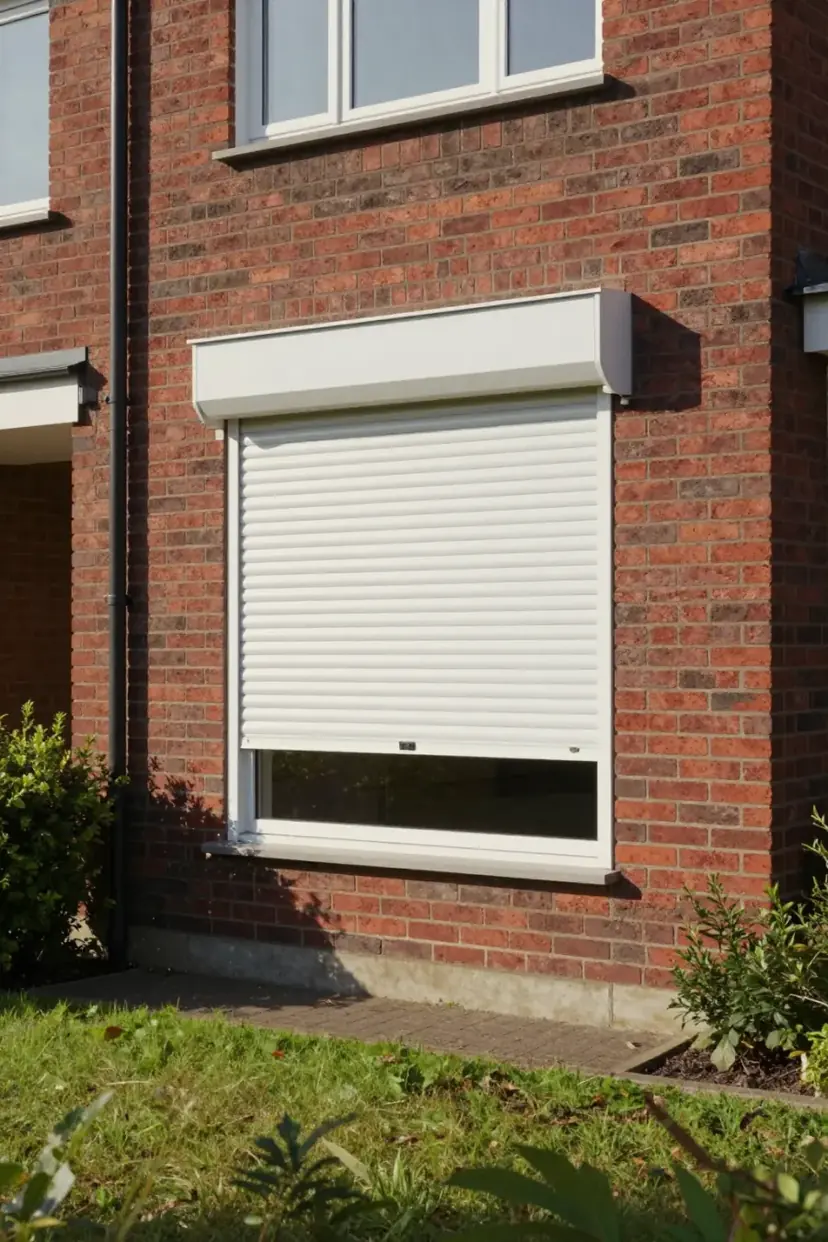
Security roller shutters are assembled from four parts: a curtain made of slats, two guide rails, a housing box, and a locking unit. The housing box covers the curtain in the raised position and protects the mechanism from rain and dust. The guide rails hold the slats on the sides of the opening. The lock presses the curtain against the guide rails. Remove any part of this four — and the rest lose their meaning.
- Profile. Extruded aluminium is pressed as a solid slat, the wall is thicker, the weight is greater — prying the blind with a crowbar will not work.
- Lock. A deadbolt lock fixes the blind in the guide rails: the slats cannot be spread apart or shifted up.
- Fastening. The guide rails are anchored into the load-bearing wall through the insulation.
Profile
The roll-formed foam-filled profile is roll-formed from thin aluminium tape, with foam placed inside. Light, inexpensive, and holds out sun and prying eyes well. It does not protect against quiet break-ins: the slat is pried and pushed out. Extruded aluminium is solid; security roller shutters are made from it where the opening is without security: shop window, garage, ground floor.
Lock
A deadbolt lock secures the curtain in the guide rails, and without it a reinforced profile loses half its point. The lock changes the price of the product and is not included in the base price of protective roller shutters per square metre — it is a separate unit that is calculated during the measurement. A weak lock on a good profile gives the same result: the curtain is lifted without touching the slats.
Mounting
The guide rails are fixed into the load-bearing wall through the insulation — this is the main thing that distinguishes real protection from its appearance. Fixing into the insulation allows the whole structure to be pried off together with the anchor: the curtain is intact, but the opening is open. On an insulated facade, the anchor passes through the insulation layer and goes into the wall; during acceptance this is visible from the fixing points and from how the guide rail behaves when pressed.
The weakest link determines the result of the whole structure: the opening is held by the solid profile, the deadbolt lock and the fixing of the guide rails into the load-bearing wall together, and reinforcing one unit without the other two gives no protection.
Grilles or protective roller shutters for the ground floor
For a ground-floor flat without security, protective roller shutters are better than grilles, and the reason is not strength: a grille closes the opening permanently, while the curtain of protective roller shutters goes into the housing box during the day. A ground-floor window without security gets protection at night and an open facade during the day. Grilles cannot do that — they are either welded shut or fitted with a hinged sash that is still visible from the street all year round. For a ground-floor shop, this is the difference between a live shop window and a barred box.
Let us compare on four points that really matter to an owner.
| Window grilles | Protective roller shutters | |
|---|---|---|
| During the day | The opening is closed permanently | The closed curtain is raised, the facade is clean |
| View from the street | The grille reads as “this place is guarded” | A neat housing box above the opening |
| View from inside | Broken up into sections by bars | Open while the curtain is raised |
| Adjustment | No | The curtain stops at any height |
| Fire exit | A hinged sash with a lock on the inside | Emergency lifting, with a crank handle for the motor |
What grilles do and what they do not do
Window grilles close the opening against break-ins and last for years without maintenance — there is no arguing with that. Then the limitations begin. A grille gives zero protection from the sun and from prying eyes: the bars hold back neither the overheating of the glass in summer nor other people's eyes. The closed curtain of protective shutters for windows takes care of both: in summer the glass does not get scorching hot, in winter the opening does not lose heat, and in the evening no one can look into the room from the street.
Grilles are also inconvenient when it comes to a fire exit. The hinged sash is kept locked, the key is somewhere in the house, and when the moment comes people search for it. In my opinion, this is the weakest point of a grille — not a thief, but a fire. Hinged metal protective louvred shutters, which are sometimes offered as a compromise, solve this only partly: the sash is also hinged and also under lock.
Can protective roller shutters be fitted over a window grille and the grille removed afterwards? Yes. The box is mounted outside above the opening, the guide rails run along the reveals, and the grille stays inside. This is what people do when the window already has a grille and they don’t want to change everything at once: first the protective roller shutters go on the window, then the grille is cut off and the reveals are finished. The reverse order doesn’t work — you can’t hide the box behind a grille.
When a protective profile at the top is not needed
The floor height determines whether a protective profile is needed at all. A window on the third floor and above cannot be pried open with a crowbar from the street: there is nowhere to stand, nothing to hook a slat with, nothing to brace against. A roll-formed foam-filled profile at the top is enough — it holds back the sun, dust and prying eyes, and the price difference with a protective one is about one and a half times. The saving on upper floors is noticeable, and there is no reason to go for extruded there.
A different matter is a window above a canopy or an awning on the second floor. That is exactly where it is easy to climb up, and a protective profile is justified there.
During the day, the curtain even of protective roller shutters goes into the housing box, and the facade stays clean — grilles cannot do that.
How to tell that the guide rails are fixed into the load-bearing wall
It is checked by the fixings: the guide rails must pass through the insulation and seat into the load-bearing wall. We look at where exactly the anchor has gone. If the fixing point holds only in the insulation layer, the structure is pried off together with the anchor — and the curtain comes out of the guide rails.
Protective roller shutters for windows are held not by the profile but by the fixing unit. The profile can be the heaviest one, but on an insulated facade everything is decided by what the guide rails have caught onto at their lower and upper ends. The Jalusso measurer checks this on site before the quote: he looks at the thickness of the finish and finds the load-bearing surface behind it.
What to check during acceptance
Four points: the fixing of the guide rails along their whole length, the depth to which the anchor goes in, the movement of the curtain in the guide rails and the gap under the housing box. And it is better to check not by eye but by touch and by ear — the curtain should move evenly, without jerking and without knocking.
Fixing into the load-bearing wall is done through the insulation. There is no other way: outside there is the finish, behind it a layer of insulation, and only then the wall. The anchor passes through this whole layer cake. If the installer shows you fixing points that sit in the insulation, that is the case when the opening is closed only in appearance.
Protective roller shutters for windows on a finished facade are installed just as strictly. A finished facade does not cancel the rule: the guide rails still go into the load-bearing wall, the fixings are simply longer.
Installation on a finished facade
The surface-mounted housing box is placed outside above the opening — the wall is not opened up, the finish is not touched. This is the most common option on houses after renovation: there is no need to drill the facade for the housing box, it sits on the surface. The guide rails, however, are fixed into the load-bearing wall, otherwise the structure holds on a wing and a prayer.
And what about an apartment building? It is worth sorting this out calmly. A housing box on the facade is a change to the appearance of the building, and in an apartment building the matter is settled with the management company or with the consent of the owners. We do not go through this stage for the client: during the measurement we explain what exactly will appear on the facade and name the fixing points — with that you can already go to those who are responsible for the building. In this sense, a surface-mounted housing box is simpler than a built-in one: it does not require opening up the wall, which means fewer questions about the condition of the facade.
Protective roller shutters for windows in an apartment building are also installed without drilling the walls for the housing box — this is exactly the surface-mounted option. Fixing the guide rails into the load-bearing wall, however, remains mandatory: without it, the structure is pried off together with the anchor.
Which profile goes on a shop window, a ground floor and a garage
The profile is chosen by the object, not by the name of the product. A shop window and a garage in a private house are closed with extruded aluminium, windows on upper floors with a roll-formed foam-filled profile, and an office with a view sometimes goes for perforation. The control, in turn, depends on the weight of the blind.
Shop window
An unguarded shop window is a job for extruded aluminium. A solid slat made of it is heavier than a roll-formed one, the wall is thicker, and you can't pry such a blind open with a crowbar.
Solid profile or perforation comes down to one question: do you need a view at night. A perforated profile keeps the shop window visible from the street on a warm evening, when the shop is already closed. The goods stay in sight, and the opening is still closed. But when it comes to resistance to prying, perforation is weaker than a solid profile — the holes in the slat weaken it. If there is something expensive behind the shop window, we advise solid extruded aluminium and not trying to keep the view.
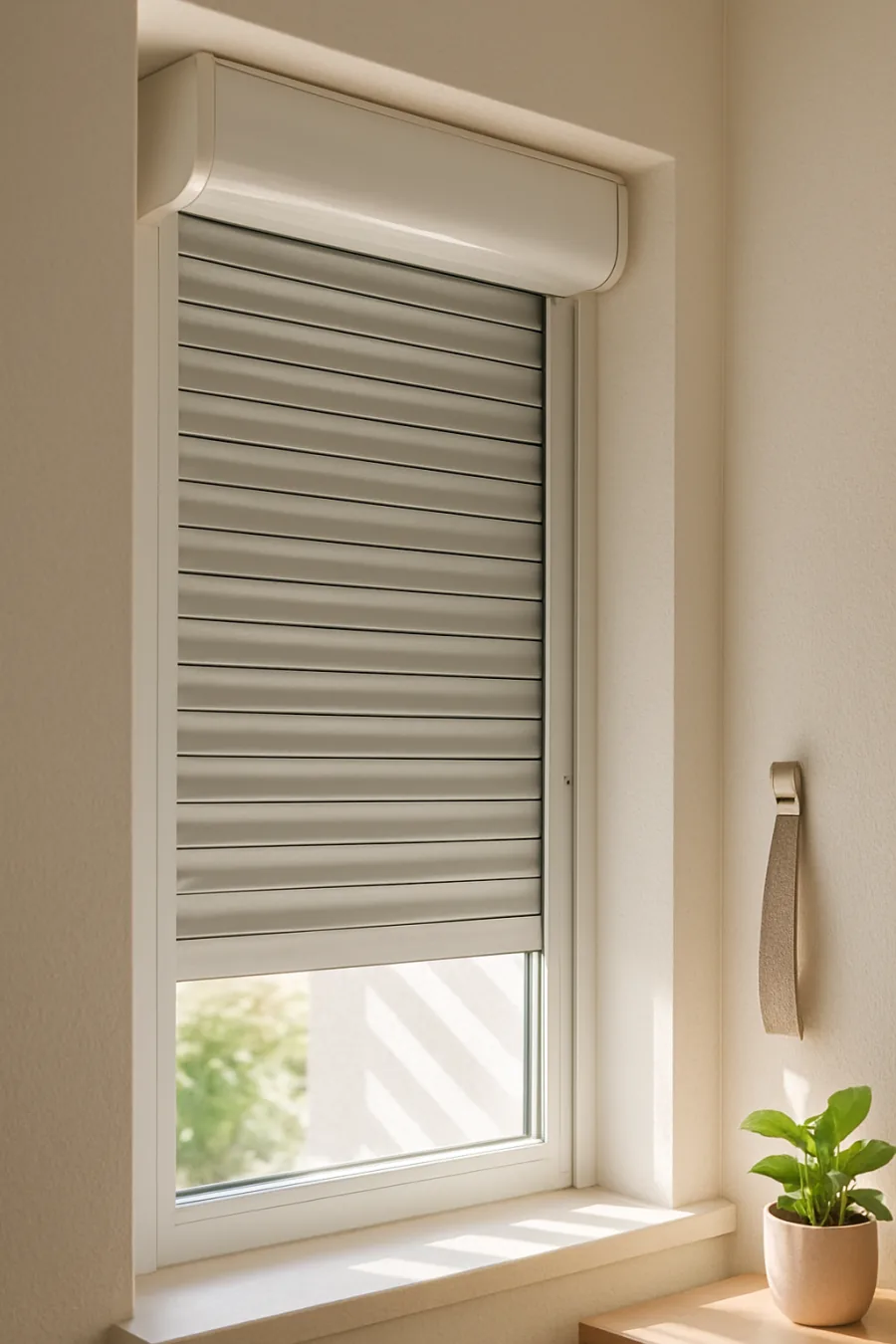
As for external or internal protective roller shutters, outside the housing box above the opening is protected from rain and from anyone trying to hook the curtain with a tool. Internal roller shutters are fixed inside the room, and they can't be seen from the street, but the raised curtain also stays inside the room. For a shop window Jalusso installs the external version with an overlay housing box.
Garage and gates
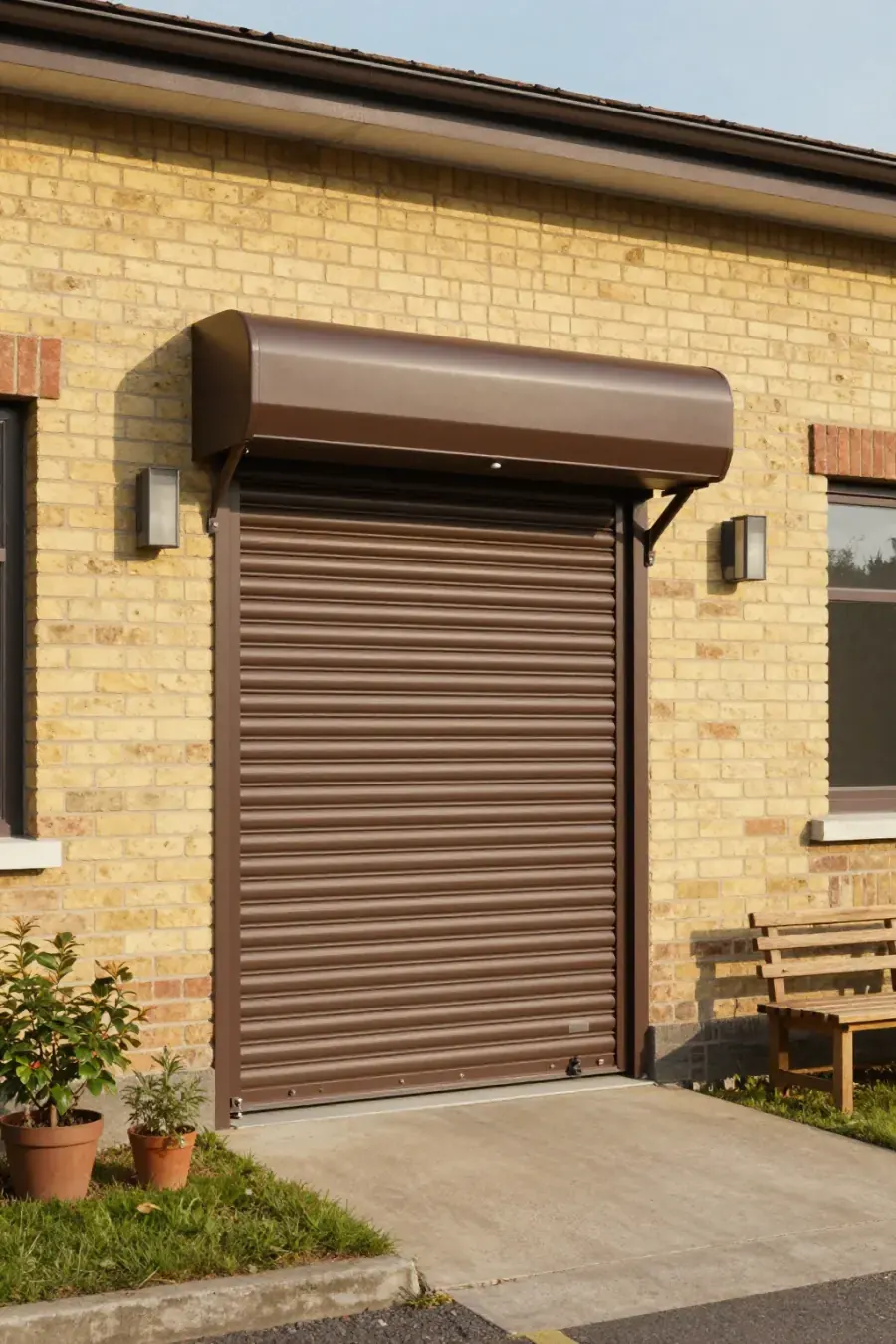
A garage and gates give the heaviest blind, and a chain can't pull it. Here a cardan gate drive works — a manual drive with a gearbox that transfers force to the roller tube and lifts the slat one by one without jerking.
How much such a blind weighs depends on the size of the opening and on how much of the opening area the extrusion covers. To be honest: we give the figure after the measurement, not over the phone. Weight is a calculated thing, and it determines whether one person can handle the mechanism. A chain suits light sashes: windows, small openings. As soon as the blind gains mass, it is swapped for a cardan drive.
Ground-floor windows and an office
Unguarded ground-floor windows are closed with extrusion and a deadbolt lock. Outsiders can't see into the room, in the evening the opening is closed, and during the day the blind is raised into the housing box and the facade stays clean.
A ground-floor office, a café and other premises where it is important to keep the view go for external protective blinds made of a perforated profile. Air passes through the holes, the shop window is visible, and outsiders can't look into the room. For such objects Jalusso more often works with panoramic glazing, and there perforation beats a solid profile precisely with its view.
A practical case
A typical case is a shop window: extruded aluminium, manufacturing time 12–16 days. During the day the blind is raised, at night the opening is closed, and the shop window works for passers-by again. If you need a view of the goods during the day, the same shop window is closed with protective metal perforated blinds. The price of perforated ones is from 27,800 ₸ per m², also 12–16 days.
The opening is held by the profile, the lock and the fixing of the guide rails into the load-bearing wall; the material of the blind is chosen by the object, and the control by the weight of the sash.
How much protective roller shutters cost in Almaty and what the price is made up of
The price of protective roller shutters is made up of the area of the curtain and the type of profile: protective ones start from 24,900 ₸ per m², manufacturing time is 12–16 days. Then the control and the type of housing box raise the cost. The area is calculated by the opening, not by the glass: the curtain covers the window unit with a margin at the edges.
Price by profile
The spread across the price list items is as follows:
| Profile | Price | Manufacturing time |
|---|---|---|
| Roll-formed profile, foam-filled | from 17,500 ₸/m² | 10–14 days |
| Security, extruded aluminium | from 24,900 ₸/m² | 12–16 days |
| Perforated, profile with perforation | from 27,800 ₸/m² | 12–16 days |
| With an electric motor, remote control and emergency lifting | from 35,000 ₸/m² | 14–18 days |
The difference between the roll-formed and the protective profile is about one and a half times — and it’s a fair difference. The roll-formed foam-filled profile doesn’t affect the price of protective roller shutters: it’s a different profile with a different job.
Control and installation coefficients
Controls and the type of housing box add to the price on top of the per-square-metre rate. Controls: mechanical ×1, chain ×1.06, electric motor ×1.85, motorised with remote control ×2.1. Installation is calculated with a separate coefficient: on the wall ×1, on the frame ×1.05, without drilling ×1.1, cassette system ×1.28. An electric motor costs about twice as much as a manual one — you notice it straight away in the price of protective roller shutters for windows, but for a shopfront the convenience pays for itself. The cassette system is rarely chosen: it costs more and hides the box, which isn’t always needed on a façade.
Installation and site visit
Installation of roller shutters costs 4,500 ₸ per unit, but from 150,000 ₸ in an order installation comes at no extra charge. Within the city, measurement and delivery are always free. We also travel outside the city — to Kaskelen, Talgar, Issyk and Kapshagay; the price of the trip is given in advance and is determined by distance. For example, for a house in Issyk with four windows the trip is charged as a separate line, but installation comes out free if the order total has passed the threshold.
Now to the question of what is cheaper — closing all the windows at once or only the vulnerable openings. Protective blinds in Almaty are calculated for each opening separately, and we usually advise not stretching protection over the whole house. Upper-floor windows don't need a protective profile: a roll-formed foam-filled one is enough there, and the difference in price is about one and a half times. In my view, it is more sensible to close the shop window, the garage and the unguarded ground floor with extrusion, and leave the upper floors on an ordinary profile — and stay within a smaller sum without losing protection. The blind of protective roller shutters is manufactured in 12–16 days according to the measurement, and this is the only time frame we give precisely.
How measurement and installation work
Our measurement is free and mandatory, because there are no ready-made products in stock: each one is made to the size of the opening. It is the measurement that determines where the housing box will go and where the guide rails will run — a mistake at this step cannot be fixed later either by adjustment or by replacing the fasteners. We work across Almaty: the measurer comes to the site, and within the city measurement and delivery are free.
What the measurer checks
The measurer comes with profile samples and looks at four things.
First — the space for the housing box. An overlay housing box is placed outside above the opening, a built-in one goes into the opening, and each needs its own allowance in height and depth on the facade. If there is no space, the housing box is moved out or the scheme is changed.
Second — where to fix the guide rails. What is behind the wall under the insulation and where the load-bearing masonry is determines the fastening: into an insulated facade the guide rails go through the insulation into the wall, not into the layer of thermal insulation. A fixing into the insulation gets pried off together with the anchor.
Third — the condition of the facade and the height of the opening. The height shows whether a chain can pull the blind or a cardan gate drive is needed, and the facade shows whether installation onto a finished facade without opening up the finish is possible.
Fourth — what exactly we are closing. A window, a shop window and a garage give a different weight of blind, and the control depends on it.
Order stages
- Request via WhatsApp: you send a photo of the opening, we reply with what to clarify before the visit.
- Measurement with samples: the measurer comes, checks the facade, the fastening and the height, and calculates the cost on the spot.
- Calculation and confirmation: we go through the profile, the control and the type of housing box with you — after that we confirm the order.
- Workshop: the product is made to the measurement, for protective roller shutters the manufacturing time is 12–16 days.
- Installation: we fit the housing box and the guide rails, adjust the travel of the blind, and check the lock. We charge 4,500 ₸ for the installation of each unit, however if the order total reaches 150,000 ₸, installation is no longer paid for.
We also travel to the suburbs — Kaskelen, Talgar, Issyk, Kapshagay — and we give the cost of the trip before the measurer sets off.
There are no ready-made products in stock: everything is made to the size of the opening, and the measurement is free and mandatory — without it protective roller shutters for your opening cannot be calculated.
Protective roller shutters in winter and at a country house
Protective roller shutters work all year round; in winter their main enemy is ice in the guide rails and on the slats. The curtain does not freeze because of the frost itself, but because of the temperature swings: during the day the slats thaw in the sun, at night they freeze up again, and ice builds up in the guide rail. Ice on the guide rails jams the curtain — this is the most common winter breakdown. If you do not visit the house all winter, the product usually gets through the season without consequences, but in spring the curtain is worth raising by hand and checking how it moves, without pulling it by force.
Servicing and preventive maintenance before the cold solve almost everything. The mechanism is lubricated, the movement of the curtain is checked, and the guide rail mounts are checked for play. Preventive maintenance before the cold prevents jamming in winter — it is cheaper than taking apart a frozen structure in January.
How often servicing is needed depends on how the house is used. At a country house with seasonal living, one visit before leaving and one in spring is enough. In a house where people live all year round, the curtain and guide rails are inspected before every cold season. Dust and the summer heat are also taken into account when choosing a profile: summers in Almaty are hot and dry, dust packs into the guide rails, and by the first frost it turns into an abrasive that wears down the movement.
The outskirts of Almaty are a separate story when it comes to visits. A country house in Kaskelen, Talgar, Issyk or Kapshagay is not the city: we do travel there for measurement and installation, but the cost of the visit depends on the distance, and it is quoted before the visit. In winter we try not to delay preventive maintenance in the outskirts — the window between a thaw and frost is narrow.
Here is what is done before the cold:
- lubricating the mechanism and moving parts;
- checking how the curtain moves in the guide rails;
- cleaning dust and debris out of the guide rails;
- inspecting the mounts of the guide rails and the housing box;
- checking the lock and the chain.
The country house is closed for the season — the openings are shut, the windows are looked after. No one can look into the house from the street, and this works even when the owners are away. And it is precisely leaving for the winter that makes protective blinds on windows more useful than grilles: the curtain is down, there is zero view from the street, and in spring it is simply raised. Protective blinds installed to measurements last for years if they are not neglected: the main cause of winter jamming is ice in the guide rails and on the slats, and preventive maintenance before the cold closes off that cause.
When the protective version is overpaying
Protective roller shutters are needed where the opening is accessible from the street and no one is watching it. A window on the third floor is not one of those: it is inconvenient to climb up to it with a crowbar, and no one will break it through the curtain. Here a roll-formed foam-filled profile is enough, and the difference in price with the protective version is about one and a half times. The same logic applies to a window onto a courtyard watched by neighbours and to an opening inside a fenced area: protective blinds on windows do not pay off there.
The floor height determines whether a protective profile is needed, but it is not the only thing that decides. If there is a canopy, an extension or a fire escape under the window, the second floor turns into the first. We look at the site as a whole: what the facade is like, who is nearby, whether there is security.
What the warranty covers
The warranty on protective roller shutters is 3 years on the mechanism and 1 year on installation from the date the acceptance report is signed. We put protective roller shutters right under warranty at no cost to you — within 5 working days. Once the warranty period is over, a visit is still possible: we will put the mechanism right, adjust it, and fit a new cord or chain. This is paid work, but you cannot opt out of it.
Break-ins and prying, however, are mechanical damage and are not covered by the warranty. Metal protective roller shutters resist prying, but if the curtain is still pried open, this is not a manufacturing defect or an installation error. The warranty covers the mechanism and installation, but not break-ins and prying. Reinstalling it yourself, water and natural fading of the fabric are also outside the warranty.
Conclusion
Protective roller shutters in Almaty secure an opening not by the name of the product, but by three components together: a solid profile, a deadbolt lock and guide rails fixed into the load-bearing wall. Remove any of the three and the whole structure loses its point. That is exactly why we start not with a price list, but with the question of what the opening is like, who walks past it at night and whether the site has security.
The profile is chosen for the site. For a shop window, ground-floor windows and an unguarded garage, extruded aluminium is used: a solid slat cannot be pried with a crowbar or opened quietly. On upper floors and on windows onto a courtyard, that kind of strength is not needed — a roll-formed foam-filled profile is enough there, and the difference in price is about one and a half times. There is no point overpaying for extrusion where the opening is out of reach from the street.
The cost is calculated by the area of the curtain and the type of profile. Protective ones start from 24,900 ₸ per m², and manufacturing takes 12–16 days. The controls and the type of housing box raise the price: a chain, a cardan shaft drive or an electric motor with a remote control, a surface-mounted housing box or a built-in one. Installation costs 4,500 ₸ per product, and from 150,000 ₸ we do it free of charge.
In winter protective roller shutters work, but they need attention: ice in the guide rails and on the slats is the main cause of jamming. Before the cold, the mechanism is lubricated and the movement of the curtain is checked. If the curtain does freeze up, it is not pulled by force.
One practical recommendation. Book a free measurement: the measurer will come with profile samples, look at the place for the housing box and the fixing point, and calculate the cost for your opening on the spot. We do not keep ready-made products in stock, so a calculation by size is the only way to get an exact price rather than a rough estimate by area.

