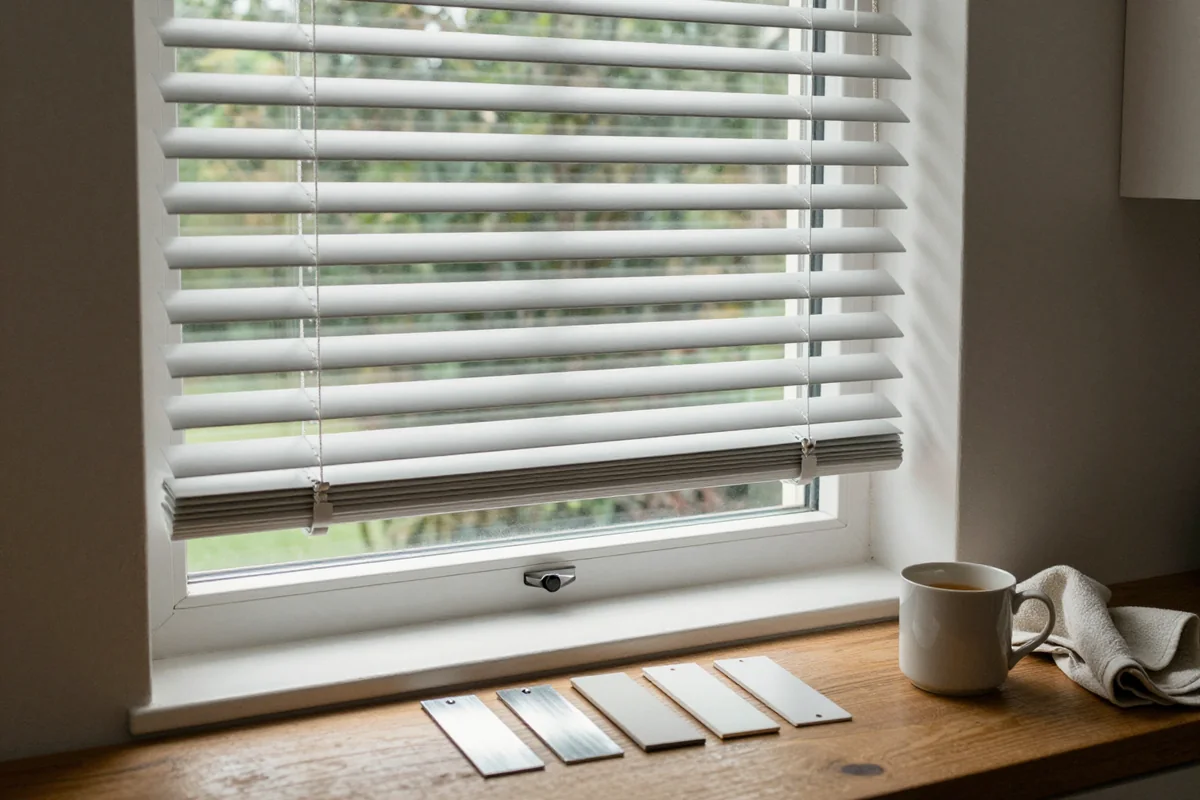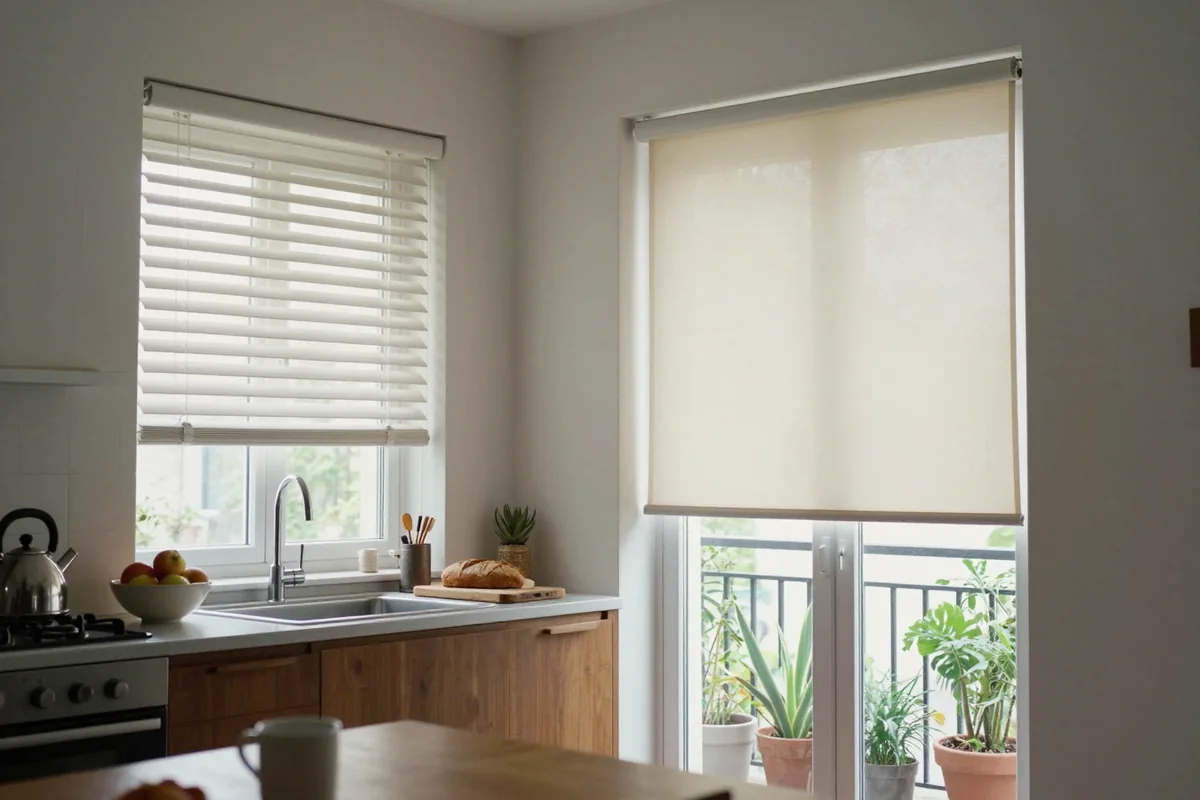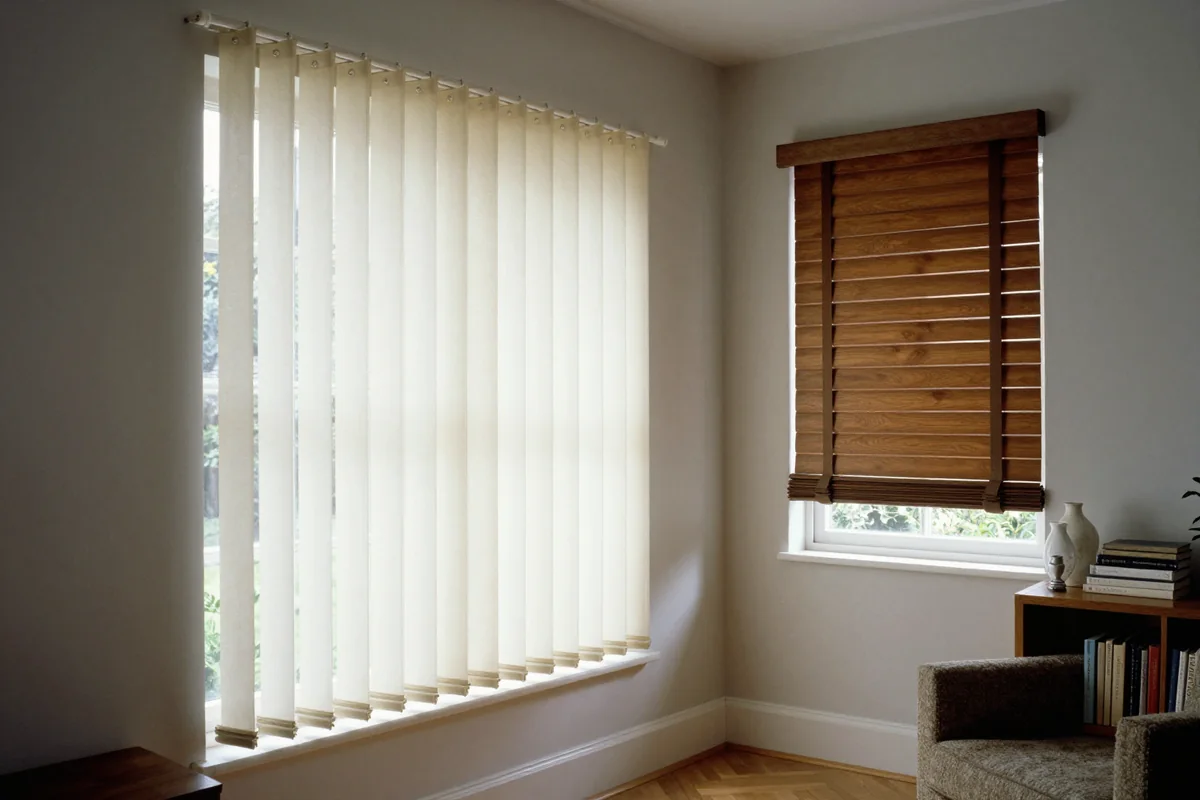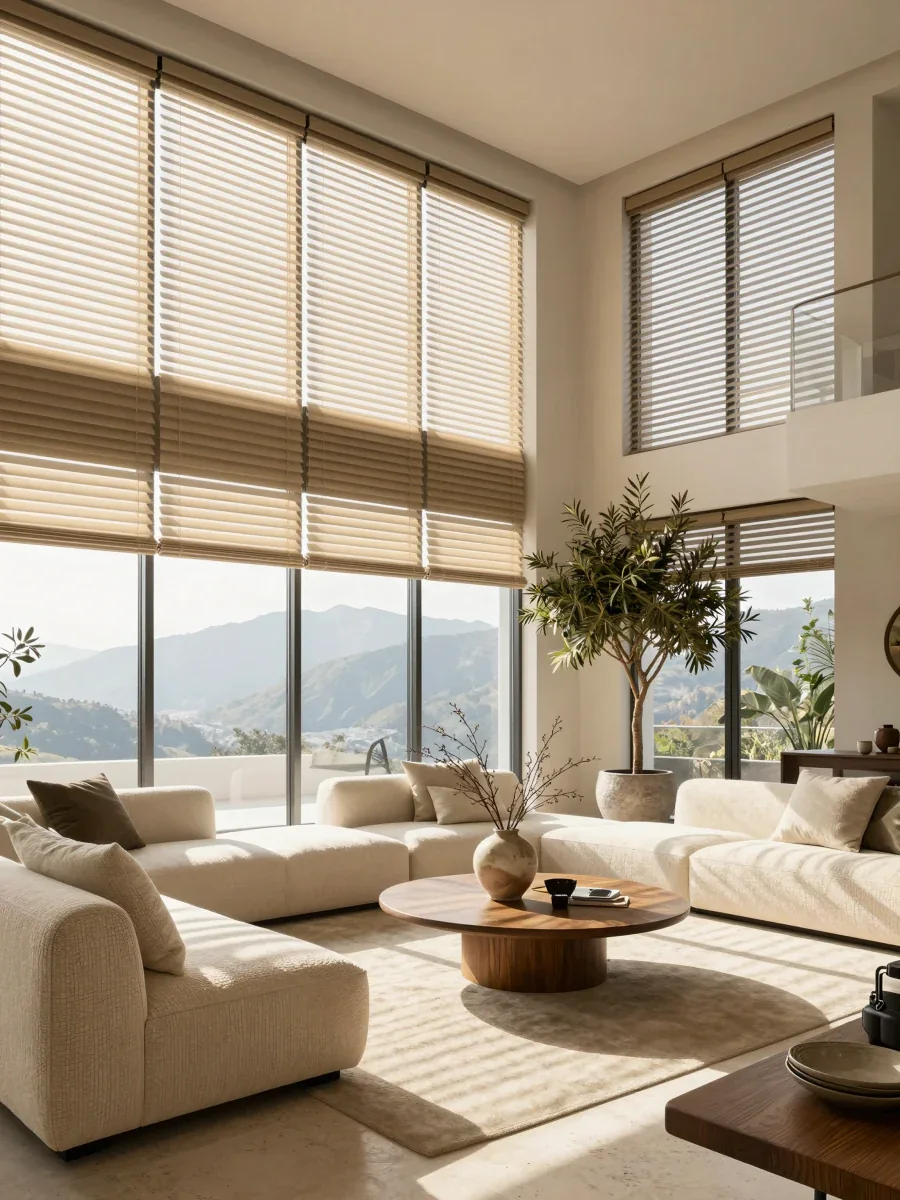

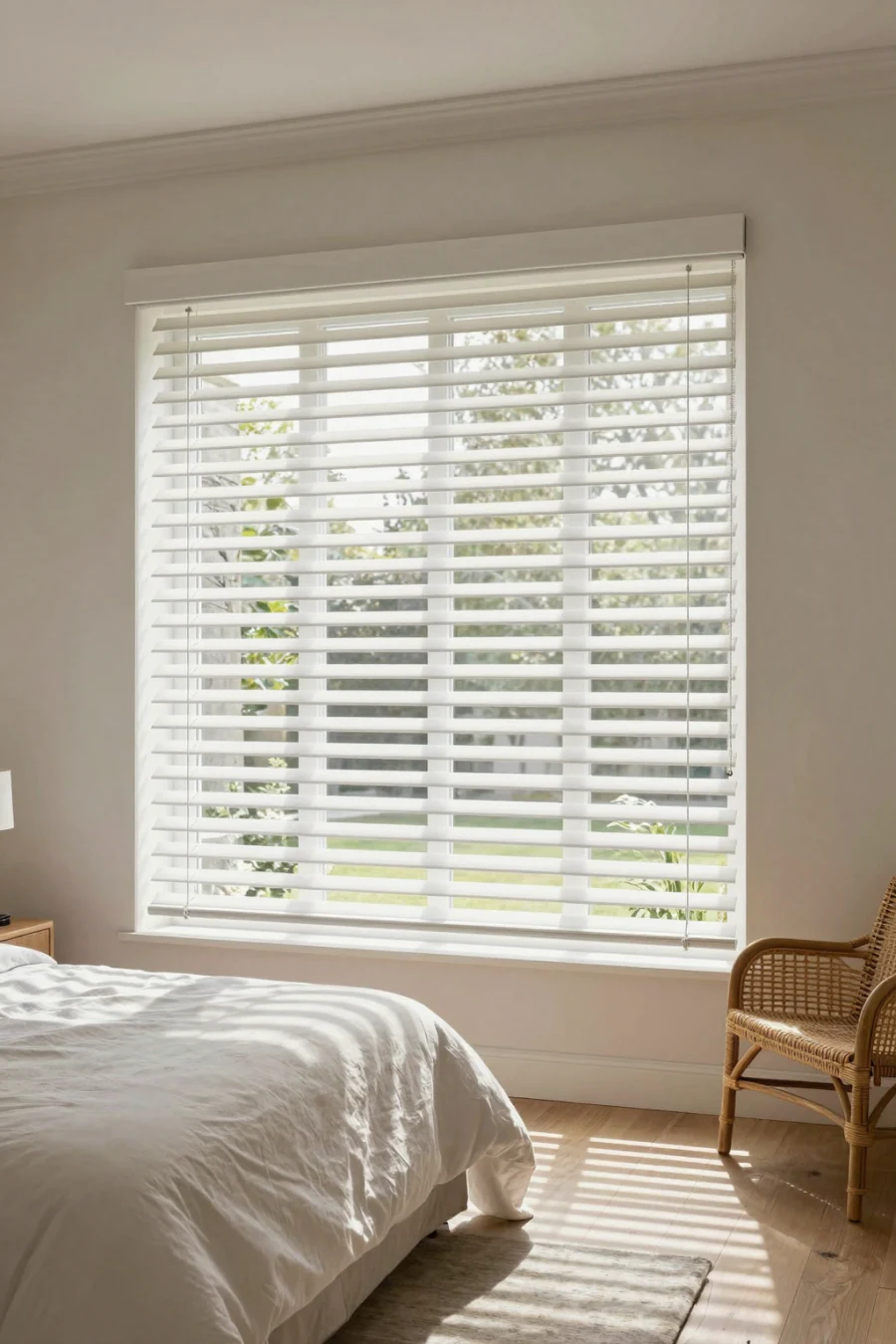
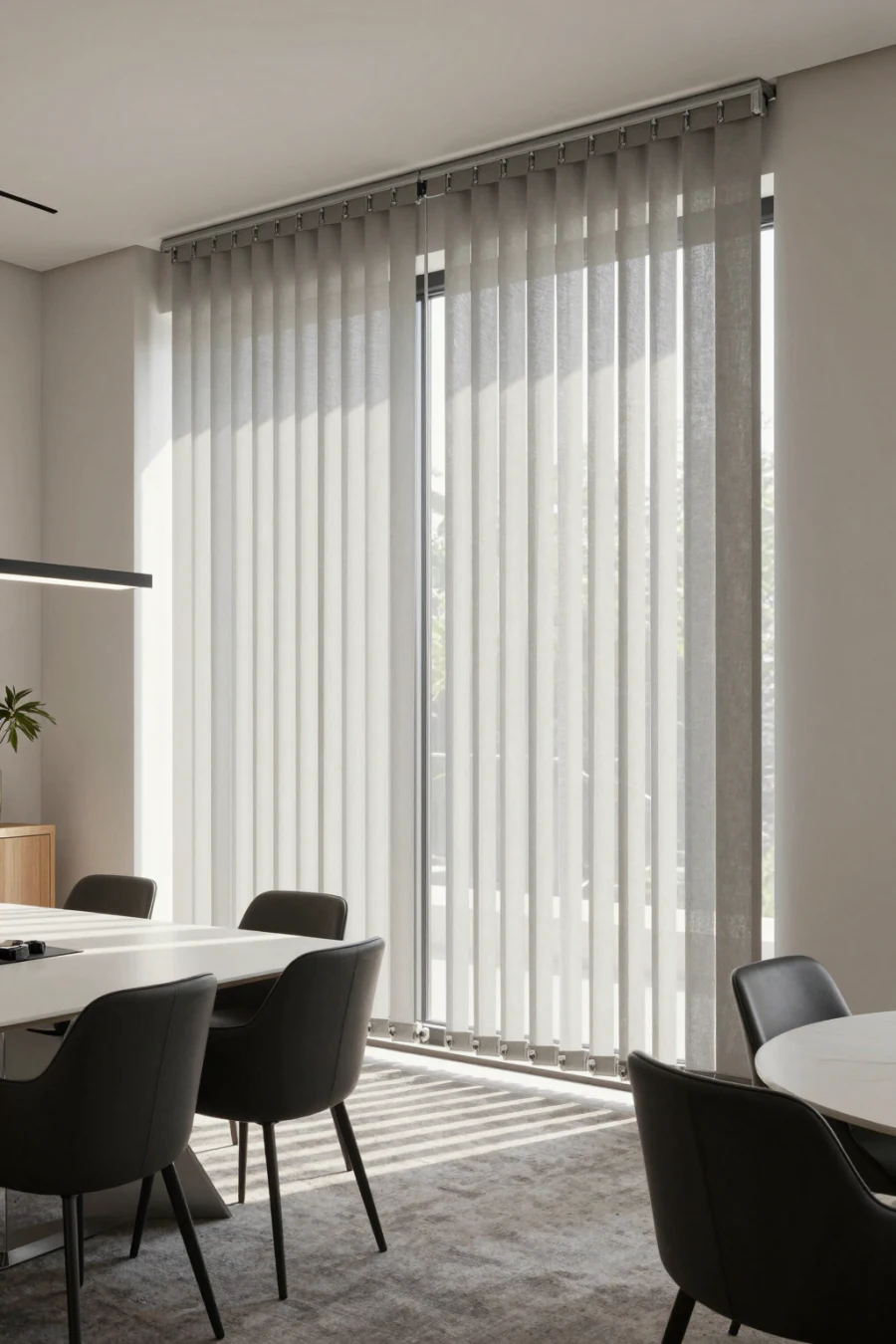
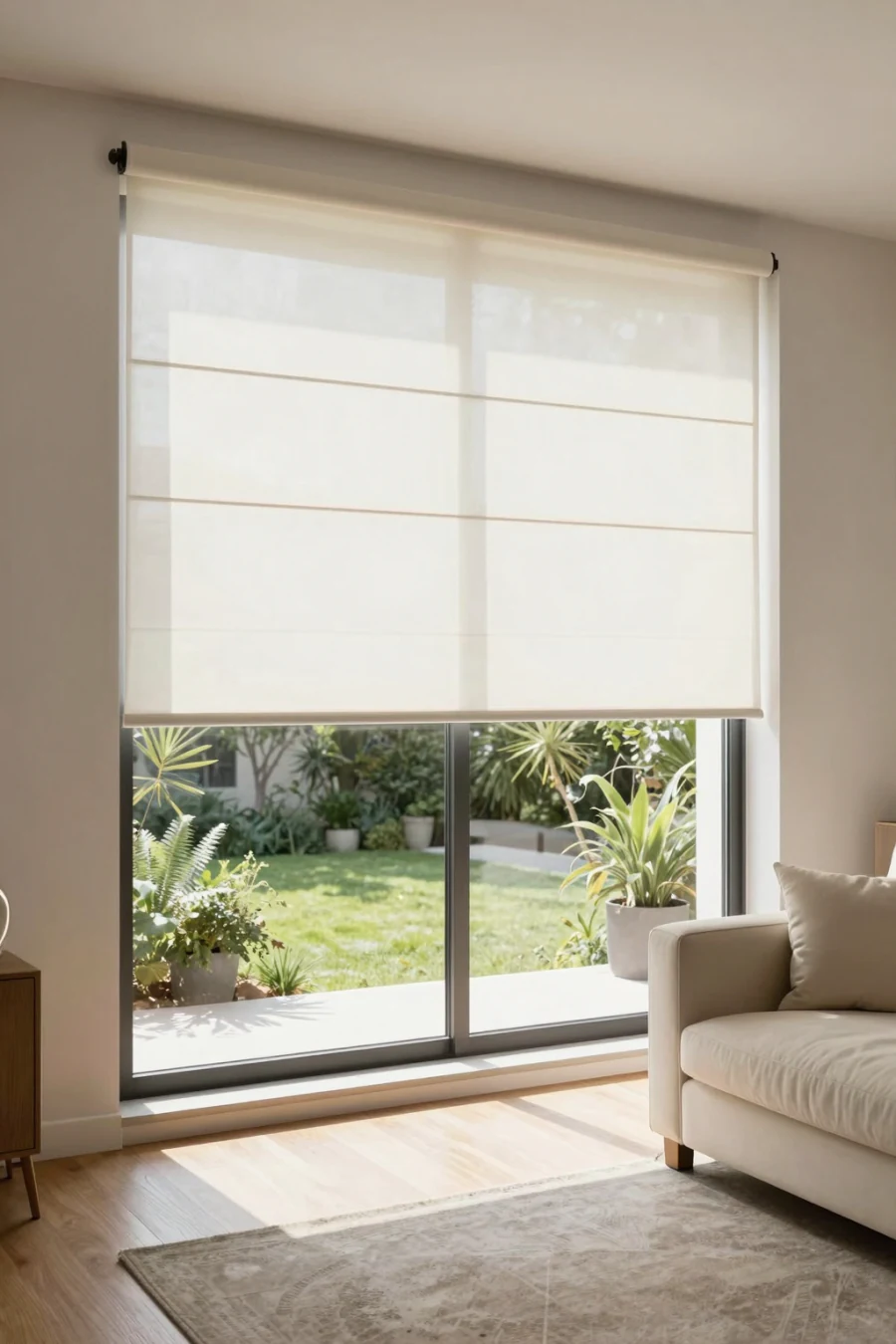
















We manufacture blinds in Almaty in our own workshop and make everything to measure: horizontal and vertical blinds, roller blinds, day-night blinds, Roman blinds and roller shutters. Our measurer comes with samples and calculates the cost on site. We don't keep finished products in stock — every item is made for a specific window.
What “from the manufacturer” means and what we do in the workshop
Blinds in Almaty from the manufacturer means one thing: we make the product ourselves, in our own workshop, to the measurements of a specific window. Cutting slats and fabric, assembling the mechanism and housing box, sewing Roman blinds — we do these operations ourselves, so the size comes out exact rather than fitted to something ready-made. We have no stock of finished products at all: every item goes into production after measurement.
What does this change for you? The measurer comes with samples of fabrics and profiles, calculates the cost on site — and then the product is manufactured in the workshop and brought for installation. Measurement and consultation are always free.
How a manufacturer differs from a seller
A seller either brings a ready-made product or reorders it on the side and passes someone else's work on to you. We calculate and make it ourselves, so we're responsible both for the geometry and for the mechanism.
It's easy to check — by the questions a seller usually answers evasively. Can they change the size at the production stage? Do they make custom shapes? Do they give a warranty on the mechanism? Our answers are specific: a 3-year warranty on the mechanism, 1 year on installation from the date the acceptance report is signed. And a complex window shape is no reason for us to refuse.
- We buy fabric, profiles and mechanisms ready-made.
- We do the cutting, assembly of the mechanism and housing box, and sewing of Roman blinds in the workshop.
- Measurement, calculation and installation are handled by our own team.
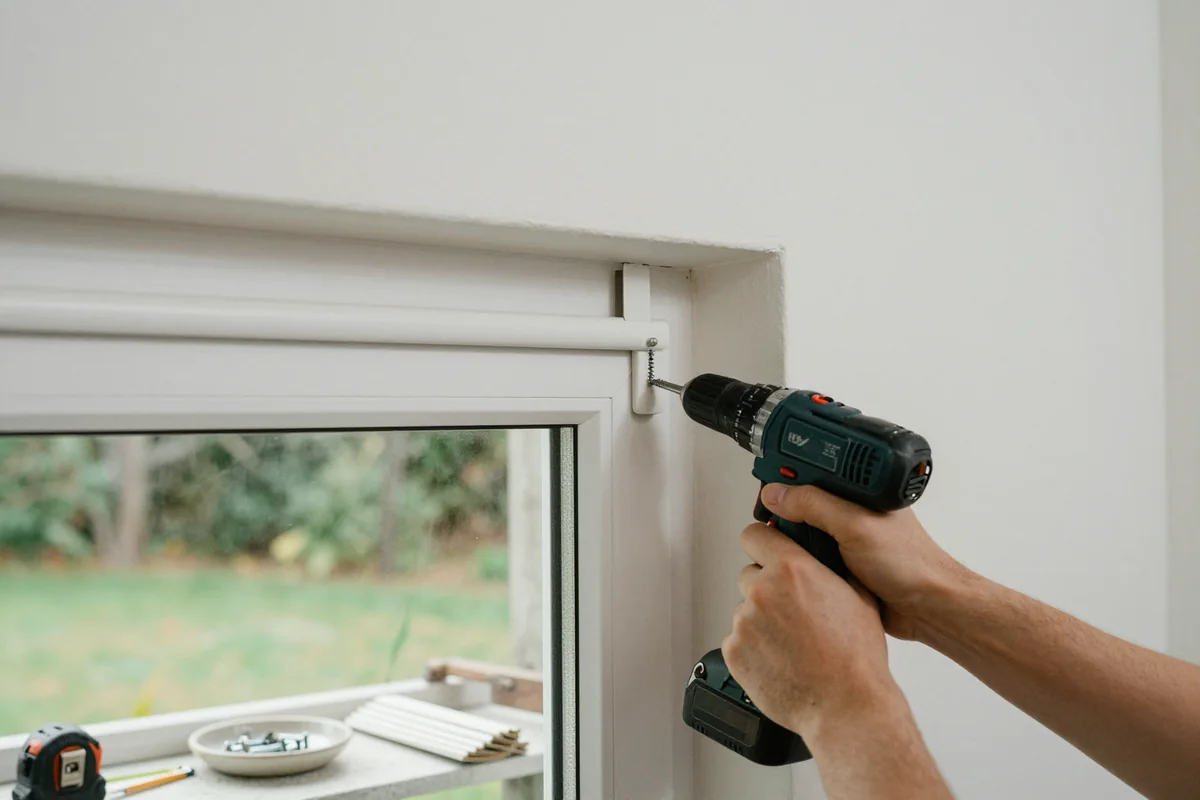
We don't drill the frame during installation — we fix into the glazing bead, with spring clips or with adhesive tape, so the window manufacturer's warranty is preserved. And a mixed order, when different windows need different categories, is calculated by one measurer in one estimate.
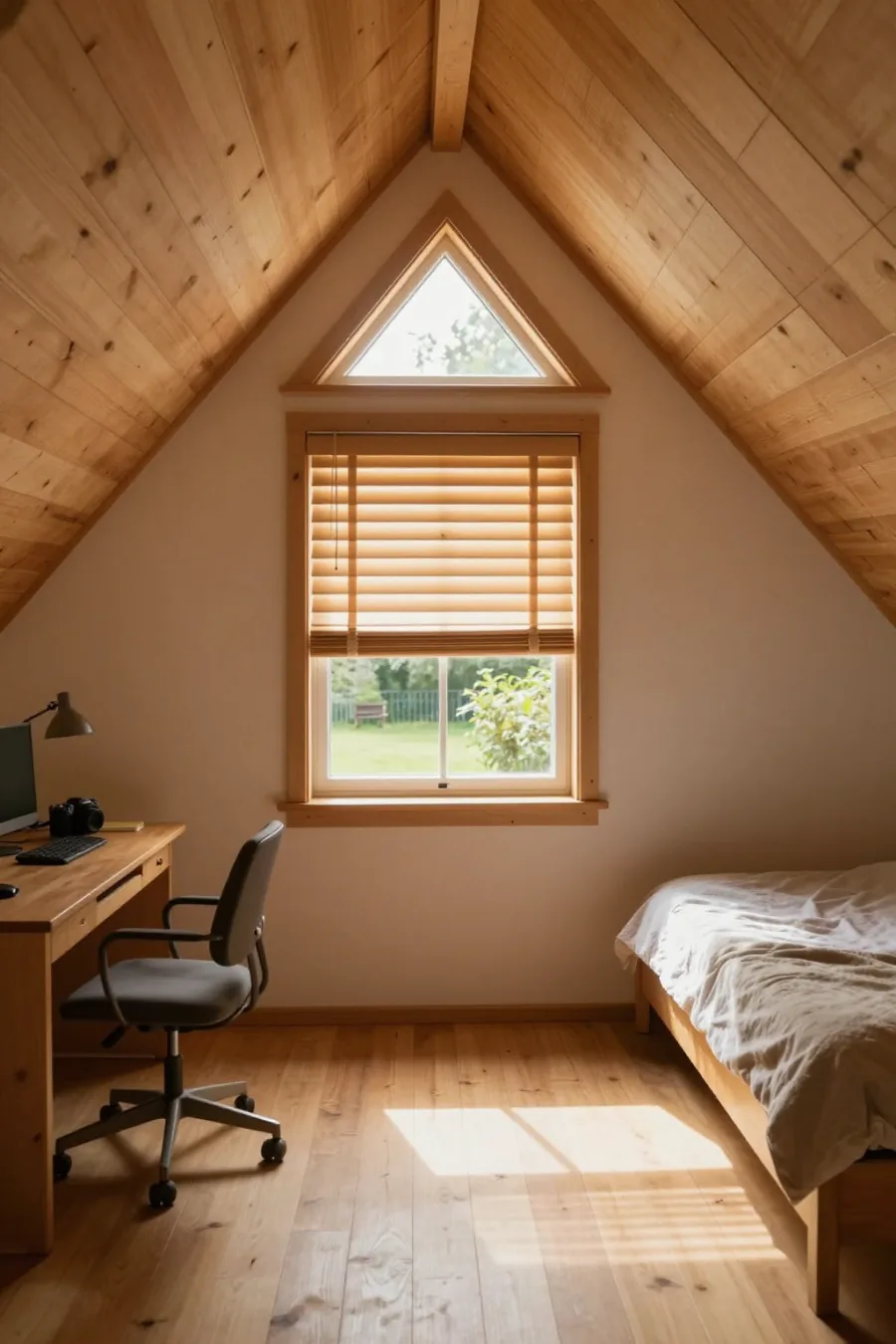
In our workshop we cut the slats and fabric and assemble the mechanism and housing box, so the product is made to the size of a specific window rather than selected from ready-made.
Which category your window needs: a selection table
We make blinds in Almaty from the manufacturer in four lines, and the category here is chosen not by taste but by the window's task. One window needs shading, another needs a bedroom darkened, a third needs a shopfront covered from prying eyes and hands — and each task has its own line. Blinds on windows adjust light with slats, a roller blind covers the window with a single fabric, day-night works with two layers of fabric, and roller shutters are mounted outside on the facade.
| The window's task | What will suit | Price guide |
|---|---|---|
| Shade the room, keep the view | Horizontal blinds, slat 25 mm | from 4,200 ₸/m² |
| Cover the opening from floor to ceiling | Vertical blinds, slat 89 mm | from 4,600 ₸/m² |
| One solid fabric per window | Roller blinds, open roller tube | from 5,400 ₸/m² |
| Soft light without full blackout | Day-night, two-layer fabric | from 7,300 ₸/m² |
| Textiles in the interior | Roman blinds, fabric on a frame | from 8,100 ₸/m² |
| Protection from the outside | Roller shutters for windows | from 17,500 ₸/m² |
Shading from the inside: blinds and roller systems
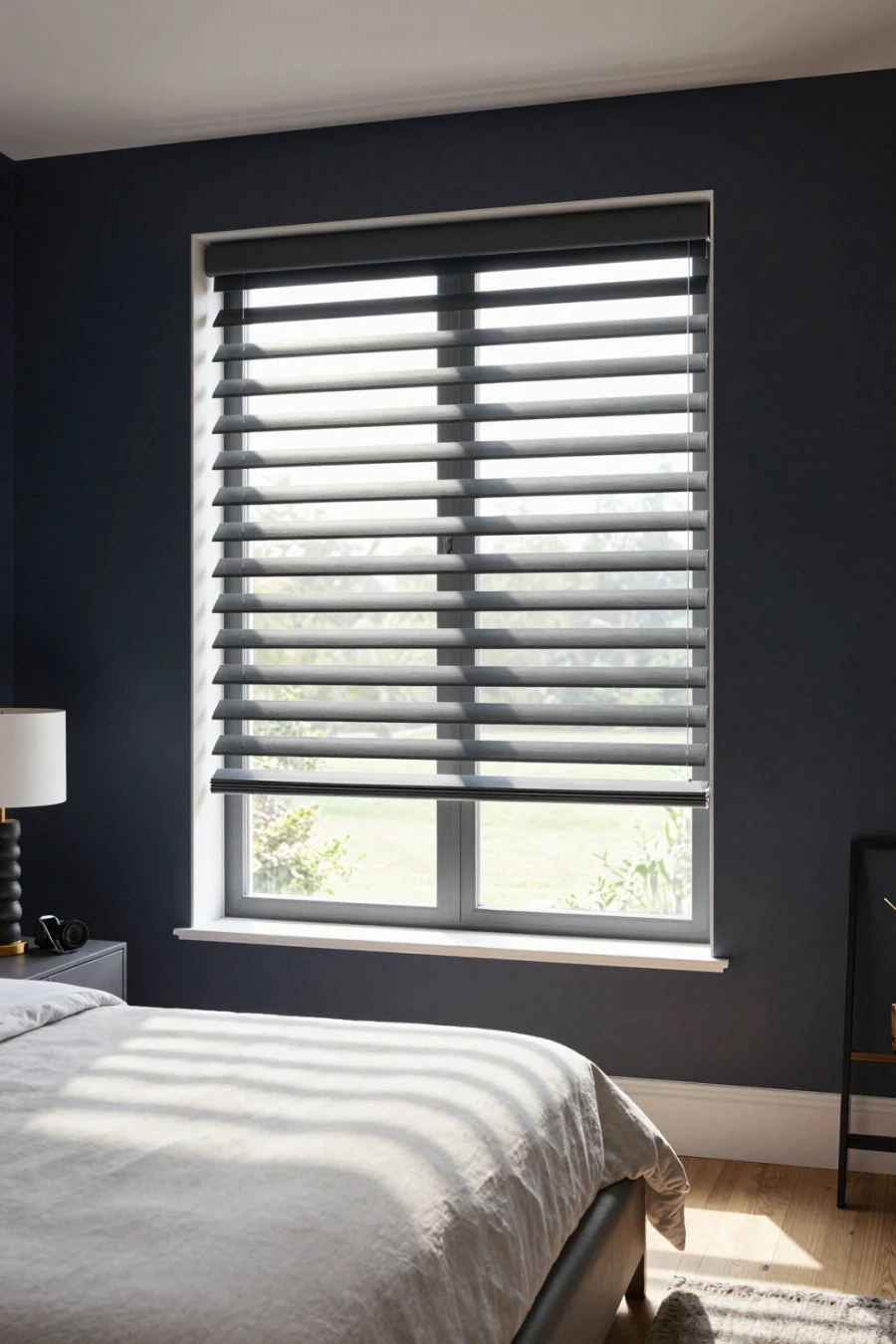
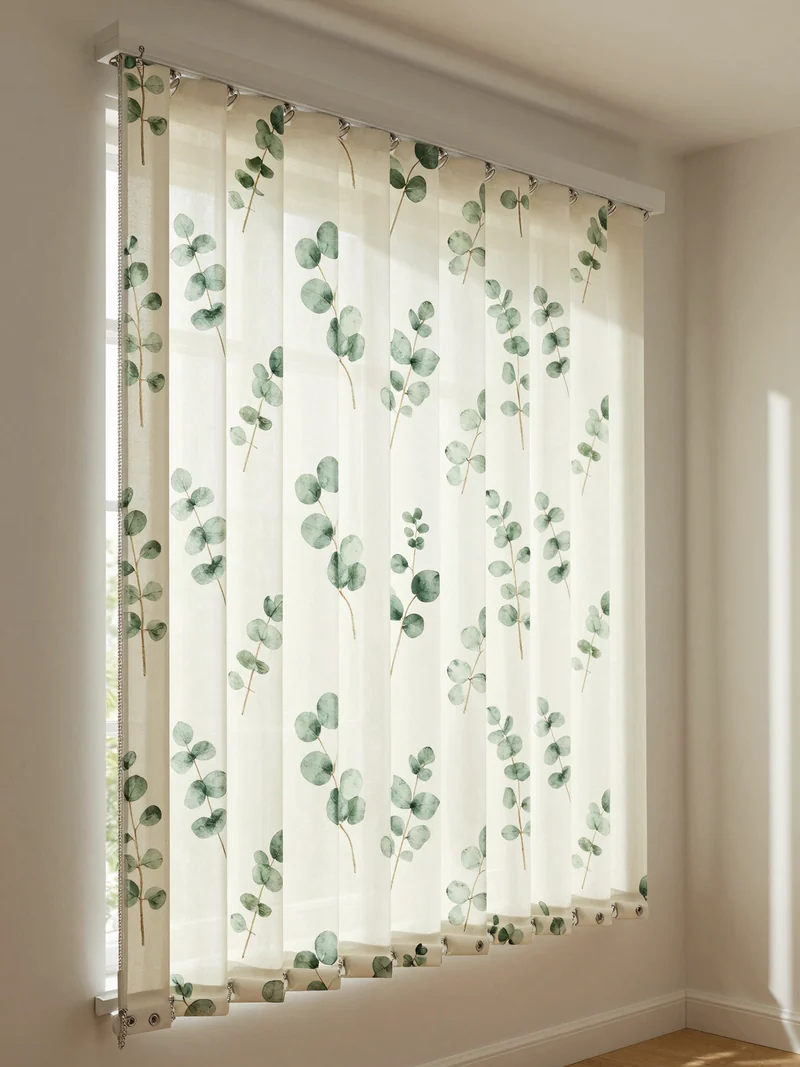
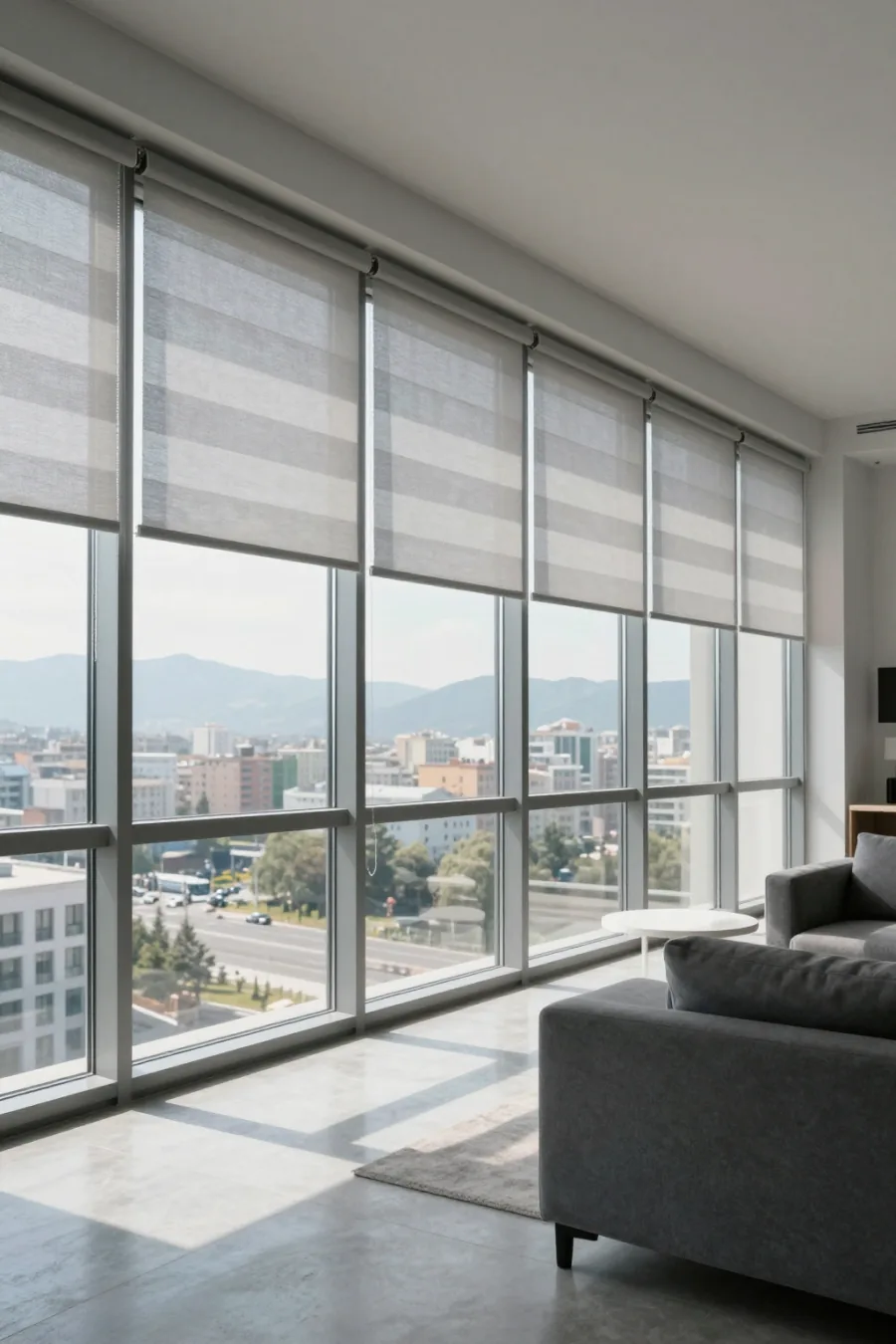
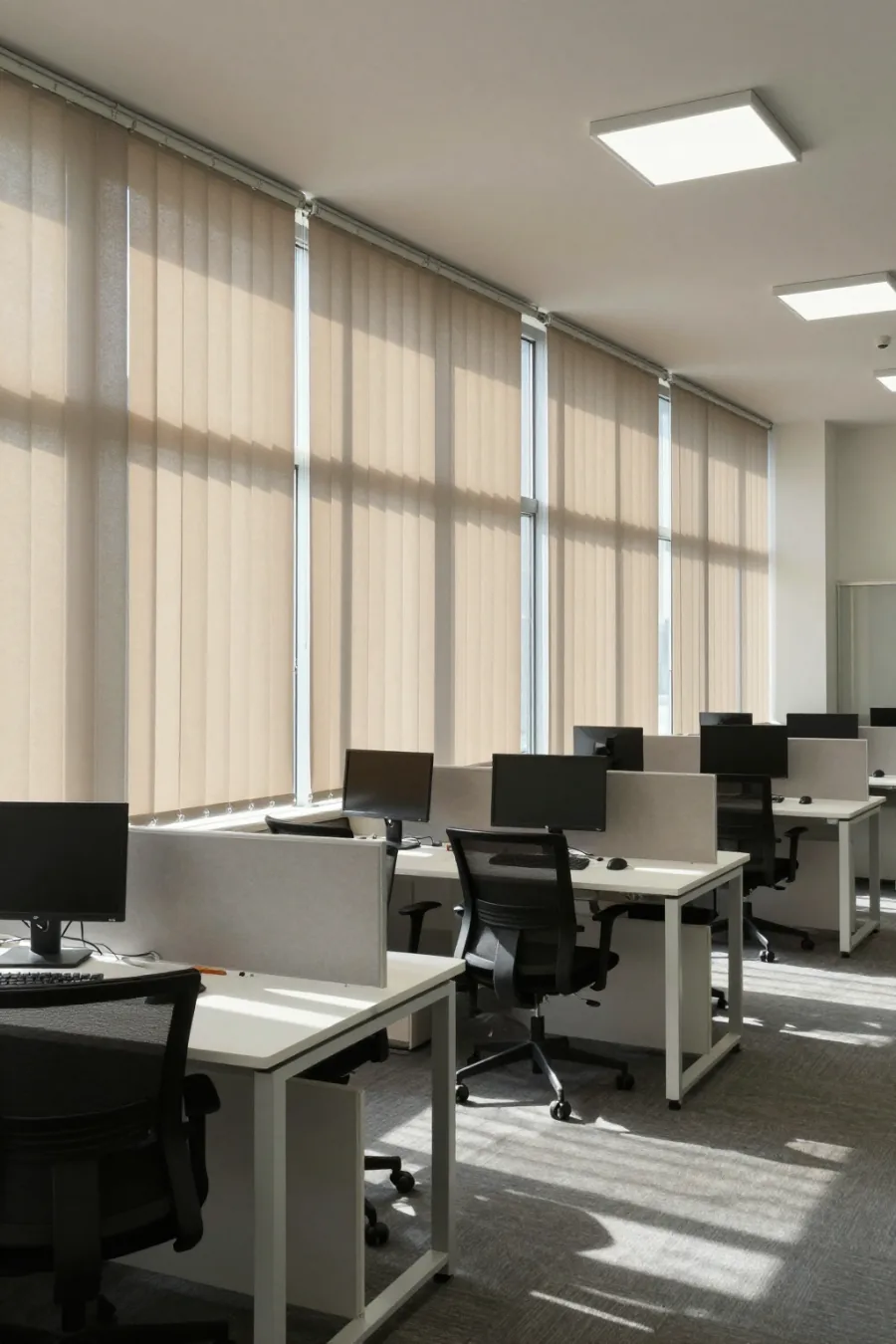
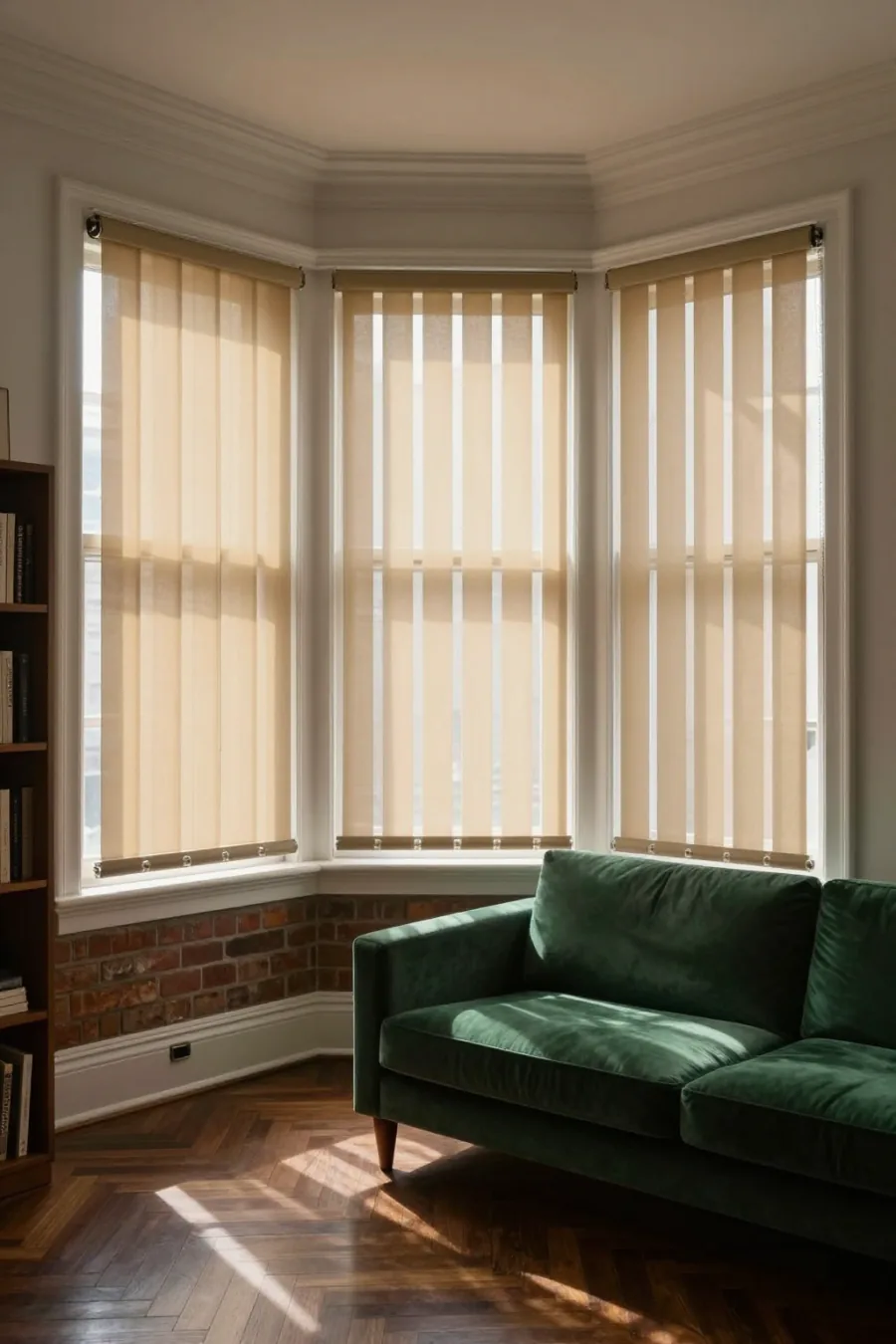
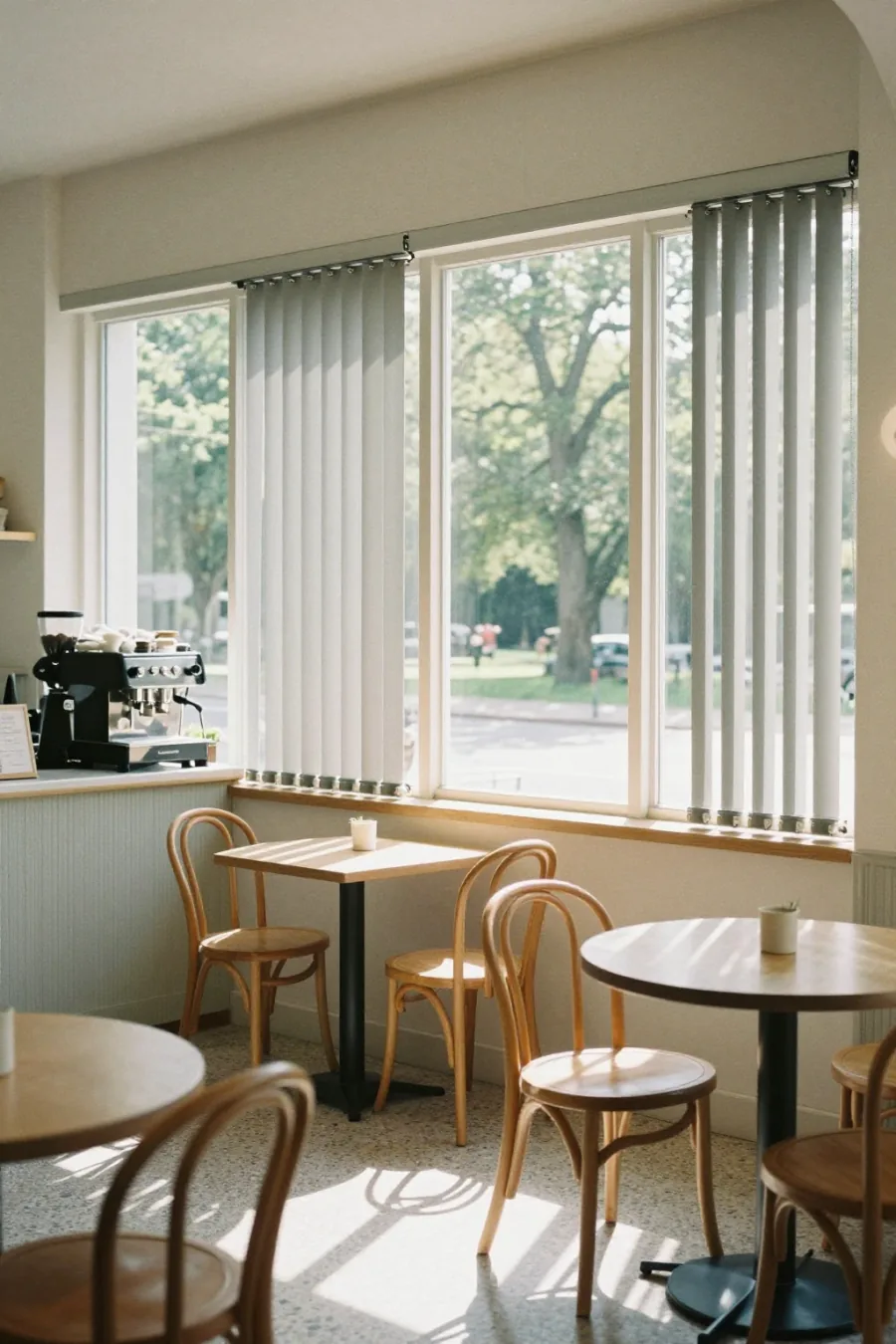
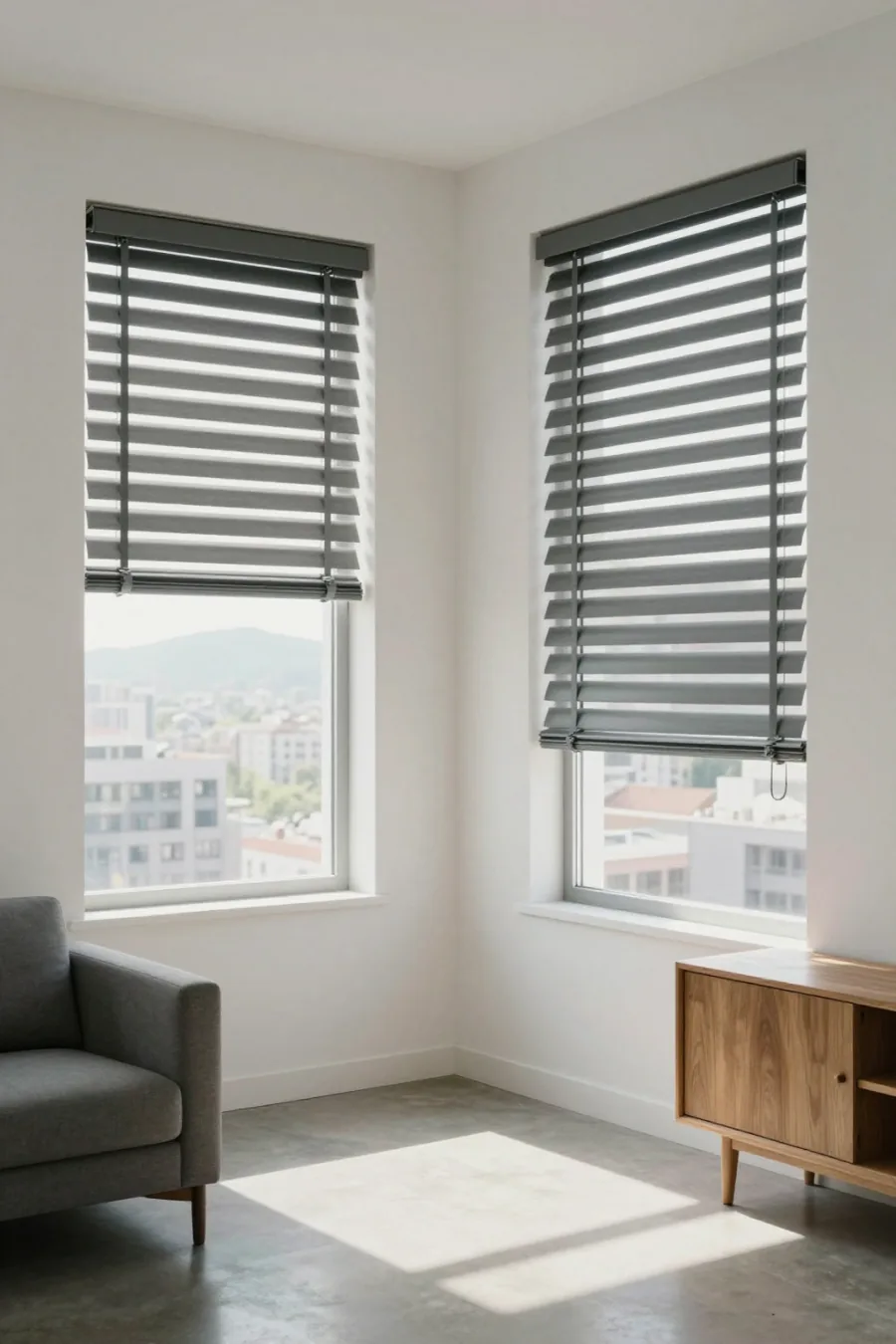
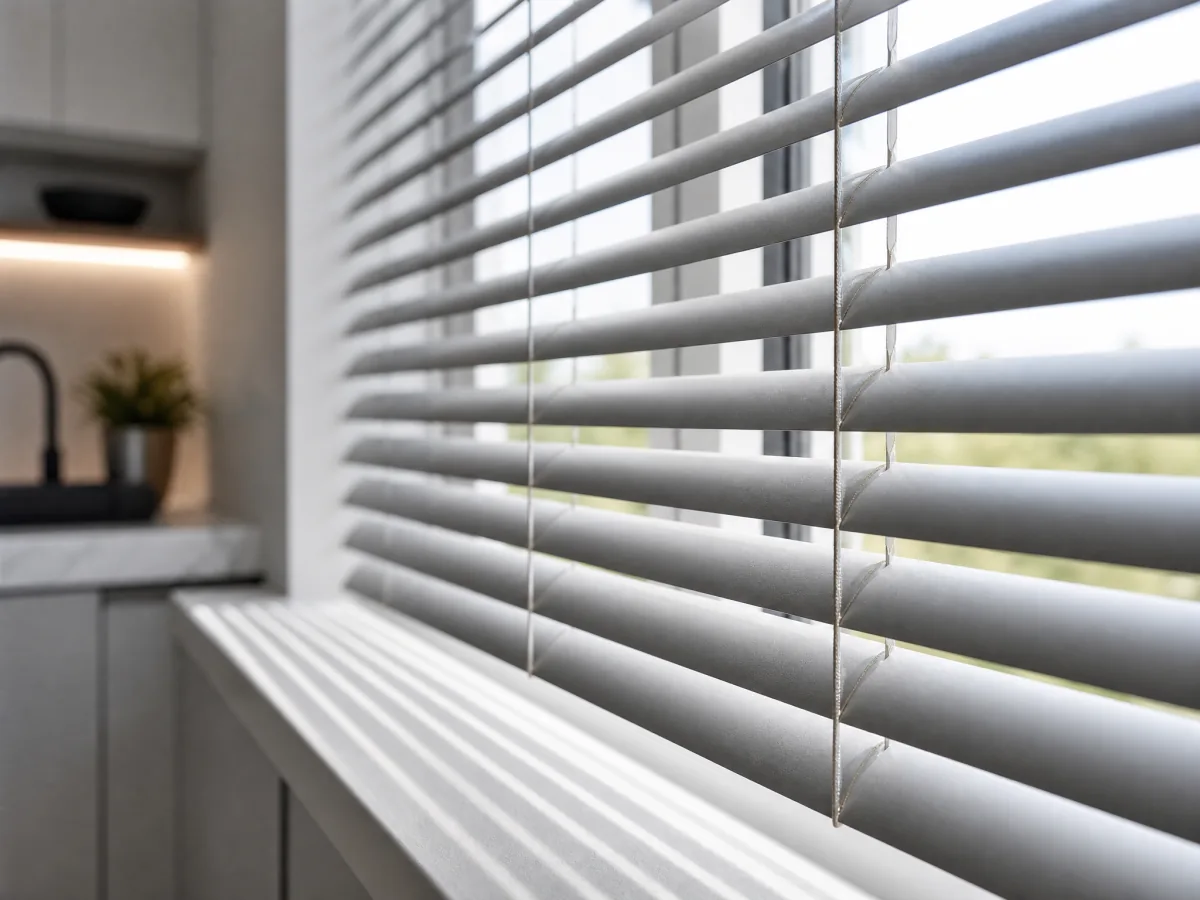
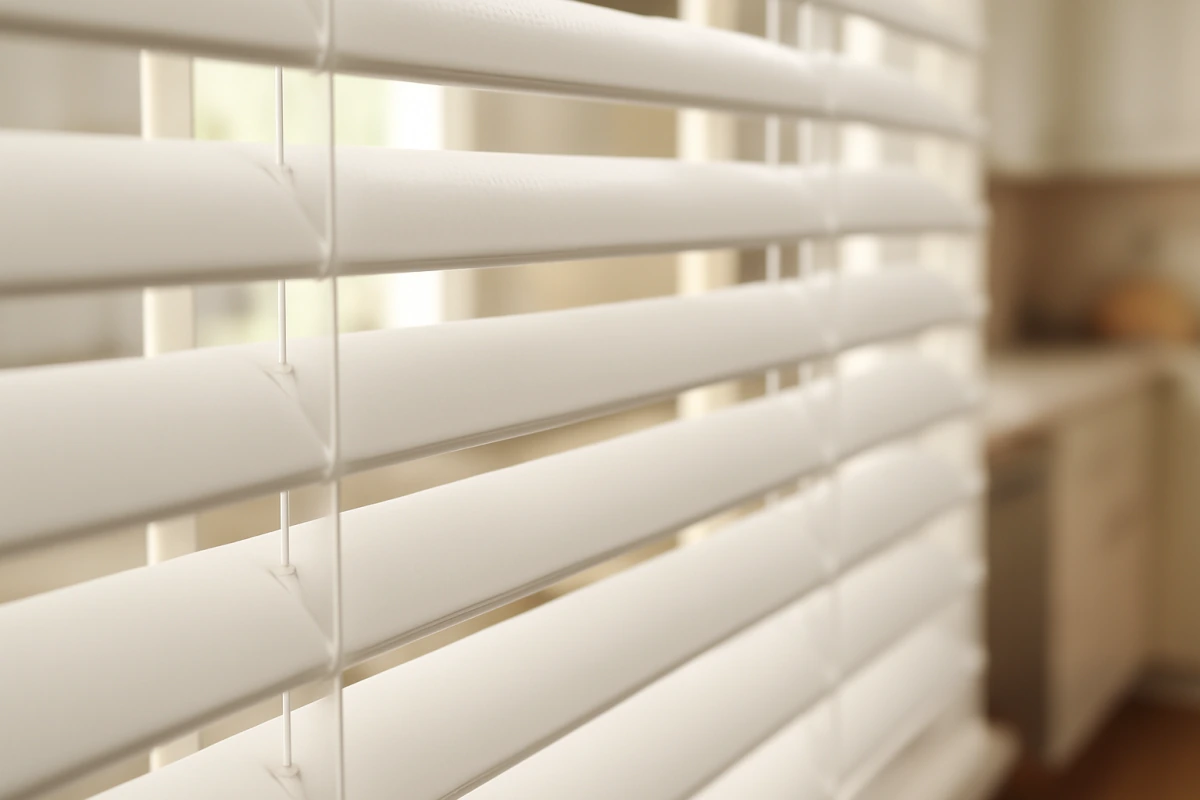
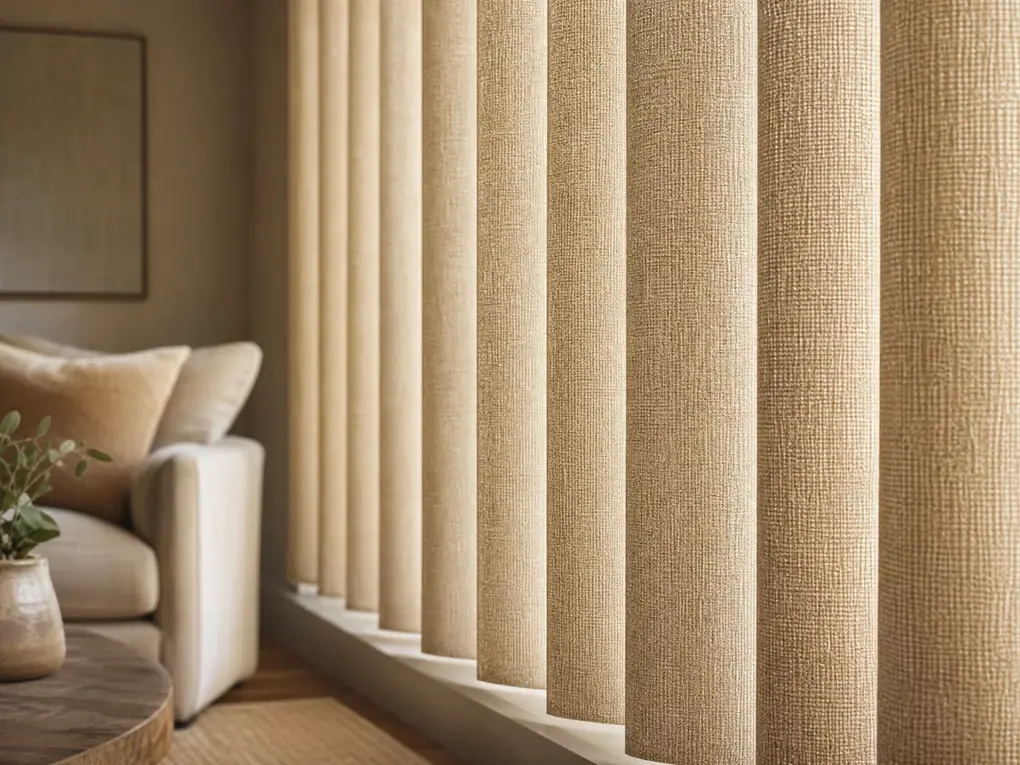
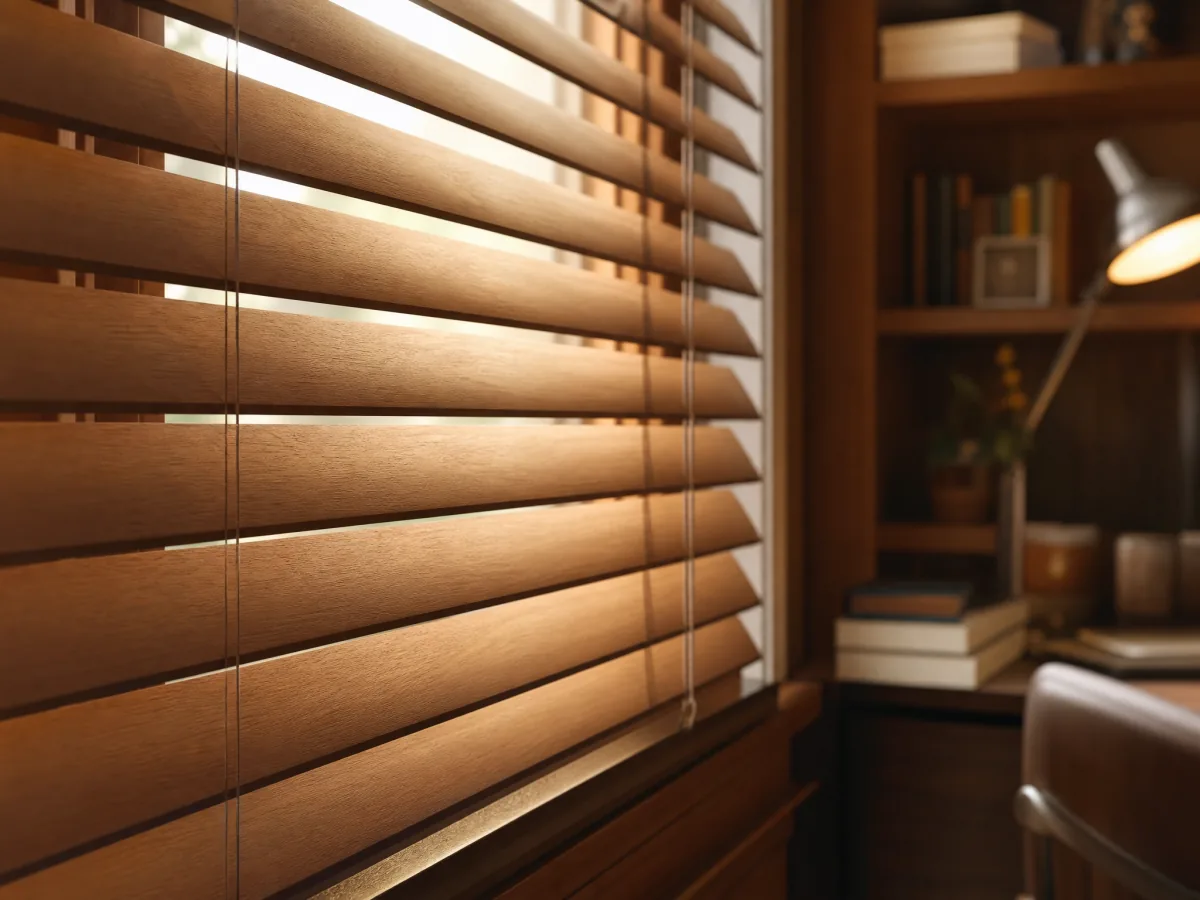
Horizontal blinds control light with their slats: turning a slat changes the angle at which light enters the room. Vertical blinds do the same job, but they gather to the side rather than upwards — handy for wide openings and balcony doors. A roller blind covers the window with a single fabric, so it holds light more tightly than a slat system. And if you want both a view during the day and full blackout in the evening, go for day-night blinds: two layers of fabric slide against each other to give the density you need. Roller blinds belong to the same group: both a plain roller blind and day-night blinds shade from the inside, without going onto the façade.
When you need roller shutters rather than shading
How do you know a window needs outside protection rather than inside shading? If the window is on the ground floor, faces a courtyard or the street, or is a shop window, shading won’t protect it. Roller shutters, also called roll-down shutters, are mounted outside, on the façade, and cover the whole opening: they protect against break-ins, not just the sun. What’s more, roller shutters and blinds don’t replace each other — they can be installed together on the same window: protection outside, shading inside. We treat shutters for ground-floor windows as a separate item precisely because their job is security, not light control.
Textiles: Roman blinds and where they fit
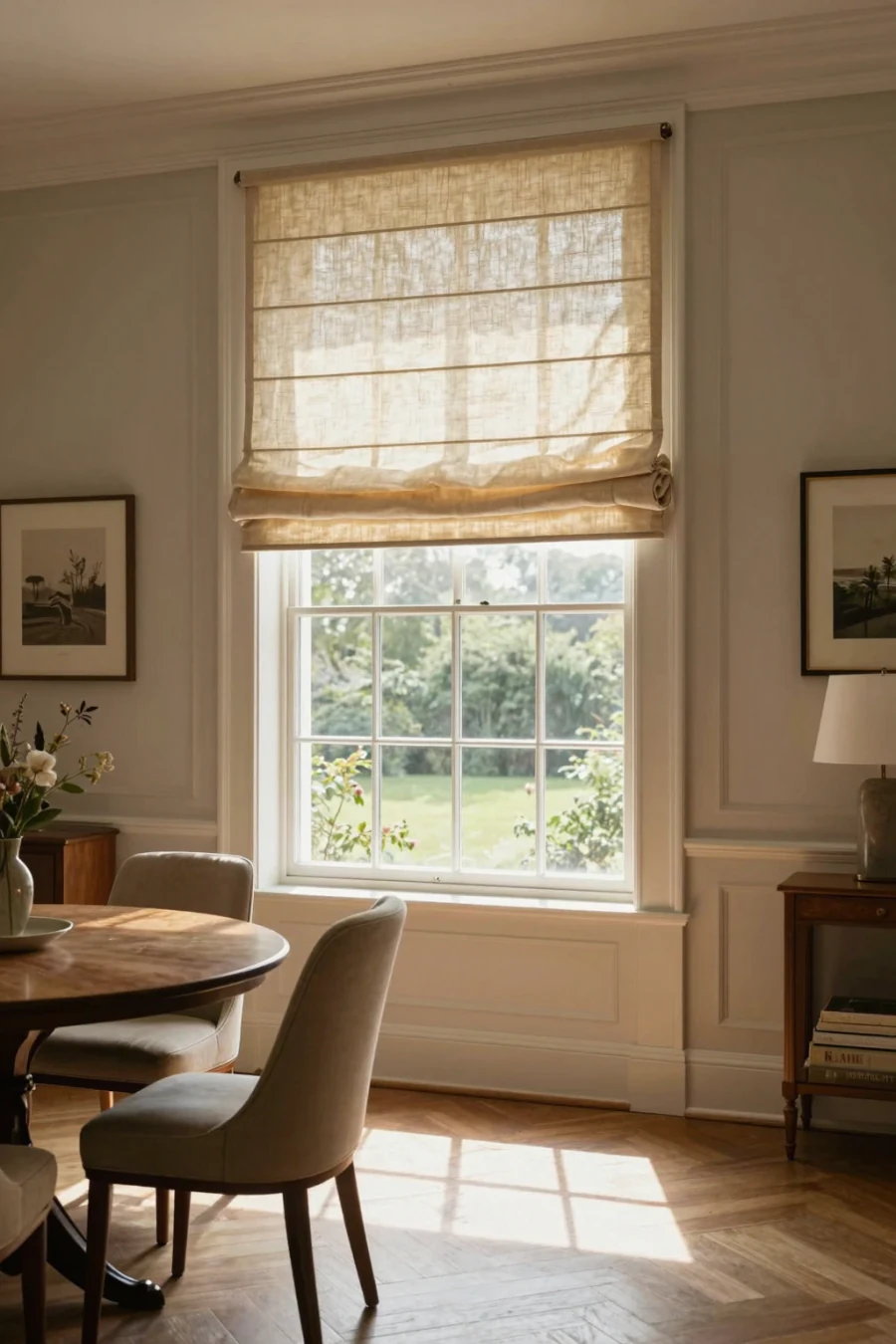
A Roman blind folds to the size of the window: the fabric is sewn in our workshop for a specific opening and rises in even rows. It’s installed where you want textile rather than a rigid slat — in the living room, bedroom or study. Coloured blinds and “blind curtains” are often called by the same word, but they’re different things: a Roman blind has soft fabric that falls in folds, while a slat system has a rigid slat that turns in its holders.
We make every line in our workshop, so the choice here isn’t driven by what’s in stock, but by which way the window faces, the purpose of the room and the job the window has to do.
How a mixed order for an apartment, house or office works
Blinds in Almaty straight from the manufacturer can be combined into a single order with the other lines: a mixed order brings blinds, roller systems, Roman blinds and roller shutters into one estimate. Blinds for the kitchen, Roman blinds for the living room and roller shutters for the balcony are all measured by one measurer, not three different contractors. It’s easy to compare the items in one table, and you don’t have to reconcile someone else’s calculations.
Combining categories on a single window is also possible. Roller shutters are mounted outside on the façade, while a roller blind is fixed inside on the sash or in the opening — these are two independent systems that don’t get in each other’s way. In summer, the outside protection keeps some of the heat and dust from the street out, while the inside fabric works with what light is left. Another option is roller shutters plus blinds on a kitchen window with a vent pane: the slat gives fine adjustment, while the outside housing box covers the sash while you’re away.
Companies order a set of products for the office by bank transfer. We have no separate price list for companies, and the payment terms are the same, so an order from a current account is placed just like a private one, and the estimate keeps the same items at the same prices. And for an office this is convenient: Roman blinds for the meeting room and vertical blinds for the workrooms arrive from a single measurement and are installed by one team.
How an order goes, step by step
You send a request on WhatsApp. Then the measurer arrives with samples of fabrics and profiles and calculates the cost on the spot, across all categories at once. After that the workshop makes the items to each size, and then the installation team arrives. Between the measurement and the installation there’s nothing to coordinate: an order for blinds and an order for Roman blinds within the same apartment follow one schedule, and the balcony and loggia are included in the same estimate.
How colour is matched across different categories
The measurer brings samples of fabrics and profiles along. You see the colour and texture on the spot before ordering, not from a picture in a catalogue — that makes it easier to bring together a Roman blind for the living room, a roller blind for the kitchen and a slat for the kids’ room so they don’t clash.
For different windows we calculate different categories in one estimate: a single measurer arrives with samples and works out the cost on the spot for all items at once.
What it costs: price per square metre and what it’s made up of
The price per square metre is the base rate from the price list, to which four coefficients are applied: control, fabric, mounting and window shape. That’s why the same “from” figure means different things at different companies: some count only the fabric, while the housing box, mechanism and installation are listed as separate lines.
Take panoramic glazing in an office. Rectangular sections go at the base rate, an arched one is calculated with a coefficient of 1.45, and an electric motor multiplies the result by another 1.85. And the arched section is exactly the case where a non-standard window needs a separate calculation: a template is taken on site and the geometry is transferred to the workshop.
“From” price table by category
| Category | Price from, ₸/m² | Lead time |
|---|---|---|
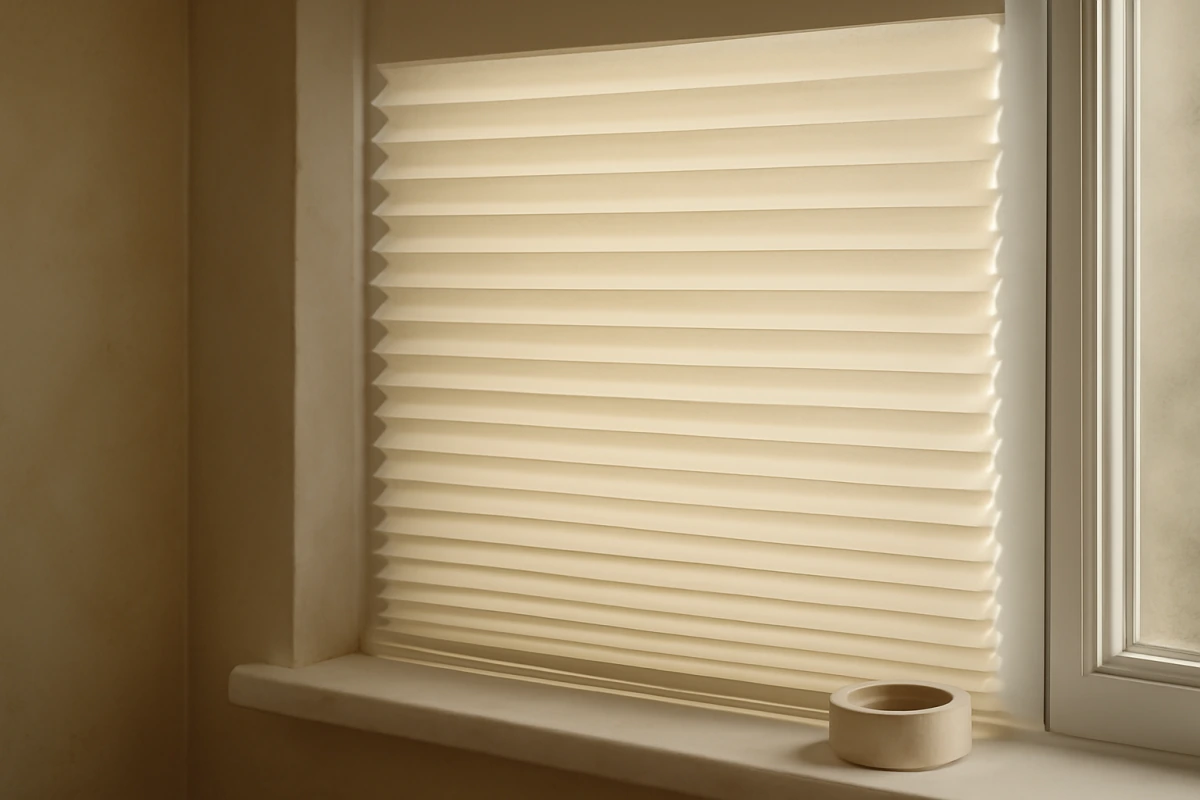
| Paper blinds | 3,200 | 2–3 days |
| Plastic blinds, PVC, 25 mm | 3,600 | 3–5 days |
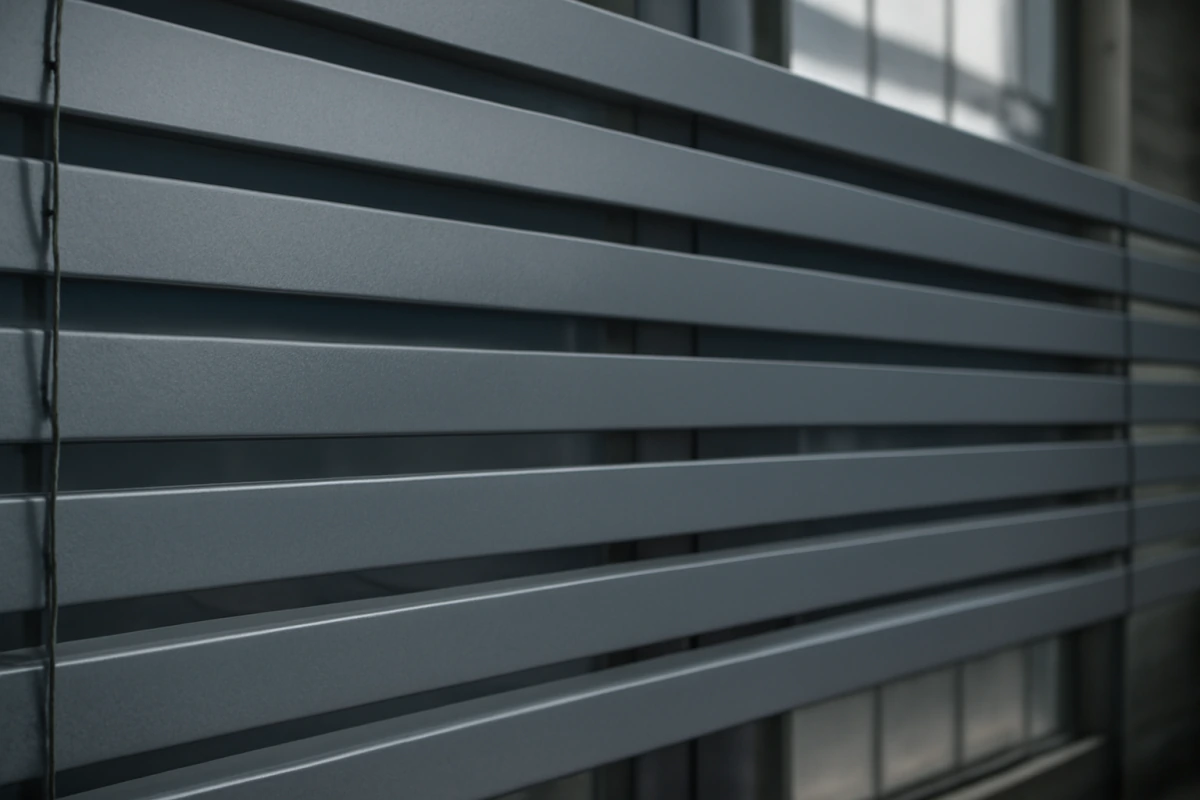
| Horizontal aluminium, 25 mm | 4,200 | 3–5 days |
| Vertical fabric, 89 mm | 4,600 | 3–5 days |
| Steel, 25 mm | 5,200 | 5–7 days |
| Roller blinds, open roller tube | 5,400 | 4–6 days |
| Day-night, two-layer fabric | 7,300 | 5–7 days |
| Roman blinds | 8,100 | 7–10 days |
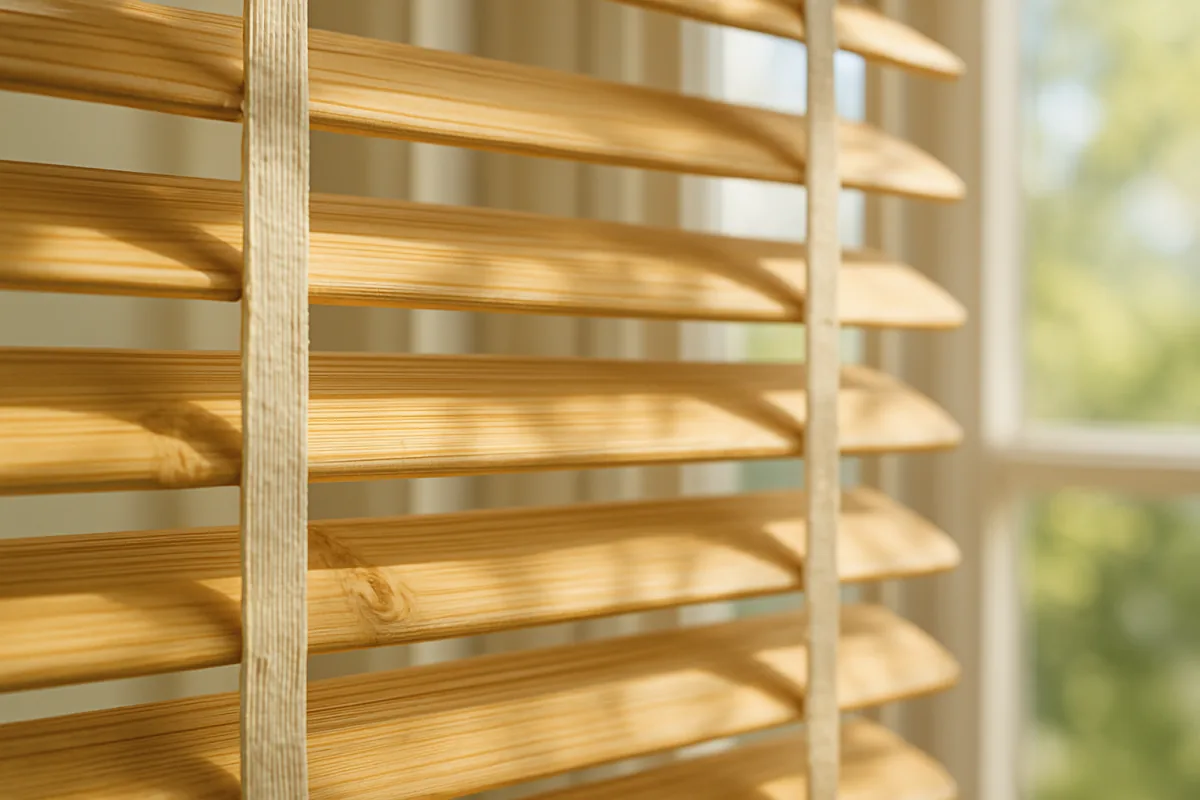
| Wooden, linden, 50 mm | 12,400 | 7–12 days |
| Roller shutters for windows | 17,500 | 10–14 days |
If you look at blinds prices overall, we have nothing cheaper than paper and PVC — that’s an honest lower bound, not a bait price. For shutters the price starts at 17,500 ₸/m², and that’s where a roller shutter begins as a complete system: profile, housing box, guide rails.
Coefficients: control, fabric, mounting, window shape
Control: manual ×1.0, chain ×1.06, electric motor ×1.85, electric motor with remote control ×2.1. Fabric: standard ×1.0, sun protection ×1.15, blackout ×1.35. Mounting: on the wall ×1.0, on the frame ×1.05, drill-free mounting ×1.1, cassette system ×1.28. Window shape: rectangular ×1.0, sloped ×1.3, arched ×1.45, triangular ×1.5.
The cassette system is the only item that adds to the price both for the construction and for how tightly the fabric sits against the window.
Installation and delivery
Installation — 4,500 ₸ per item. For orders from 150,000 ₸ installation is included in the price, it is no longer a separate line. Within the city, measurement and delivery are free; for the suburbs we travel at a cost we quote before the visit.
Why is it cheaper from the manufacturer than from a showroom? We don't pay for someone else's resale and a second measurement — but this only works when the item is non-standard and has to be made to size anyway.
The price per square metre is multiplied by a coefficient for the control, fabric, mounting and window shape — the final amount for the same window can differ twofold depending on the configuration you choose.
Why do different categories have different manufacturing times
The manufacturing time is set by the category of the item, not by how busy the workshop is. Paper blinds are ready in 2–3 days. Horizontal and vertical blinds — in 3–5 days. We sew Roman blinds in 7–10 days, and roller shutters — from 10 to 14 days and longer, because they have their own profile, housing box and guide rails.
Why do roller shutters take longer than blinds? Because roller shutters are not assembled from a ready-made slat, but from a roll-formed profile: it has to be cut to the height of the opening, the housing box fitted, the guide rails selected, and only then is the curtain hung. Blinds are a slat, a cord, a chain and a turning mechanism. Fewer components — shorter cycle.
The times by category look like this:
- Paper blinds — 2–3 days, the fastest item in the price list.
- Horizontal aluminium, vertical fabric and PVC plastic — 3–5 days.
- Roller blinds with an open roller tube — 4–6 days.
- Day-night, metal steel, cord-operated blinds — 5–7 days.
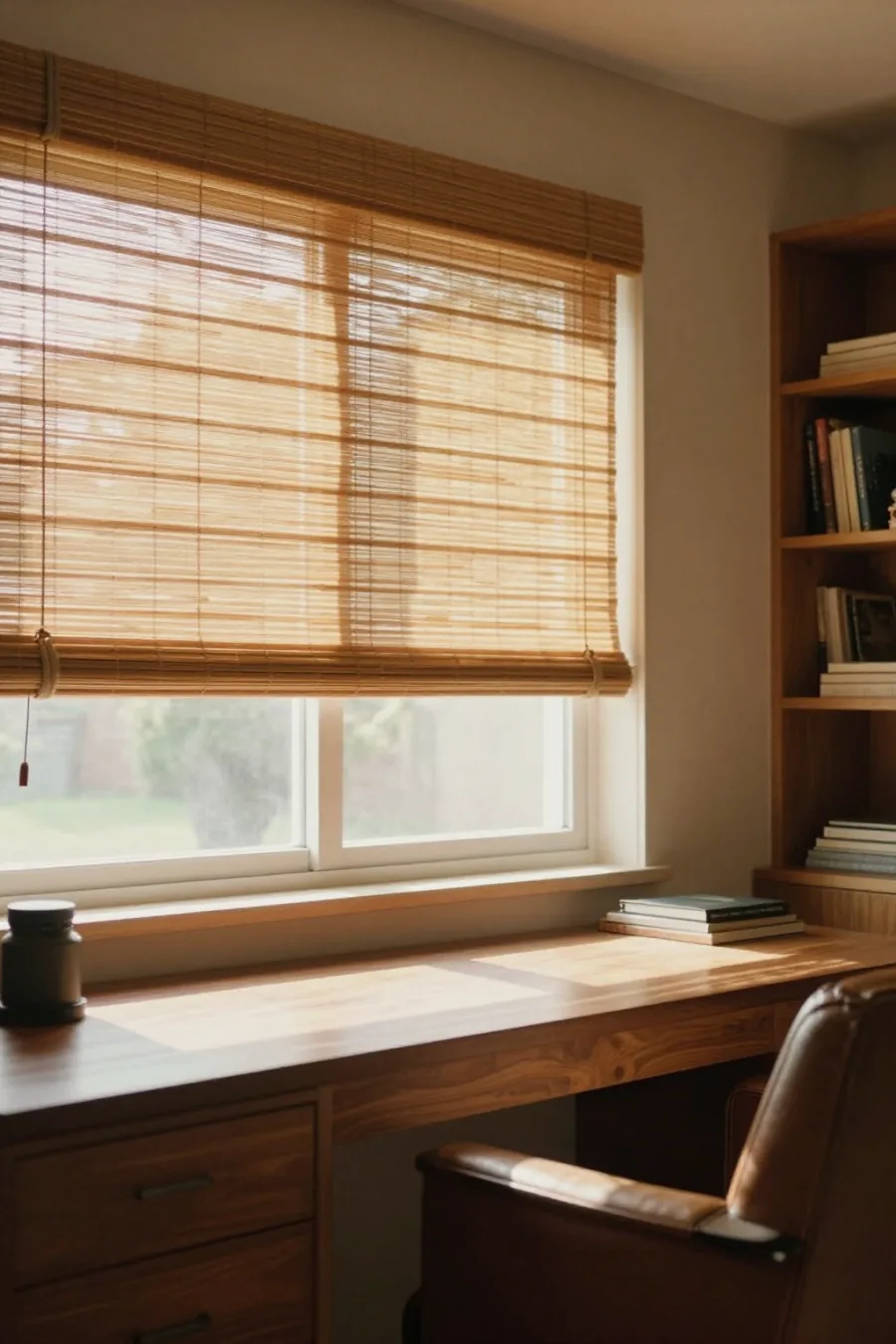
- Roman blinds, pleated blinds, bamboo, multi-texture — 7–10 days.
- Wooden blinds, photo printing, electric motor — 7–12 days.
- Roller shutters for windows — 10–14 days.
What affects the time within one category
Within one category, three things shift the time: an electric motor, photo printing and a non-standard window shape. The motor has to be mounted in the roller tube, the remote control programmed and the emergency lift tested — hence 7–10 days instead of 4–6 for an ordinary roller blind. Photo printing is a separate pass over the fabric; wooden blinds with a 25 mm slat take 7–12 days. An arched, triangular or slanted window adds cutting to a template.
On service life, a separate note: it is not directly linked to the manufacturing time. A fast item does not mean a short-lived one. An aluminium slat and a fabric blind last differently, and what affects that is the side of the building it faces and care, not the number of days in the workshop.
The manufacturing time is determined by the category of the item: the more components and non-standard features it has, the longer the cycle.
Drill-free mounting and keeping your window warranty
Blinds can be fitted to windows without drilling the frame — we don't touch the window profile at all. There are three ways. Into the glazing bead on brackets: the most reliable option for slat systems. On spring clips: quick to remove if you need to wash the sash. On adhesive tape: for lightweight items, paper pleated and small roller blinds. We don't drill the frame, and the window manufacturer's warranty stays valid. This is not a minor point: a drilled profile is a legitimate reason for a window company to refuse a repair.
And if the window has a wide windowsill and you want the blind to sit flush against the frame? Then we fit a cassette system. A cassette system is mounted with no gap between the blind and the frame — the cassette hides the fabric, the side guide rails hold it at the edges, and the window closes more tightly. But a cassette is wider than an ordinary roller, and on a fixed sash next to the window reveal it doesn't always fit. The measurer with samples is exactly who checks this on site: whether there is enough room for the cassette.
On ordering by yourself, let me be direct: you can take the measurements yourself, but it's easy to make a mistake. Uneven window reveals, a slanted sash, a glazing bead of non-standard width — each such case adds an extra centimetre, because of which the item then doesn't fit the opening. A free measurement costs zero tenge, while a remake costs money and time. The measurer arrives with samples of fabrics and profiles and calculates the cost on site.
Why it's better to leave the measurement to the measurer
He looks at the window as a whole: how the sash opens, how much room there is to the windowsill, whether the cassette will get in the way of the handle. Our lead measurer Kirill has fitted systems on arched, triangular and mansard windows over nine years — such openings can't be measured by eye.
Drill-free mounting keeps the window manufacturer's warranty, and a cassette system gives a tight fit of the blind to the frame thanks to the absence of a gap.
Roller shutters: external protection for ground floors and shopfronts
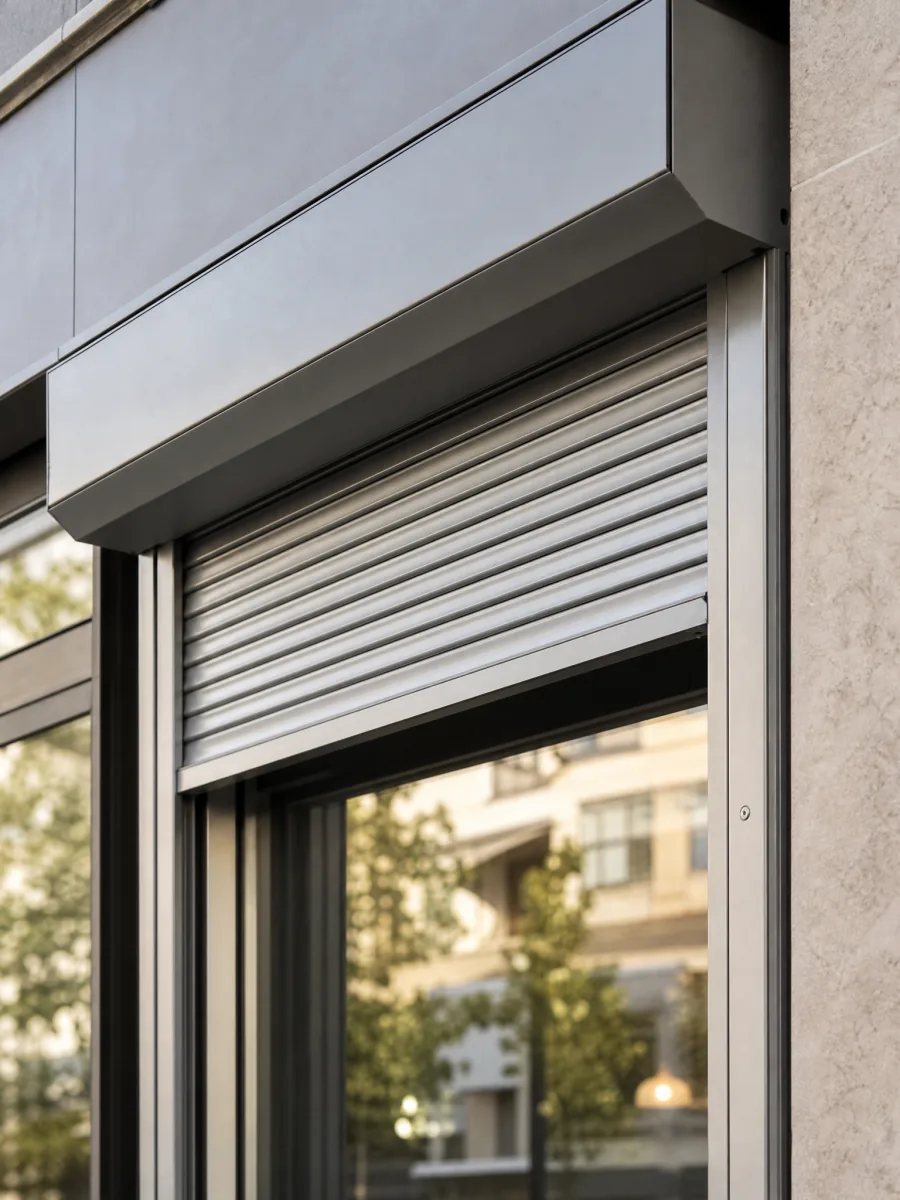
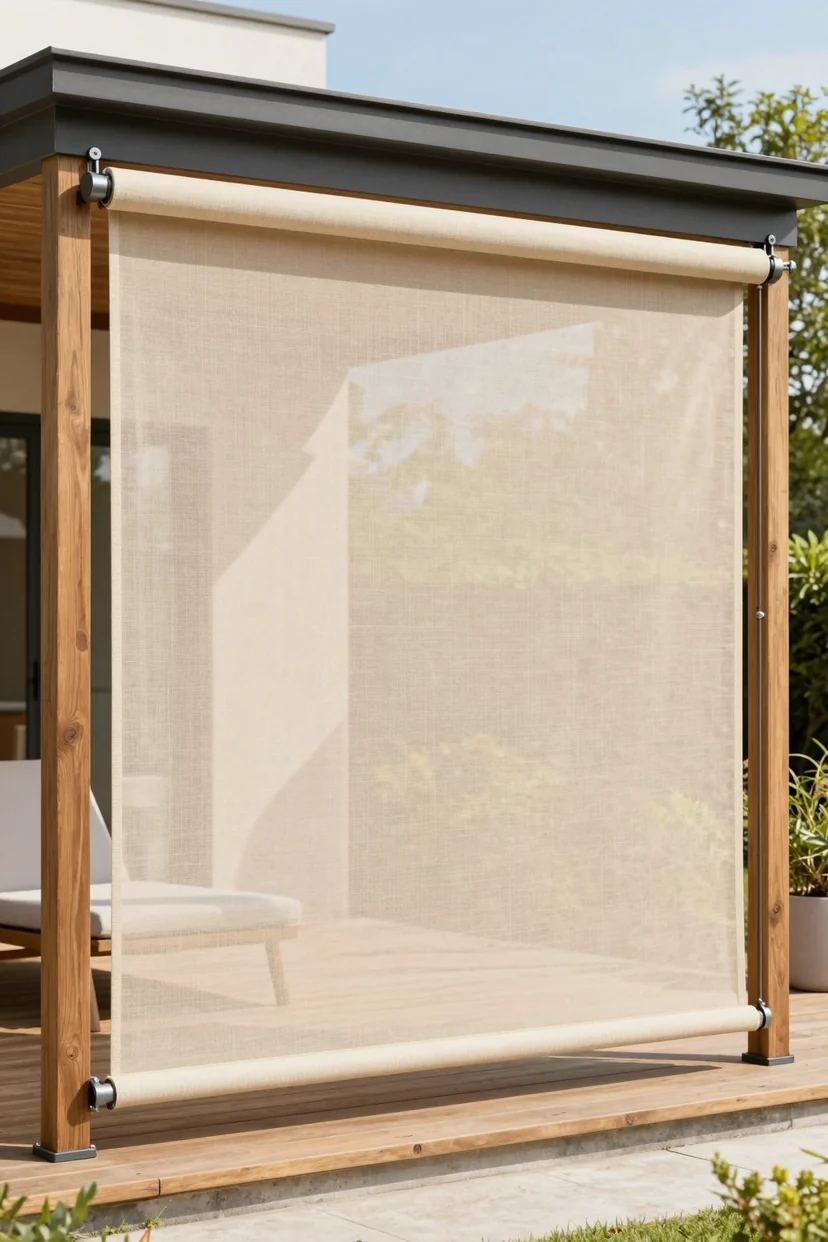
We fit roller shutters on the outside, on the window facade — this is our only range that works not from inside the room, but from the street. Roller shutters for windows cover the opening entirely, with a single rigid curtain of profile, and solve a task that shading from inside cannot: they block access to the window and protect it from outside. Blinds and roller blinds control light and hide the room from prying eyes — but the glass stays glass.
When roller shutters are really needed
Roller shutters are needed where the issue is not light, but access to the window.
- The ground floor of a house or apartment whose windows face a courtyard, the street or a car park.
- A shopfront of a store, pharmacy or salon: at night it needs to be closed completely, not just curtained.
- A premises left unattended — a warehouse, workshop, office on the ground floor of a residential building.
- Windows with high windowsills and large openings where rigid protection matters, not fabric.
A ground floor requires external protection, and fitting only blinds there means hiding the room from view but leaving the window open to anyone who walks up from the street. Yerlan, our sun-protection engineer, usually starts the calculation with one question: what exactly do you want to stop — the sun or a person.
A separate topic is approval. The roller shutter housing box goes onto the facade, that is, it changes the appearance of the building, so it is approved with the building’s owners’ association (OSI/KSK). We mention this before the measurement so the client understands the order of steps, and we advise on what is usually required from the management company.
Operating roller shutters
The profile is raised and lowered mechanically, by chain or by electric motor. Mechanical operation is chosen for windows that are easy to reach by hand. A chain is more convenient where the curtain is heavy and the window is high. An electric motor with a remote control is fitted on shopfronts, high and hard-to-reach windows, and openings that are opened and closed every day on a schedule: raising such a profile by hand is inconvenient, and sometimes unsafe.
Roller shutters are our only category that is fitted on the outside, on the facade, so the housing box on the facade is approved with the building’s owners’ association (OSI/KSK).
Roman or roller blind: kitchen, kids' room, living room, office
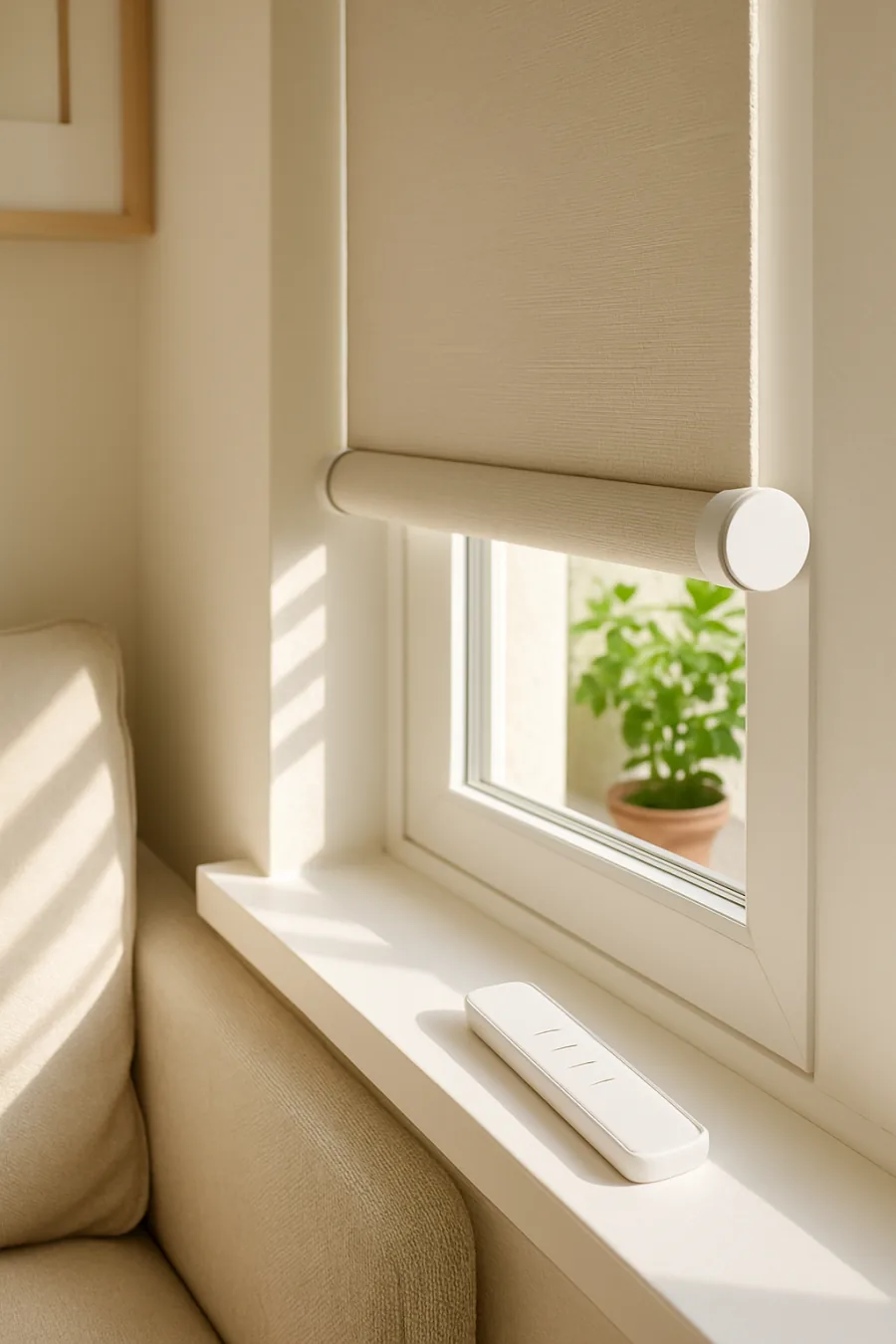
In the kitchen and kids' room, roller blinds and day-night are more practical; in the living room a Roman blind is appropriate; in the office, vertical blinds or roller blinds. A roller blind covers the window with a single fabric, and grease doesn't settle on it the way it does on slats. We sew Roman blinds in our workshop to the size of the window. The choice is set not by the interior, but by what happens in the room every day.
| Room | Category |
|---|---|
| Kitchen | Roller blinds, day-night |
| Kids' room | Day-night, roller blinds with blackout |
| Living room | Roman blinds, roller blinds |
| Office | Vertical blinds, roller blinds |
The difference between a roller blind and day-night
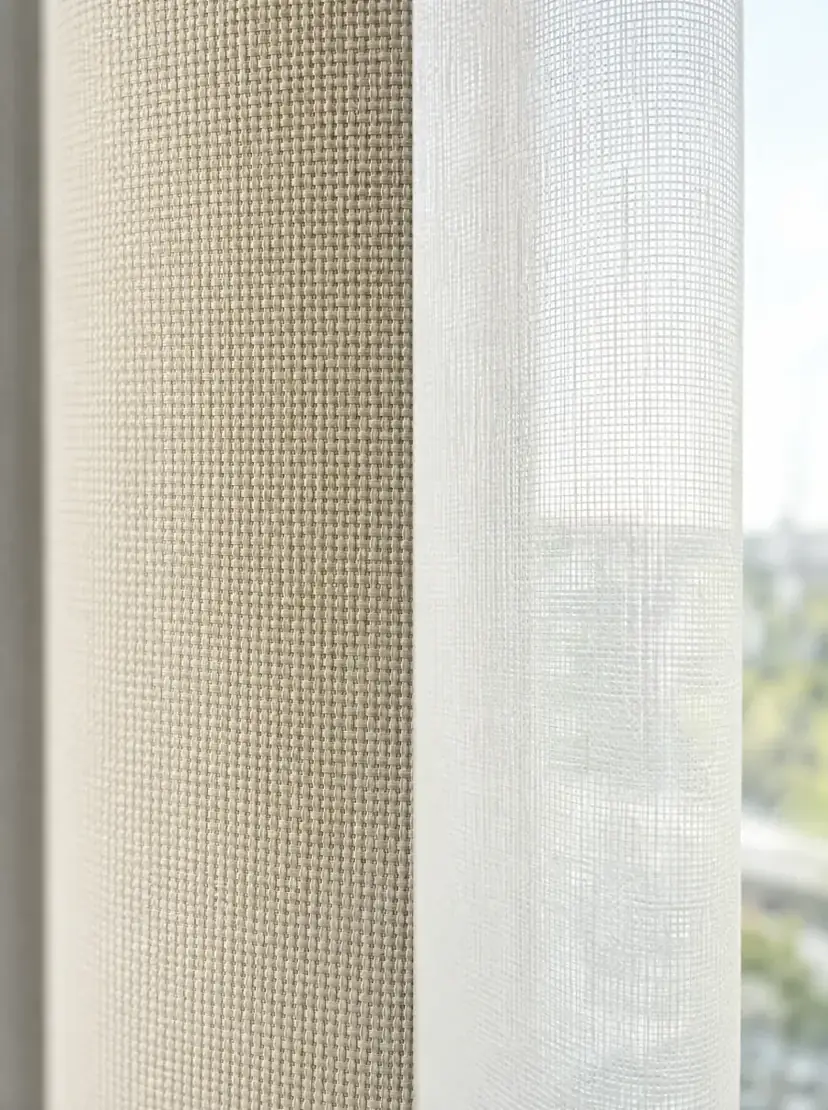
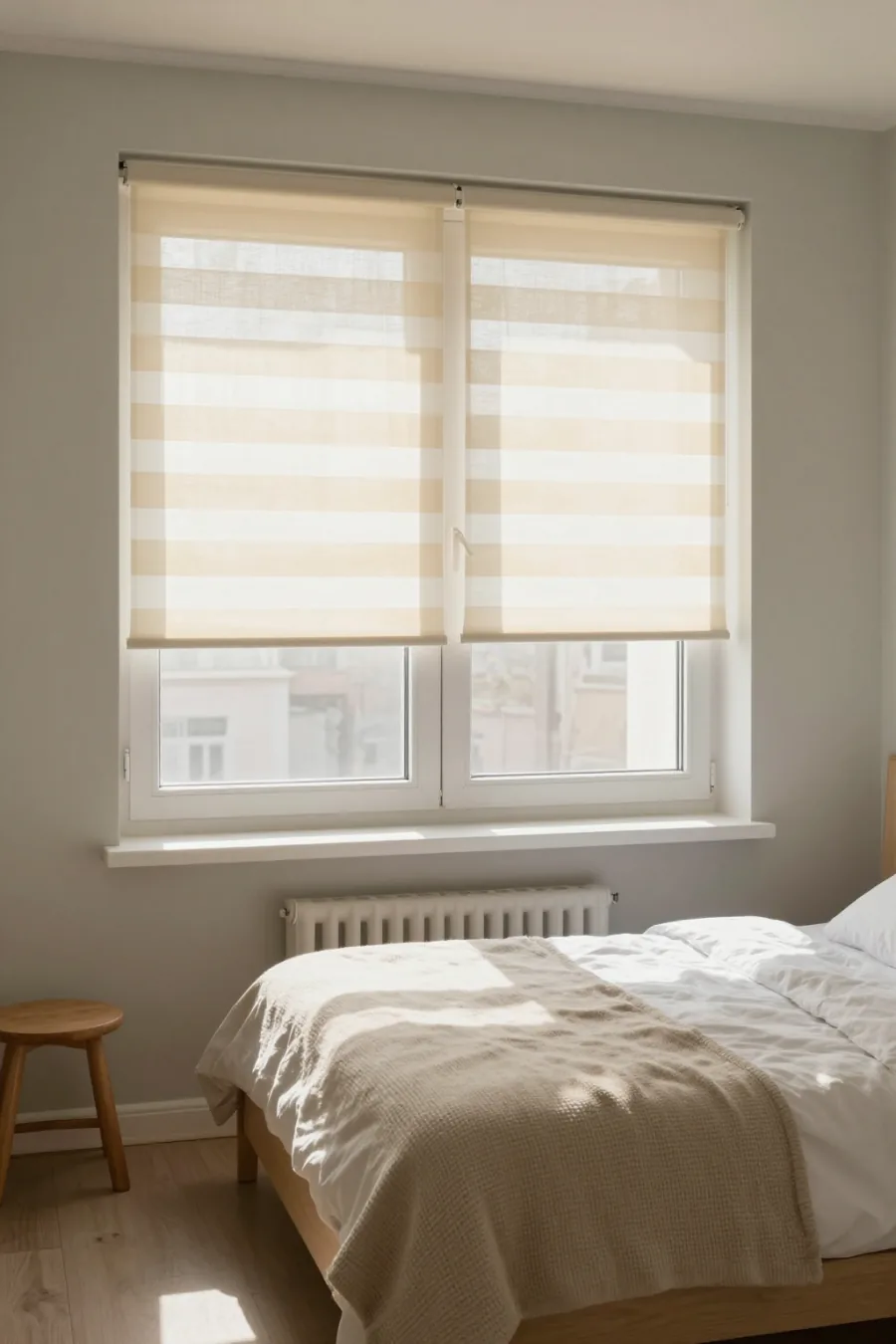
A roller blind gives you a solid fabric: light either passes or it doesn’t, there are no in-between states. Day-night is a two-layer fabric of alternating opaque and sheer stripes, and by shifting the layers you control the light without fully darkening the room. For a bedroom or a child’s room, people choose blackout fabric at a coefficient of 1.35 to the base price — that’s a roller blind from 7,300 ₸/m². In the kitchen, day-night is more convenient: during the day the stripe lets light through, and in the evening you close the window and don’t sit under a lamp.
Roman blinds in the interior and how to care for them
A Roman blind folds into pleats and looks like textile rather than a mechanism — that’s why it’s used in a living room, where the window is part of the interior. The price of Roman blinds is from 8,100 ₸/m², manufacturing time 7–10 days. A white Roman blind in a living room with a solid wall works almost like a roller blind, only softer in terms of light. Care depends on the fabric: machine washing is not suitable for all fabrics, some can only be cleaned by hand or with a dry brush. In an office, where there are many windows and they are tall, Roman blinds are an expensive pleasure: vertical blinds and roller blinds cover the same windows more simply. When blinds and curtains are on different windows, they are matched by the colour of the fabric and the slat — our measurer brings samples and shows what goes with what.
We quote an order for Roman blinds for an office separately from a set for apartments, but in the same estimate as the other items. And yes, blinds and curtains are not one category but two different products, and we honestly say so if a particular room calls for something other than what you had your eye on. The practice is simple: roller blinds and day-night block the light without drawing attention to themselves, Roman blinds work for the interior, vertical blinds — for office windows.
Almaty’s climate: heat, dust, frost and choosing a category
Almaty’s sharply continental climate — hot sunny summers with dust and cold winters with a day-to-night temperature swing — directly affects the choice of fabric and shading system. A south-facing window and a north-facing window live by different rules.
The window’s orientation determines the choice of fabric and shading system. For south-facing windows we recommend a dense fabric or slat that holds light and fades less; for north-facing ones a standard fabric is enough. Coloured blinds on the sunny side lose their richness over time — and this is not a defect but a natural process: fabric fading is excluded from the warranty, which we tell the client before the order. Wide blinds with a 50 mm slat collect less dust between the plates than a narrow slat.
What lasts longer — aluminium or fabric? An aluminium slat is resistant to sun and temperature swings, fabric is softer in terms of light but needs more careful handling. Practice suggests: for a kitchen and a south-facing bedroom we more often install aluminium or dense fabric, and light fabrics — on windows where the sun looks in less.
- Dust and care: with blinds and roller systems, care comes down to dry and wet wiping.
- Fabric blinds cannot be machine washed — only gentle brushing and a damp cloth according to the instructions.
In winter, with frost and temperature swings, the window works in condensation mode, and here what matters is not so much the fabric as the correct mounting and ventilation. We take this into account in the workshop: our measurer with samples looks at how the window sits in the reveal and recommends a system for the real conditions, not for a picture from a catalogue. Almaty’s sharply continental climate — hot sunny summers with dust and cold winters with temperature swings — is the main factor determining the choice of fabric and shading system for each window.
What happens after the warranty
The warranty on the mechanism is 3 years from the date the acceptance act is signed, on installation — 1 year. If the mechanism fails during this period, we come out and fix the fault free of charge, within 5 working days.
And what happens after? We get asked this more often than you’d think, and there’s no reason to fear it. After the warranty we still come out: to tighten loosened mountings, adjust the movement of the slat or fabric, replace a cord or chain. After-warranty service is paid work, but it’s done by the same workshop that assembled the product. The manufacturer repairs its own product years later to its own dimensions — you don’t have to look for someone willing to take on someone else’s design.
Separately, about service life and fabric replacement. The fabric loses its look over time — faster on the sunny side, slower in the shade. We can replace just the fabric, keeping the working mechanism and mountings: that’s cheaper than replacing the whole product.
- warranty on the mechanism: 3 years from the date of the act;
- warranty on installation: 1 year;
- warranty case: we fix it free of charge within 5 working days;
- after the warranty: tightening, adjustment, replacement of cord, chain or fabric.
Buying something cheap for the duration of a renovation and then replacing it is, in my view, an overrated approach. A product installed to measurement can only be taken down and moved to a new window with new brackets. It’s simpler to cover the window right away with something that will last.
The warranty is 3 years on the mechanism and 1 year on installation from the date of the act, and after it expires we continue to service our products.
What is not covered by the warranty
Mechanical damage, reinstallation on your own, water and natural fading of the fabric. For these cases we also come out, but it’s paid repair.
If you order Roman blinds from us, the lifting mechanism is assembled in our workshop, and the same mechanism warranty applies as for the other lines.
FAQ
Measurement and consultation are always free, and within the city measurement and delivery are free too. To the suburbs — Kaskelen, Talgar, Issyk, Kapshagay — we do travel, but the cost of the visit depends on the distance, and we quote it before the visit, not after.
Questions about price and timelines
How much does a square metre cost? It depends on the category: horizontal aluminium blinds from 4,200 ₸/m², vertical fabric ones from 4,600 ₸/m², roller blinds from 5,400 ₸/m², day-night from 7,300 ₸/m², Roman blinds from 8,100 ₸/m². These are “from” rates — the final figure is calculated by the window dimensions and coefficients.
How many days will manufacturing take? Paper blinds — 2–3 days, horizontal and vertical — 3–5 days, roller blinds — 4–6 days, Roman blinds — 7–10 days, roller shutters — 10–14 days and longer, depending on the profile and drive.
Can I buy blinds cheaper? A paper pleated model from 3,200 ₸/m² comes out cheaper, but it’s a solution for a season, not for years. The price difference between categories comes from the material, not from discounts.
Questions about mounting and windows
Do you drill the frame? No. We mount into the glazing bead on brackets, on spring clips or on adhesive tape — the window manufacturer’s warranty is preserved.
Do you make large blinds for panoramic glazing? Yes, we quote it separately: wide slats, a cassette system and a drive chain or electric motor. The exact calculation is provided by our measurer.
Can I measure the window myself? You can, but with uneven reveals and non-standard sashes it’s easy to be off by a centimetre, and the product will have to be redone. Our measurement is free, so it’s easier to leave it to our measurer.
Questions about visits and payment
Do you work with legal entities? Yes. A company orders a set of products for its office by bank transfer: the sale of blinds and curtains for offices and shops comes as one estimate together with installation.
Can we come to the workshop and see the production? Yes, our own workshop is in Almaty, and we show it: cutting slats and fabric, assembling the mechanism. We arrange the visit in advance.
The measurer arrives with samples of fabrics and profiles, so you see the colour and texture on site before ordering — that is more convenient than choosing from photos in a catalogue.
Conclusion
The manufacturer makes the product to individual measurements rather than picking it from ready stock. Everything we do starts with a visit from our measurer with samples of fabrics and profiles: they calculate the price on site and for all items at once. Four conclusions follow from this, and they are worth keeping in mind when choosing.
The category is determined by what the window needs, not by taste. Blinds adjust light with slats, a roller blind covers the window with a single fabric, a Roman blind gathers into folds to the size of the window, roller shutters are mounted outside on the facade and protect a ground floor or a shop window. One flat can easily need two or three solutions at once — and that is normal.
A mixed order combines blinds, roller blinds, Roman blinds and roller shutters in one estimate. One measurer, one workshop, one installation — instead of three contractors with different timelines and different warranty obligations.
The price is calculated per square metre and multiplied by a coefficient for the control, fabric, mounting and window shape. So the “from” price is only the base, and comparing companies by it makes no sense until a specific opening has been calculated. Installation costs 4,500 ₸ per product; for orders from 150,000 ₸ we do it free of charge.
Drill-free mounting preserves the window manufacturer’s warranty: we do not touch the frame. The warranty on the mechanism is 3 years, on installation — 1 year from the date of the acceptance report, and after it expires we still come: to tighten, adjust, replace a cord or chain.
There is one practical recommendation. Start with a free measurement and show the measurer all the windows you want to cover — even if you have not decided on half of them yet. The measurer brings samples, sees the window’s orientation and the type of sashes, so the estimate will be realistic rather than approximate. That is exactly how blinds in Almaty from the manufacturer are calculated.