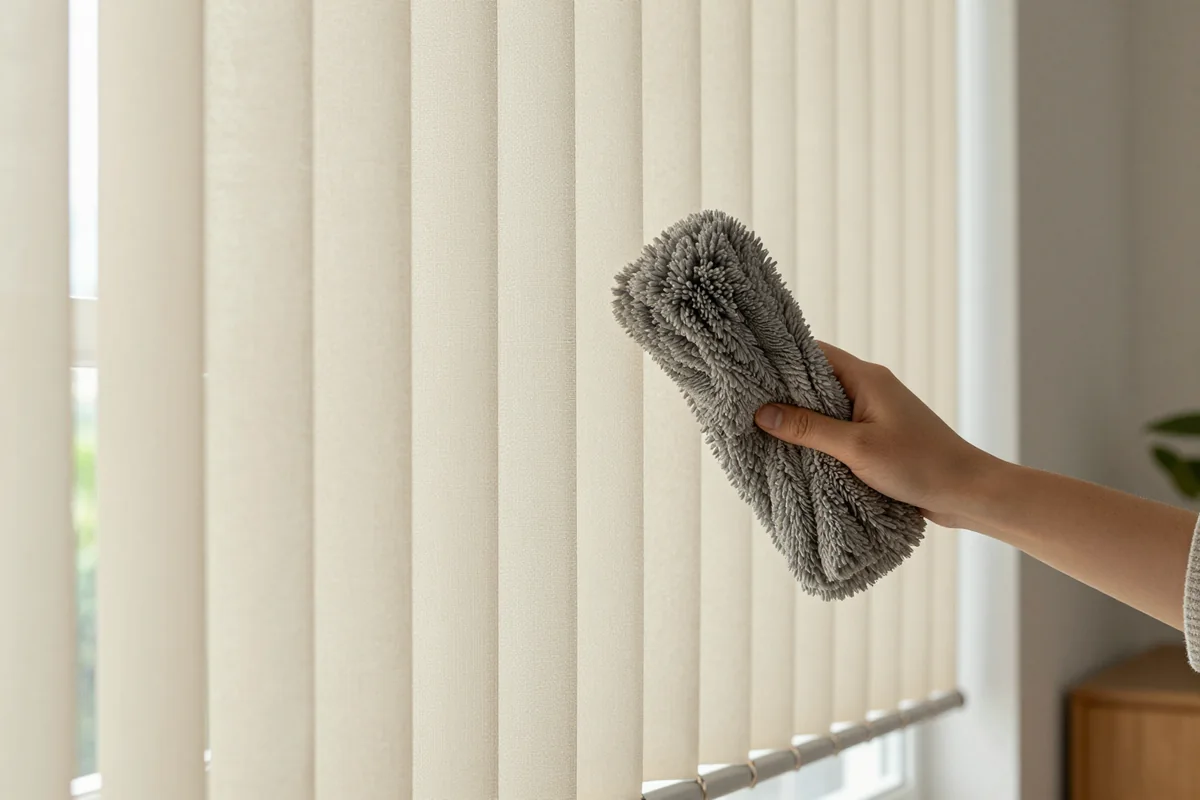
Caring for vertical blinds comes down to dry dusting once every one to two weeks: with a vacuum cleaner on low suction or a soft-bristled brush. Washing is rarely needed, because every wash strips the treatment. Fabric slats are washed in water no hotter than 30–40 °C, without bleach and without spinning. Treated fabric, blackout, printed and natural fabrics are not machine washed.
Why blinds gather dust quickly in Almaty
In Almaty, dust builds up on slats faster than in a humid climate, and the reason is the climate itself: it is sharply continental. Summers are hot and dry, the wind carries dust, and winters are cold, with temperatures swinging widely between day and night. Dust rises from the streets and courtyards and settles on everything hanging at the window. Vertical fabric blinds hold onto it more readily than plastic or aluminium: the pile catches the fine particles instead of letting them pass.
That is why caring for vertical blinds in Almaty starts with regular dry dusting. If you put it off, dust works its way into the weave and turns into a grey film that a brush can no longer remove. Dry dusting once every one to two weeks takes a couple of minutes and nothing has to be taken down.
What helps around the home:
- a vacuum cleaner with a soft brush attachment on minimum suction — working from top to bottom;
- a soft brush or a dry microfibre cloth — if there is no vacuum cleaner at hand;
- an antistatic spray for fabrics — apply rarely; it reduces how much dust settles, but does not replace cleaning.
What this means for cleaning
Dry dusting matters more than washing in Almaty: it removes dust without stripping the treatment. That is exactly the kind of care vertical blinds need — frequent and without water. Save washing for when a slat is genuinely dirty, not just dusty.
What vertical blinds are made of and which parts can get wet
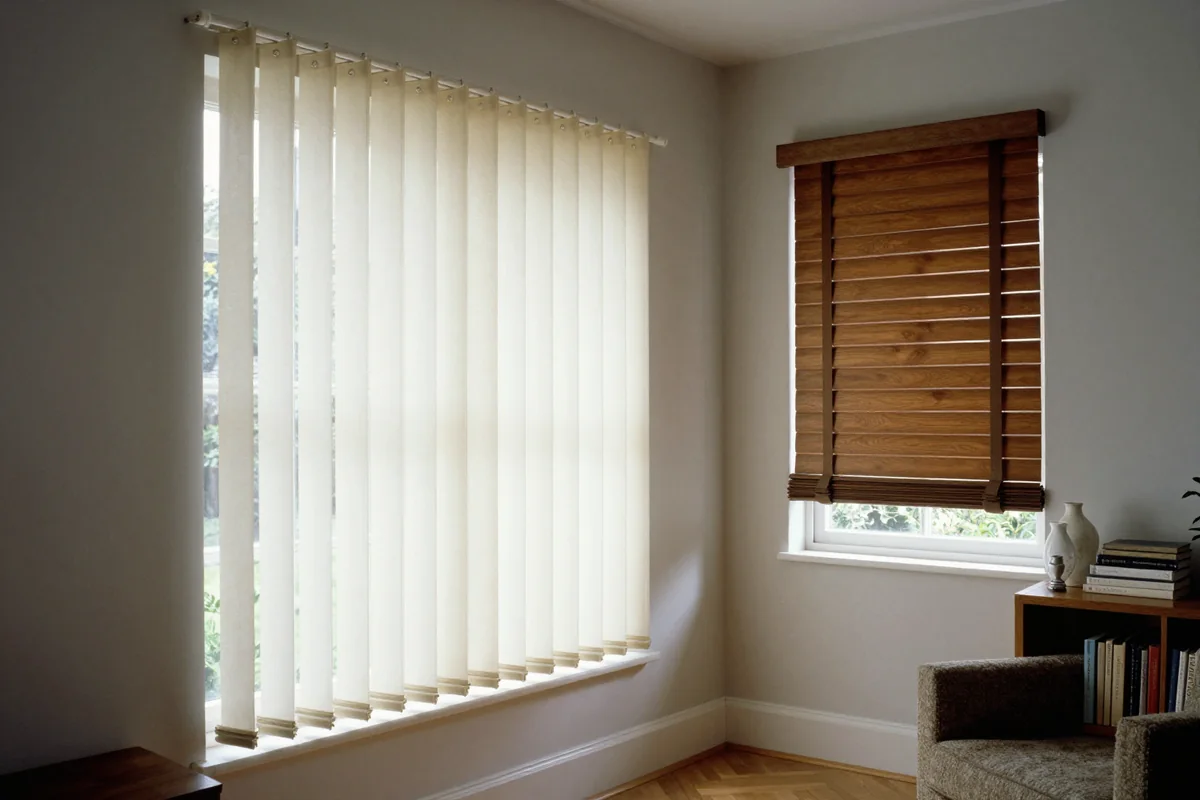
Vertical blinds are a rail above the window with fabric slats hung from it, and the only part of this construction that can get wet is the slats. The rail, the runners and the control mechanism always stay dry. Water on the mechanism is not covered by the warranty — that is not a formality but a direct condition.
There are only a few parts, and each has its own role.
- The rail is the load-bearing profile, with the tilt rod hidden inside and the runners travelling along it.
- The runners are plastic carriages with hooks. The hanger — the reinforced top of the slat — is slipped onto the hook.
- The weights are plates in a pocket at the bottom of the slat. Without them the fabric billows and curls.
- The bottom connecting chain is fastened to the weights and keeps the slats at an equal distance from each other.
- The control chain and cord hang at the side. The chain tilts the slats, the cord gathers them to the edge or spreads them apart.
The slat and its parts
The fabric slat is the only part that goes into water. Before that, the weight is taken out of it and the bottom chain is unfastened. The hanger stays on the fabric: it is plastic and not affected by water.
The rail and mechanism
Wipe the rail with a dry cloth or a slightly damp, well-wrung one. Do not pour oil or household lubricant inside: dust sticks to lubricant and the runners start moving even more stiffly. If the slats tilt with effort, first clean the profile with a vacuum cleaner and a narrow attachment — most often the culprit is packed dust. Did that not help? Then it is a matter of adjustment, not cleaning.
The rail and mechanism of vertical blinds are cleaned dry only, and water is only for the slats themselves.
How to tell whether your slats can be washed
The answer depends on two things: what fibre the slat is made of and whether it has an anti-dust treatment. The treatment is a factory finish that keeps dust from working its way into the fabric. It is also the first thing to suffer from water and detergent.
The label or the product passport is the quickest way to find out the composition; if you no longer have them, you can ask whoever made the blinds. Then proceed as follows.
- Check the composition: natural fibres, polyester or a blended fabric.
- Assess the density. A loose, fuzzy fabric soaks up water greedily; a dense one holds its shape.
- Check the print. If the pattern is printed on top of the fabric, you must not rub it.
- Drop some water on the bottom corner of a slat. If the drop sits on the surface for a while, the fabric has been treated. If it soaks in straight away, there is no treatment, or previous washes have already rinsed it off. This is a rough guide, not a laboratory test.
The order of checks
If you still cannot find out the composition, do not consider a machine at all: hand washing or dry dusting only. Treated fabric must not be washed in a washing machine: the very first cycle strips the finish. Natural fabrics and printed slats should never go in a machine, on any setting. Polyester and blended fabrics can take a machine wash, but the general conditions are the same: water no hotter than 30–40 °C and a gentle spin.
What happens to the treatment after washing
Every wash rinses off some of the treatment, so afterwards the fabric collects dust faster. You have to dry dust more often, and the slat behaves differently. That is why, if you want to wash vertical blinds, we advise you to check the label and test a drop of water first, and only then wet the fabric.
Dry dusting or washing: which to choose
For fabric slats the main method is dry dusting, and washing remains a rare measure for a specific stain. The reason is simple: every wash rinses off some of the treatment, and afterwards the fabric collects dust more readily than before. Caring for vertical blinds without water covers almost everything that happens to slats in an ordinary flat.
And what if they look clean? Dust on light-coloured fabric is not immediately visible, but it is there — it settles in a thin layer, and over time that layer works its way into the fibres. Dry dusting once every one or two weeks keeps dust from building up to the point where you can no longer do without washing. Skip a month, and a fingerprint on such fabric will have to be spot-treated.
Hand washing is needed when the slats have a stain, grease or an old mark that a dry cloth will not remove. Machine washing is acceptable only for polyester and blended fabrics without treatment, without printing, not blackout — and even then as an exception, not as a regular routine.
Table “method — when it suits — what it does to the fabric”
| Method | When it suits | What it does to the fabric |
|---|---|---|
| Dry dusting | Regularly, once every one or two weeks | Removes dust, leaves the treatment alone |
| Hand washing | Spot treatment: a stain, grease, an old mark | Partly rinses off the treatment, fabric stays intact |
| Machine washing | Only polyester and blends without treatment or printing | Rinses off the treatment heavily, creases are possible |
The conclusion is simple: dry dusting is what you always do, and washing is what you resort to when there is no other way. Washing rinses the treatment off the slats, and you cannot restore it at home.
Cleaning without taking them down: how to wash slats right on the rail
Fabric slats can be washed right on the rail, without taking them off the window. In effect this is washing without removal: the fabric stays hanging and you work on it in place, with a soft sponge and a weak soap solution.
What you will need
A soft sponge, a weak liquid soap without chlorine or abrasives, a dry cloth and a basin in case drips run down. A microfibre sponge is more convenient than a foam one — it leaves fewer streaks and the fabric dries more evenly.
Step-by-step
- Wet the sponge in the soap solution and wring it out well — it should not drip.
- Move the sponge from the top of the slat downwards, without pressing hard.
- Treat stains and old marks locally with a mild product before the general wash.
- Immediately blot the treated slat with a dry cloth.
- Work one slat at a time, not straight across the whole section.
Working from top to bottom matters here: if you start at the bottom, dirty water will run down over the part you have already cleaned. Local cleaning without removal handles fresh dust and small stains. When fabric slats are dirty along their whole length, a wipe-down is not enough — a full wash is needed.
How to take the slats off the runners
The slats are taken off the rail runners, while the rail itself stays on its brackets. The slat hanger sits on the runner hook, and there is only one task — to take it off the hook without breaking anything. The job is simple but needs care: bend the hook and the slat will hang crooked afterwards.
Take them off one at a time
- Set up the step ladder so that the rail is at chest or eye level. Reaching from below upwards is awkward, and the fabric is easy to tug harder than you should.
- Turn the slats edge-on towards you — that way each hanger is easier to reach.
- Take the slat at the very top and lift it slightly to ease the load on the hook.
- Slide the hanger off the hook to the side. Don’t pull down: a plastic hook bends if you yank it.
- Stack the removed slats in order. Even better, number them with a strip of masking tape on the hanger — after washing, slats can differ slightly in shade, and in the original order it isn’t noticeable.
Weights and chain
First unclip the bottom connecting chain from the weights — otherwise a removed slat will pull the neighbouring ones with it. The weights are taken out of the pockets once the slat is on the table. We don’t touch the control chain and cord: they stay on the rail together with the mechanism.
Slats are taken off the runners one by one and stacked in order, the weights and bottom chain are removed before washing, and the rail is left alone.
Hand-washing fabric slats step by step
Hand-washing fabric slats is done in water no hotter than 30–40 °C. In such water the fabric doesn’t shrink, and the coating washes out more slowly than in hot water. If you’ve decided that washing vertical blinds is acceptable in your case, then here’s the order.
We advise not soaking all the slats at once, but testing one first: soak it separately and see how the fabric behaves. It’s more reassuring that way.
Preparing the water and detergent
Fill a bathtub or a wide basin with water and dissolve a mild soap solution in it. Don’t use bleach or chlorine: they destroy both the fabric and the coating, and there’s no way to restore it afterwards. Treat stains and old dirt locally before the general wash — with a soft sponge, without rubbing. The order matters here: if you soak a slat with a stain whole, the stain will spread and instead of a clean spot you’ll be left with a mark.
Soaking and the wash itself
- Lower the slats into the water and let them soak — without active movement.
- Run your hands or a soft sponge over the fabric from top to bottom.
- Rinse in water at the same temperature as for washing.
- Don’t wring or rub: this leaves creases that won’t straighten out.
- Let the water drain, but don’t dry the slats until they’re like a dry cloth — they’re easier to hang back up while damp.
Rubbing and wringing damage a slat more than the water itself. A mild soap solution removes ordinary dust just as well, and the fabric stays intact.
Fabric slats are hand-washed in water no hotter than 30–40 °C, without bleach or chlorine, and stains are treated locally with a mild detergent before washing.
Machine washing: when it’s acceptable and on which cycle
Machine washing is acceptable for polyester and blended fabrics — and only for them. Natural fabrics are not machine-washed: linen and cotton shrink and crease in the drum so much that the slat can’t be straightened out. Coated fabric, blackout and printed slats should never go in the drum at all.
Before loading, check the fabric composition. It’s on the product label or in the order documents. If the composition is unknown, the machine is out, and the choice is between hand-washing and dry dusting.
What has to line up so the machine doesn’t ruin the slats:
- Composition — polyester or a blended fabric without coating.
- Use a delicate or manual cycle, water no hotter than 30–40 °C, and preferably closer to the lower end.
- Spin — minimal or switched off completely.
- A laundry bag or pillowcase — essential, with no bleaching additives in the detergent.
What goes into the machine
The slats are rolled into soft rolls and put into a bag or pillowcase. Spinning causes creases and twisting of the slats: in the drum the fabric rubs against itself and against the mesh, and the creases stay forever. That’s why the spin is either switched off or set to minimum.
Hand or machine
Hand-washing is safer almost always. In a basin we control the temperature, see how the fabric behaves in the water, and can stop at any slat. A machine saves time, but it doesn’t tell where the fabric is delicate and where it’s dense — you decide that for it, and a mistake here is irreversible.
Only polyester and blended fabrics without coating or printing are machine-washed, on minimal spin or without it.
Drying and hanging the slats back up
A fabric slat should dry straightened out and in a vertical position, not rolled up in a basin or thrown over the back of a chair. Twisting of slats most often happens at this stage. In water the fabric is still smooth, but a wet clump on the table picks up creases within an hour.
How to dry
The simplest way is to dry the slats right on the window.
- Let the water drain without wringing the fabric. The slat should be damp but no longer dripping.
- Hang the slats back on the runners in the same order you took them off.
- Insert the weights into the pockets and clip the bottom chain back on. Under their weight the fabric will straighten out on its own.
- Put a towel under the window for the time being and open the sash slightly for ventilation.
- The slats should not touch the radiator, and direct sun on wet fabric leaves streaks.
Another option is a clothesline in the bathroom: hang the slat vertically by its hanger, without folding it in half. Drying on a radiator damages the fabric and the shape of the slat, so we rule it out with any method.
How to put them back on the runners
Put the hanger onto the runner hook, check that the slat hangs straight, and only then take the next one. When everything is in place, turn the slats with the control chain and look at them against the light. The weights should line up. One slat lower than the rest? Take it off and put it back on, rather than pulling on the bottom.
Dry the slats vertically, in place and with the weights on, away from the radiator — then the fabric hangs as straight as it did before washing.
Horizontal, plastic, wood, bamboo, pleated: what to wash with
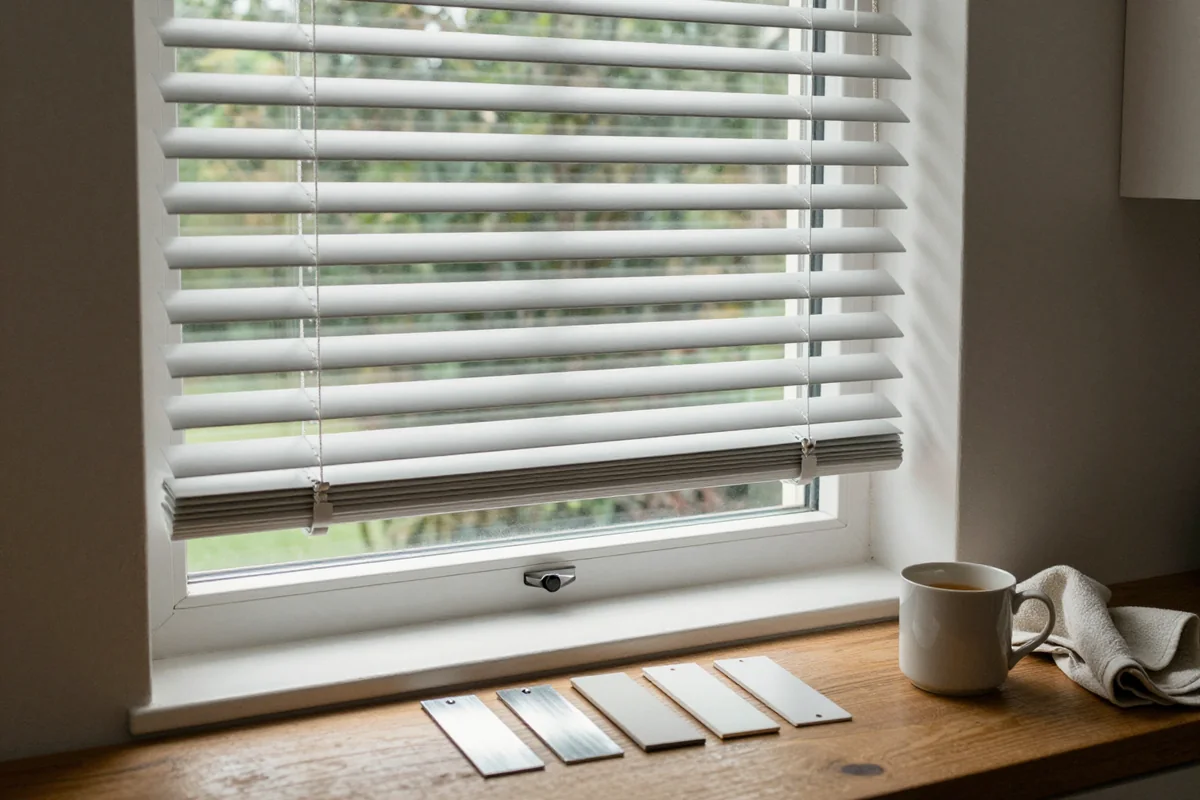
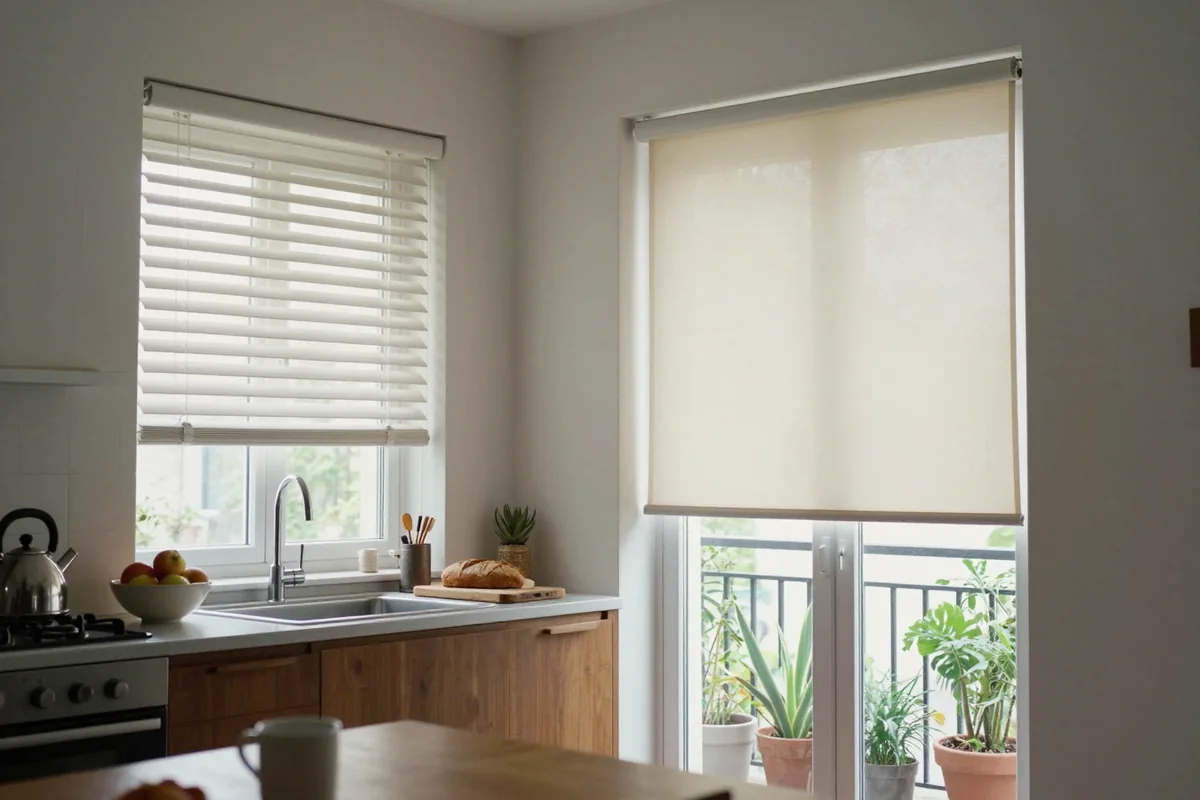
The way you care for them depends on the material: fabric is washed according to the conditions, plastic and metal are wiped without soaking, wood and bamboo are not washed with water, roller blinds are not machine washed, and pleated blinds are not washed at all. Fabric slats are not the only thing hanging on windows, and every material has its own limits.
| Material | What you can do | What you can’t do |
|---|---|---|
| Plastic slats (PVC) | Soft sponge, weak soapy solution, wipe dry right away | Soaking, abrasives, water on the rail |
| Horizontal aluminium blinds | A damp cloth or sponge along the slat, on both sides | Pressing hard, bending a narrow slat |
| Metal steel slats | Wipe with a damp cloth and dry right away | Leaving them wet, scratching |
| Wood and bamboo | Dry cloth, soft brush, vacuum cleaner | Washing with water, hanging near a source of steam |
| Roller blinds | Vacuum cleaner, soft brush, spot treatment for stains; gentle hand washing only if the fabric’s care label allows it | Machine washing, soaking, a wet sponge over the whole fabric |
| Pleated blinds | Vacuum on low power, soft brush, spot-clean a stain with a damp sponge | Any washing, soaking, or a wet sponge over the whole fabric |
With horizontal blinds it is easier to work on the window. Close the slats to one side and run a cloth from top to bottom, then turn them the other way and repeat. Hold a narrow aluminium slat with your fingers from below, so it does not bend under pressure. You can give the fabric a thorough wash in the bathtub, but for that it has to be taken off the brackets, and that is already installation work.
Plastic slats are wiped without soaking: water left in the grooves and in the mechanism does more harm than good. Wood and bamboo swell and warp from water, and that cannot be reversed. Roller blinds should never go in a machine: the treatment and the even fabric do not recover afterwards. The main care for them is dry dusting, stains are spot-cleaned, and the fabric is gently hand-washed only when the fabric label expressly allows it. Pleated blinds are not washed or soaked at all, even by hand: the fold is held by the treatment and heat-setting, and water takes them away along with the concertina shape.
The material determines the way you care for them before the degree of soiling does: metal and plastic are wiped, wood and bamboo are cleaned dry, roller blinds are cleaned dry and spot-only, without machine washing, pleated blinds are dry and spot-only.
Stains, grease, limescale and mould: local cases
We remove stains and old soiling locally and before general washing, not after: if you soak a slat with a stain, it will spread across the fabric. Work with a sponge, in blotting motions, from the edge of the stain towards the middle.
Grease in the kitchen
On plastic and metal, grease is removed with a warm solution of dish soap at a weak concentration. Then the slat is wiped with clean water and dried right away. On fabric, the same product is applied only to the stain, without rubbing, and blotted with a dry cloth.
Limescale and soap scum in the bathroom
Plastic and aluminium slats are wiped with a weak solution of vinegar or citric acid, then with clean water — the acid must not stay on the surface. We do not use acid on fabric: it changes the colour and strips the treatment.
Mould
Mould on slats is a sign that the room is damp and the air does not change. Dry the slats, air the room. Synthetic fabric without treatment can be washed by hand. If dark spots remain, the slat can no longer be cleaned, and it is easier to replace it, and at the same time deal with the ventilation.
Garment steamer and steam cleaner
We do not use a steam cleaner on fabric with treatment or on printed slats: hot steam strips the treatment and can distort the pattern. With a garment steamer you can refresh fabric without treatment, holding it at a distance and not pausing in one place.
Stains are removed locally and before washing, acid is left for plastic and metal, and mould is dealt with together with the cause of the damp.
Mistakes after which the slats cannot be restored
Slats do not twist and shrink on their own — a spin cycle and hot water ruin them. Slats made of treated fabrics are not machine washed.
Four mistakes give an irreversible result. And each of them is made at home, because it looks harmless.
- Spinning in the washing machine leads to creases and twisting of the slats: the spin cycle crumples a long strip of fabric, and it cannot be straightened out afterwards.
- Hot water makes the slats shrink: the fabric gets shorter and narrower, and the bottom weight pulls it down, adding more distortion.
- Bleach and chlorine destroy the fabric and the treatment. The fibre loses strength, and the colour fades in patches.
- Drying on a radiator ruins the shape and the fabric: the hot radiator dries the fibre unevenly, and the slat goes wavy.
And after that, the shape and the treatment can no longer be restored. Treated fabric loses its treatment with every wash, and after hot water and spinning there is simply nothing left to restore — the treatment cannot be reapplied at home.
What can no longer be saved
Shrinkage, creases, faded or yellowed fabric cannot be fixed. If a slat has shrunk or gone wavy, ironing will not help: the treatment on the fabric will only lose what is left of its protective layer from the iron, and synthetics will get a new crease where it is folded.
Replacing a single slat
A single slat can be replaced without replacing the whole fabric. The damaged strip is taken off the runner, and a new one is hung in its place, cut to the size of the others — the other slats are left untouched. This makes sense when one or several strips are damaged and the rest are intact and the same shade. But if the fabric has yellowed or faded along its whole length, the new slat will stand out noticeably from its neighbours, and it is easier to replace the whole fabric. We do not cover tears or a broken mechanism here — that is a separate topic about repair.
Hot water, spinning, bleach and drying on a radiator damage the slats so badly that the shape and the treatment can no longer be restored, but a single slat can be replaced without changing the whole fabric.
When to call a technician and when you can manage yourself
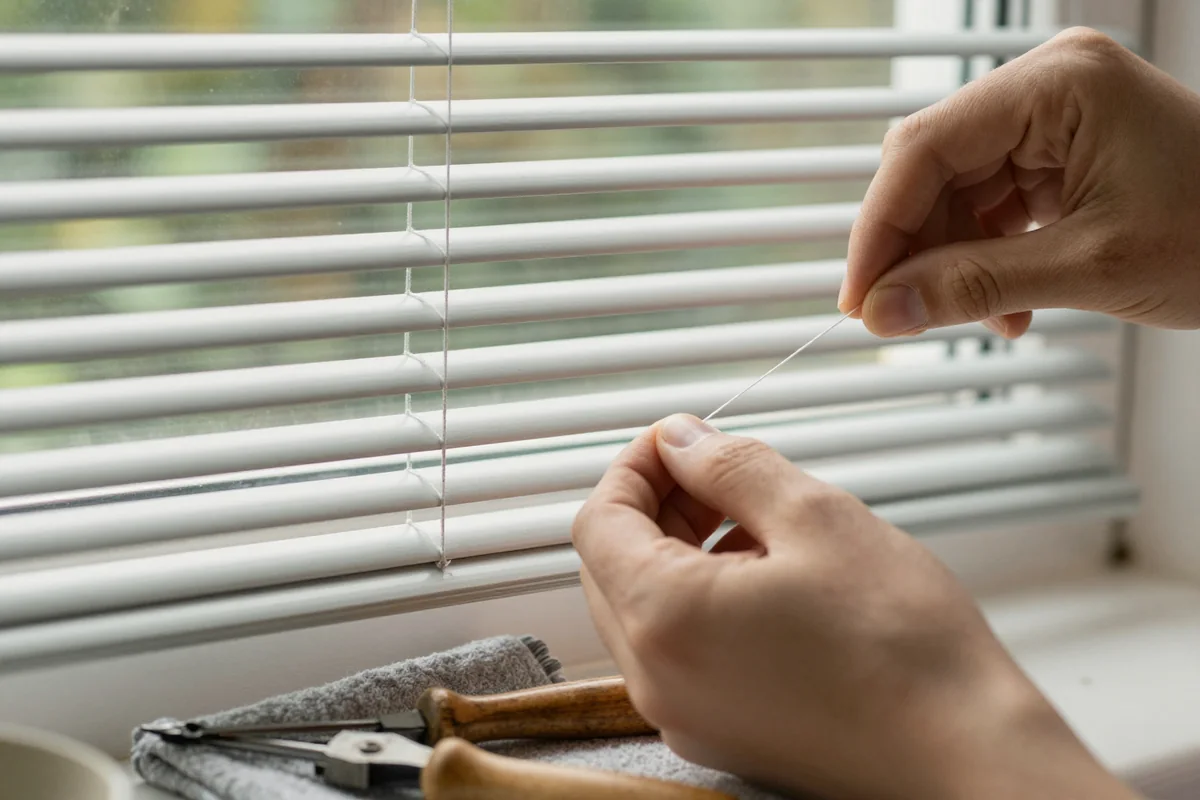
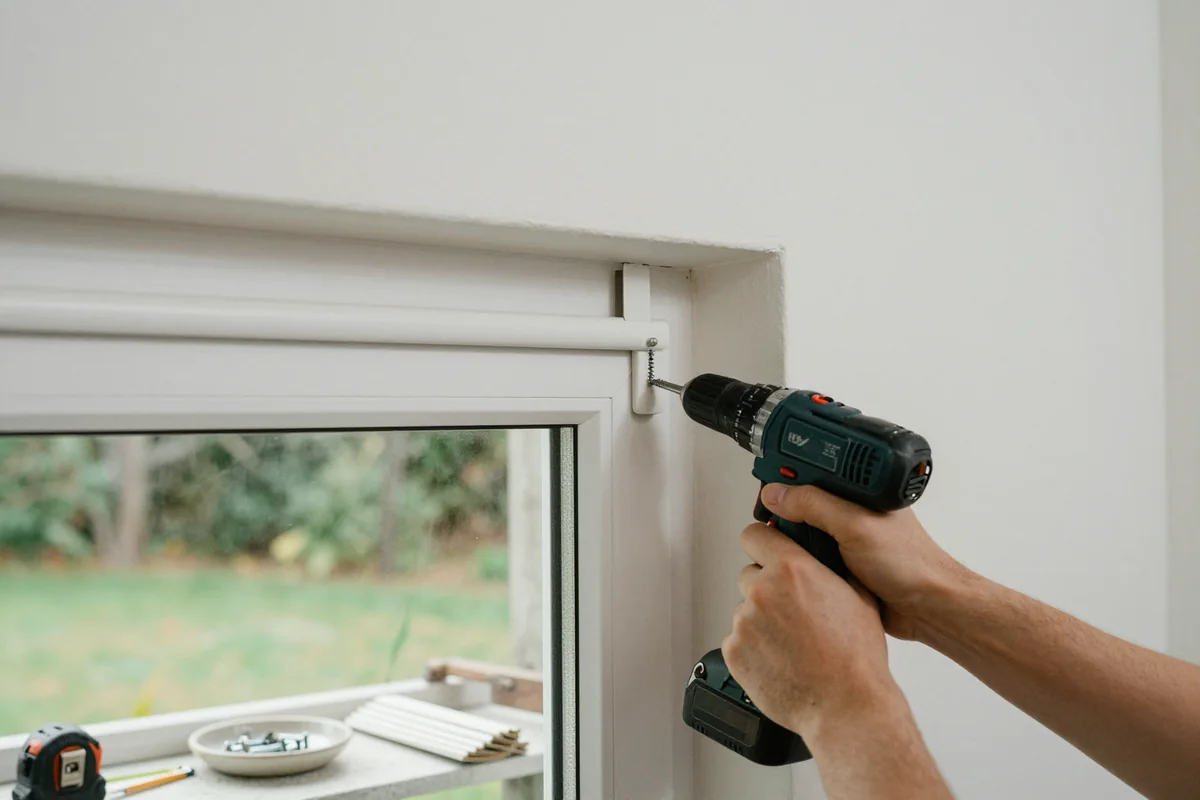
The line is simple: everything to do with the slats you do yourself, and everything to do with the rail, brackets and mechanism is better left to a technician. Taking the slats off the runners, dry dusting, washing according to the fabric’s requirements and hanging them back — this is not reinstallation, and the installation warranty is not voided by it.
Taking down the rail, however, is a different matter. The rail, brackets and the system on the sash are considered part of the installation, so if you take them down yourself, that is a self-reinstallation. The installation warranty does not cover that case. Why risk it if the rail has to go back in place level anyway?
A broken mechanism is a separate story. The runner jams, the cord tears, the chain slips off the roller — here you need a technician, because taking the unit apart without experience means finishing off the rest. During the warranty period — 3 years on the mechanism — we fix such a breakdown free of charge, within 5 working days, and after it ends a technician will still come — adjust the mechanism or fit a new cord or chain. Care for vertical blinds ends at this point, and repair begins, which is already another topic.
With washing it yourself, the question is usually not about money but about risk. If the fabric is expensive or printed and you are not sure it will survive a home wash, the fabric can be taken to a professional dry cleaner that accepts curtains — but first ask them about the treatment. In other cases, think of it this way: if the fabric is polyester or a blend, without treatment or print, wash it yourself. If the slats have a treatment, blackout or print, the machine and soaking are out, only dry dusting is left — and you do not need a technician for that either.
Replacing a single slat saves you from replacing the whole fabric. A separate slat can be replaced without touching the others, and this is exactly a job for a technician: they will take off the hook, match the fabric to your batch and hang the slat level.
What you can do yourself:
- take the slats off the runners and hang them back;
- dry dusting with a brush or a vacuum cleaner on low suction;
- washing, if the fabric composition allows it;
- wipe the slats on the rail with a weak soap solution.
What is better left to a technician:
- taking down the rail, brackets and the system on the sash;
- adjusting the mechanism and replacing the cord or chain;
- replacing a single slat.
The division is simple: the slats are your area, the rail and mechanism are the technician’s area. That is what keeps life with blinds calm: the fabric is intact, and the installation warranty is in place.
What to remember
Care for vertical blinds rests on one rule: dry dusting once every one or two weeks matters more than any washing. Dust is removed with a vacuum cleaner on low suction or a soft-bristle brush, and the treatment stays in place.
Washing is rarely needed. It washes the treatment off every time, and it does not come back. Fabric slats are washed in water no hotter than 30–40 °C, without bleach or chlorine. Spinning and hot water cause creases and twisting, after which the shape can no longer be restored.
We take the slats off one by one and return them to the runners in the same order. The rail and mechanism are not wetted: water on them is not covered by the warranty.
The practical recommendation is simple: before taking the slats to water, check with a drop whether the fabric has a treatment.